Back to School
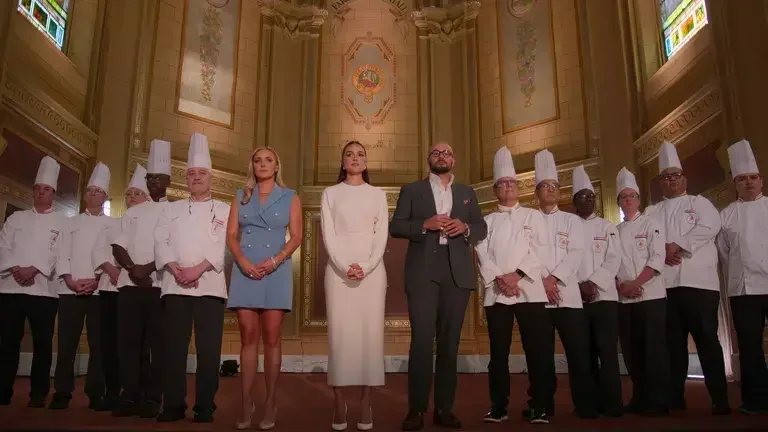
When filming began at the Culinary Institute of America, where Clark once studied, the experience was surreal. “Our camera crew and our production companies were the same production company and camera crew that I had on Top Chef,” she says. “When they would say certain things talking to the chefs, I would move and react involuntarily, and they’re like, ‘Not you, you’re not one of them anymore.’ I’m like, ‘Oh yeah, you’re right.’”
Still, being back inside those halls brought her full circle. “It was an absolute dream come true,” she says. “Imagine you are not good at anything your whole life, and every school you’ve done, every place you’ve gone, you felt like a misfit. It truly reminds you of Harry Potter, where you just have to figure out how to harness your power and use it in a different way, and that’s what the school did. It was amazing to be back.”
The Anti-Ego Era
Clark doesn’t sugarcoat the realities of running a kitchen or what separates a great cook from a real leader. “You have to be well rounded,” she says. “You can’t just be a doctor who’s the best person giving stitches but can’t do anything else.
“I was never the freak show chef in any kitchen. I was never the best. I was never the one that was just naturally a freak. I just worked harder than most people. And second of all, what I figured out and what we 100% want to see in chefs is that you want them to succeed. We don’t want to set people up for failure.
“You’ve got to be able to talk to people, go to freaking therapy and learn how to communicate. Be obsessed with making yourself so well-rounded and knowing how to read people. That’s what will make you the best leader—knowing how to handle anyone, because everyone is different. You can’t be one type of boss to everyone. You have to look at where they are, who they are, the way they communicate. What is their love language? What triggers them?”
It’s the kind of advice that makes you realize why Next Gen Chef feels less like a competition and more like group therapy with knives.
The Judge’s Seat
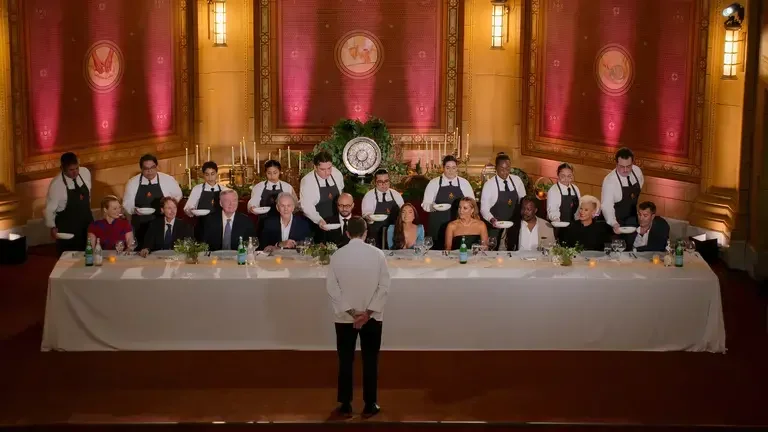
Clark laughs when she admits the hardest part of judging wasn’t the pressure, it was herself. “I had to check myself at all times, mostly with Andrew Sargent, frankly. I was brutal to him,” she says. “From the first episode, I was just like, if you don’t show us more than the fact that you work for Thomas Keller and that you can copy his food, just go. You have got to give us something besides this.
“We forced him to do that in four weeks. For me, Andrew, 100%, because I also had so much similarity to him, and I was like, if you think for a second I’ll let you get away with anything, it’s sort of like the mom with their child trying to sneak out. You’re like, are you freaking seriously trying to sneak out right now? You don’t think I snuck out the same way?”
She laughs again. “Try harder to get me to believe you right now.”
But what could’ve been tension became transformation. “I give so much credit to Andrew because he dug deep. He didn’t like it at first, but he hunkered down. And he did exactly that.”
Sargent, who serves as sous chef at Per Se in New York, would go on to win the competition.