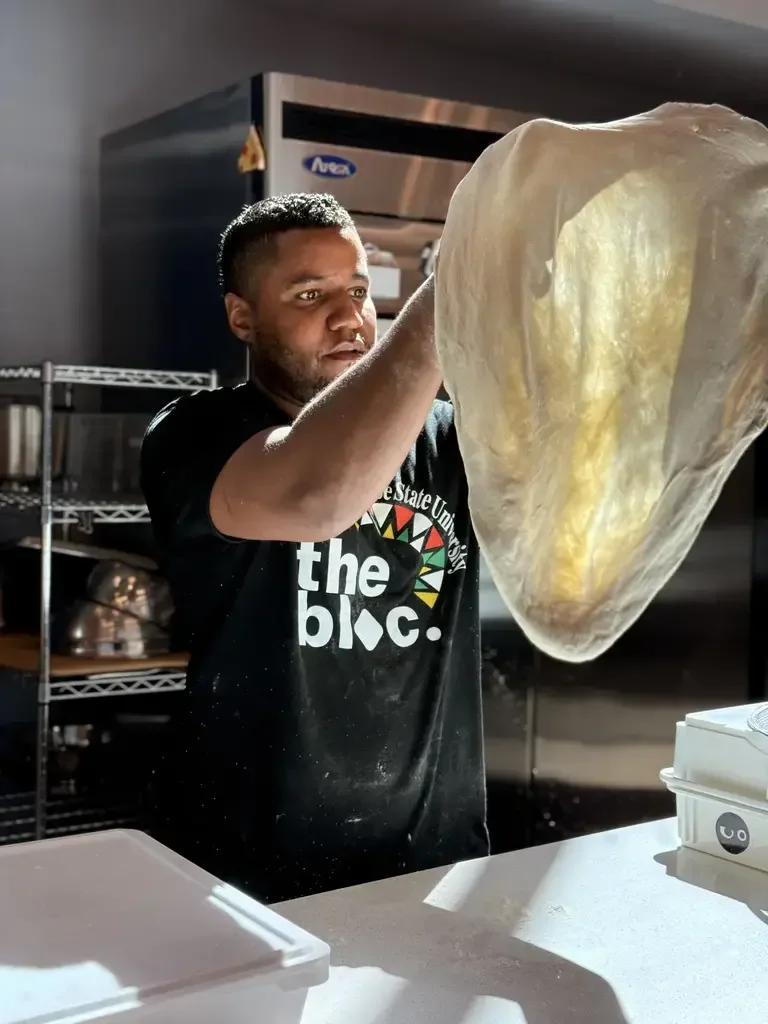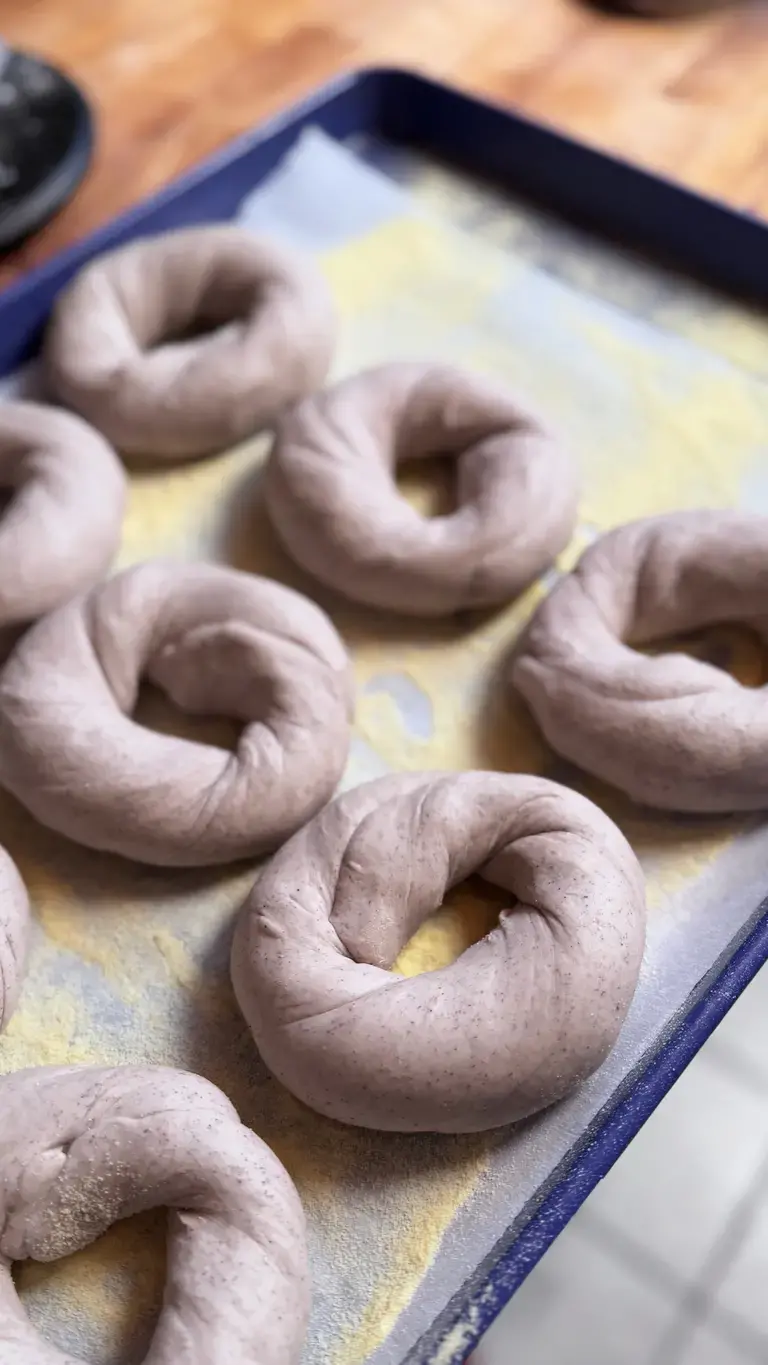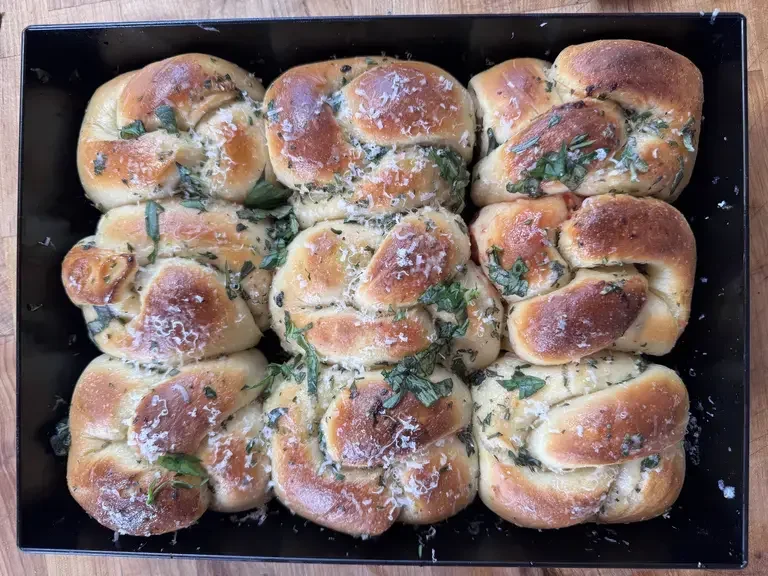
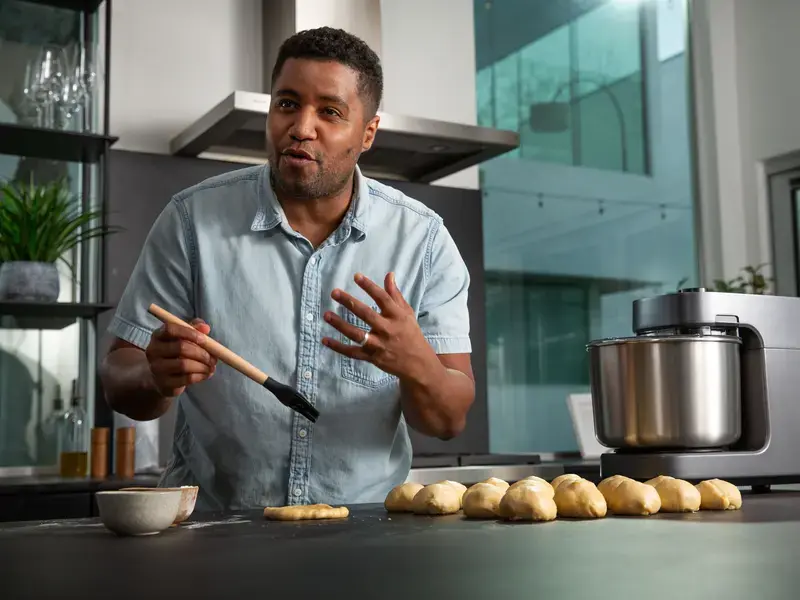

Bryan Ford has spent years studying the feel and rhythm of dough. The New Orleans–born baker with Honduran roots has built his reputation on teaching others to trust their senses—and their flours. Here, he breaks down the fundamentals of mixing, from choosing ingredients to mastering texture, all in his own words.
Start with the Flour
“For me, the number one ingredient is the flour,” Ford said. “There’s probably so many opinions out there about flour, especially in the pizza world, but I keep it simple. The flour should be organic. If you’re privileged enough, stone ground. You should know where it comes from—directly, right? Like the mill that it comes from.”
He sources from small mills whenever possible but emphasizes that great bread doesn’t require rare ingredients. “Of course, the stuff from the grocery store—your King Arthur—that’s okay,” he said. “Just make sure it’s not bleached and not bromated.”
And why does quality matter so much? “It’s very simple—it tastes better,” Ford said. “When you use fresh, freshly milled, organic stone-ground flour, whatever you’re going to bake is going to taste fifty times better than if you used a package of white flour from the grocery store.”
Think About the Water
Water, he says, is often overcomplicated. “People like to talk about their water,” he said. “I personally don’t think about water that much at all. I’ve baked bread in Latin America, Colombia, Honduras, Panama, Florida, Texas, California, New York—the flour and your pre-ferment and fermentation techniques are going to drive the flavor more than the water.”
Still, temperature matters. “You don’t want to use hot water,” he said. “If you can run your hand under it and you’re not uncomfortable, that’s a good temperature. If you live somewhere cold, use warmer water. If you’re in a tropical place like me, use cold water. It all depends on your environment.”