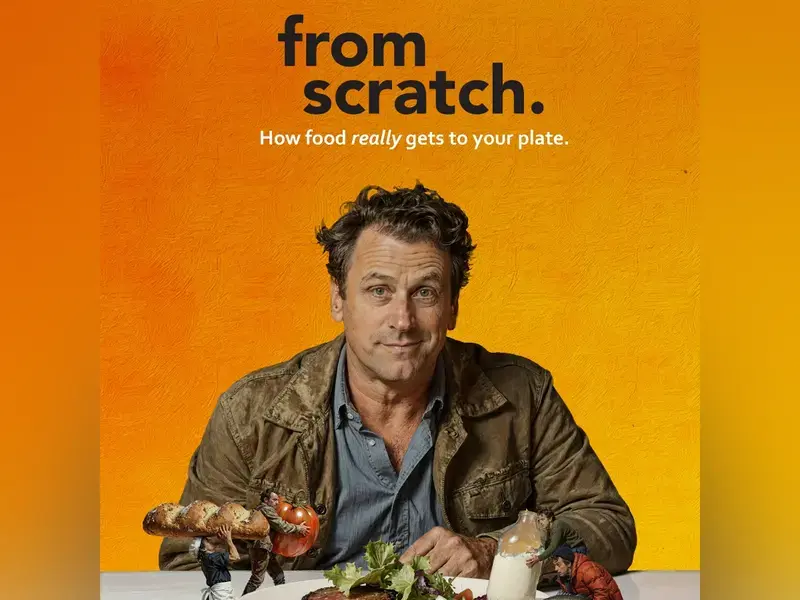
You are now six seasons into From Scratch. Catch me up. Where is the show today?
“We are in season six, which is crazy,” Moscow says. He remembers sitting on his couch in 2017 after watching Michael Pollan’s Netflix series, Cooked, and wanting to create something more accessible. “We really loved what Pollan talks about and his whole ethos, but we felt it was very posh. So, we asked how we could make something like that for my friends, or for my son, who is now seven.”
The original idea was strictly chef-led, but that changed. “There are a lot of chefs doing this kind of stuff. Usually it is focused on the kitchen with a little bit of what happens before the kitchen. We really thought that not having an expert would help be the substitute for the audience.”
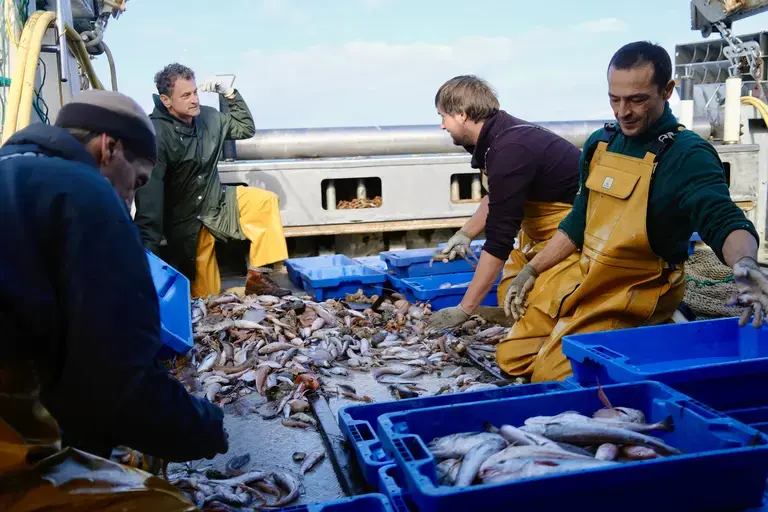
From Scratch became a way to put working food producers at the center. “It was not going to be about the host. It was going to be about the food producers themselves,” he says. “What is it like being a fisherman? What is it like being a farmer?”
The show expanded over the years, and Moscow found himself diving into subjects he never expected to learn about. “I do not know about farm economics. I do not know how to tinker with a machine. I do not know how to manage a small company. Suddenly you are in a world where you realize these people are brilliant.”
How does it feel to be moving the show to Peacock?
“This was our dream in a way, to end up on a streamer,” he says. The show built an audience across A&E and Tastemade, and now it arrives on Peacock with a larger platform. “It is exciting that people are going to get to watch the adventures we have had and meet the food producers we have met.”
With a wider audience comes an opportunity to think bigger. “We want to do all seven continents. We want to start diving into more accessible forms of everyday meals and take them apart.” Season six offered an early example. “We just did the New York bagel cream cheese lox and how much of an actual international episode that is.”
You spend so much time with farmers, fishers, and producers. Has the show made a difference for any of them?
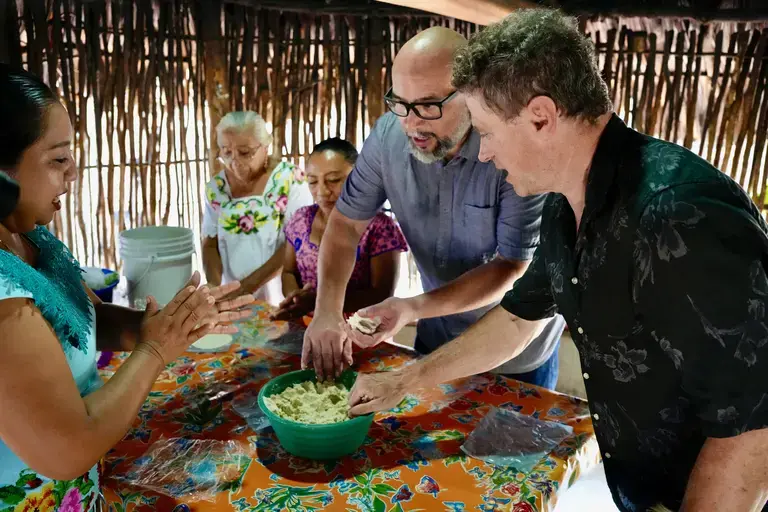
In Mexico, while filming with Maya communities, Moscow watched a real-world impact unfold in real time. “We took an amazing chef, Gilbert Cetina of Holbox, down with us. We did a cochinita pibil. He tasted it and told the mama who made it with me that hers was better than his.”
Later that day, the chef asked local farmers if he could buy their corn directly for his restaurant. “The Heifer organization guy ran up to me and said, did you hear that? The episode has not even come out. There is going to be a direct economic benefit from this show.”
Moscow says this is the heart of the series. “We put cultures that feel so different in front of you, and by the end you see that they are just like me. They are looking for the same things. Take care of their families, have enough food to eat, make enough money to live. The show helps bring the world closer together.”
What kinds of responses have you heard from the people featured on the show?
“One of the neatest things for me is hearing back from the food producers,” he says. Many have never been on camera before. “They work in silence. They grow their food and sell it at the market. They are in the shadows. It is so lovely when they watch an episode and get so excited.”
He recalls filming with a scientist working to save the kelp beds in Monterey. “He is a very serious guy. He watched and said the show was so engaging and fun that he wanted to use it when he talks about his work. That is what I hope the show can be. A vessel for change.”
How has making this show changed you?
“I am now terrified of the ocean,” he says immediately. “I [nearly] drowned a couple of times in season one. I did it again in season three.” Last year in Denmark he had a panic attack during night spearfishing. “It was one of the more terrifying things I have ever done.”
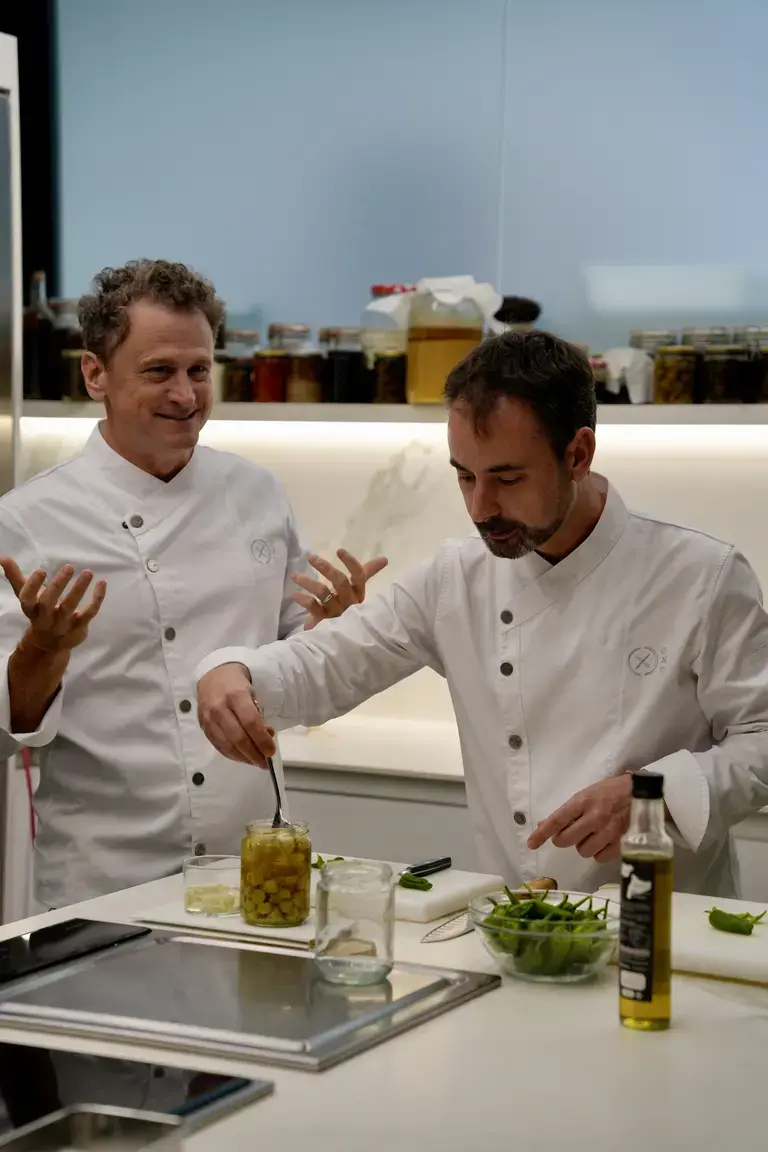
The series has also reshaped how he cooks and eats. “It is now hard to just go and eat a meal. Every meal is now like, oh, well, I cannot go there, I have to go here,” he says, laughing. But the show has made him a better cook. “There are tricks that I have learned. Every episode I still glean stuff. I bring it home and test it with my wife and kids.”
What has surprised him most is how much he still loves the work. “I thought at some point it would become a job, and it has not.”
What changes, if any, will viewers see now that the show is on Peacock?
“I think that is the challenge,” he says. “We want to keep the level of what we have been doing and also focus more on supporting farmers and other food producers. They are under a lot of stress now.”
Peacock’s reach changes the scale of the message. “We now have 90 million monthly subscribers who can amplify what we are putting out there,” he says. “It would be lovely if we could be of service to food producers and restaurateurs. They are also going through crazy times.”
Logistically, how can viewers watch the new season? How do the episodes roll out?
“It is all tiers of Peacock, from AVOD through SVOD,” he explains. “We cherry picked forty episodes from A&E and Tastemade, and now we are doing another ten for season six on Peacock.”
Upcoming shoots include Barcelona, Yucatán, Ethiopia, and a potential Italy episode. “It will be really fun. Very European. I will be dressed to the nines. It will be aperitivo.”