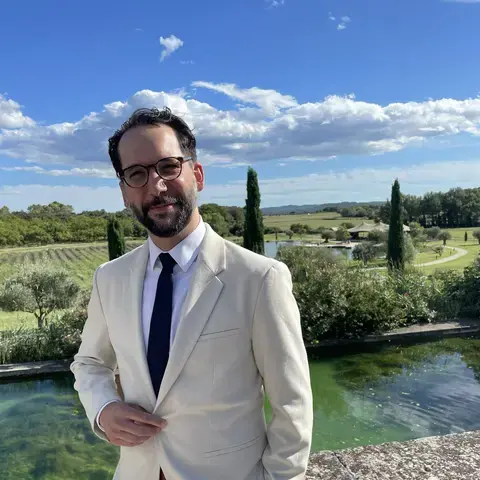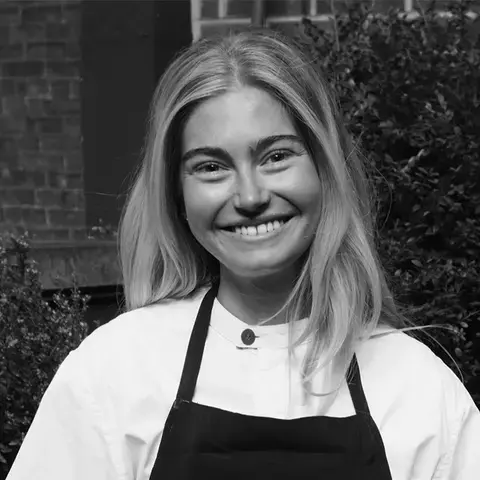
At this point in his life, Spencer Horovitz, chef and owner of Hadeem in San Francisco, says he feels more culturally Jewish than religious. Yet Yom Kippur still prompts him to take stock of the past year and consider how he can better support the people around him.
“I really value the importance of tradition as a way to find togetherness amid the chaos—as well as the opportunity to reflect on how we can all be better humans to those around us,” says Horovitz.
For Horovitz, tradition was never black and white, an outlook shaped during childhood. As a kid, he welcomed the High Holidays as an excuse to miss school and later learned patience while sitting quietly in a crowded synagogue. At home, however, his family didn’t always keep kosher, even on holidays. “Most of the time, we’d break the fast in a very unkosher way—at a chain restaurant like Claim Jumper in Anaheim,” says Horovitz.
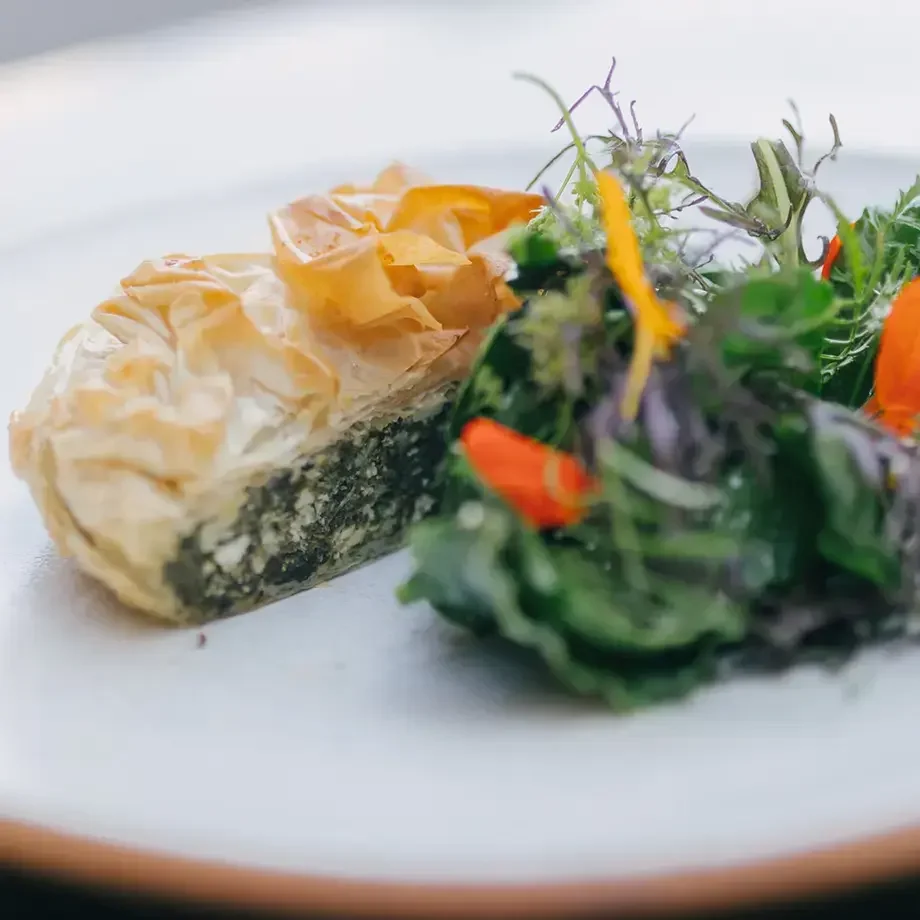
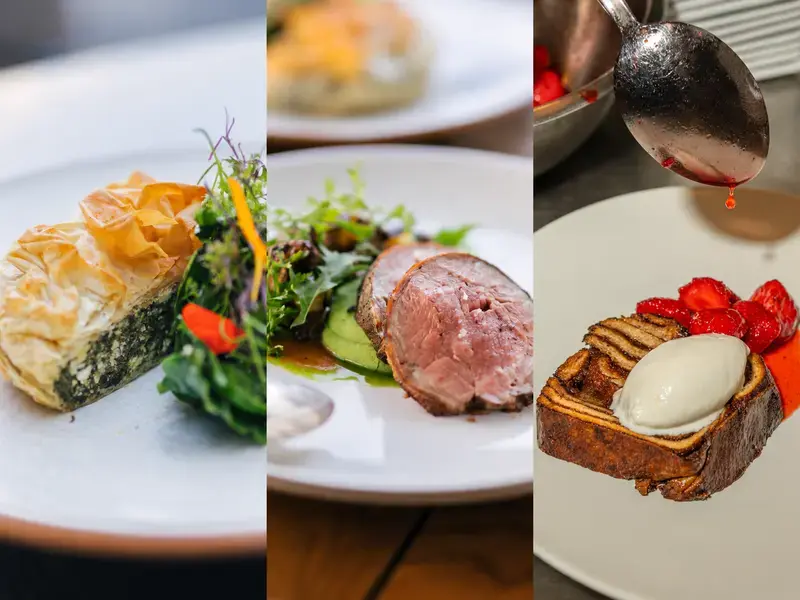
On other occasions, his family gathered at home to break the fast. “These usually included a pretty epic spread,” says Horovitz. One of the defining dishes was his Greek grandmother’s spanakopita. Born and raised in Siatista, Greece, she wasn’t Jewish, but her spinach-filled phyllo squares became the dish everyone in the family looked forward to.
Today, spanakopita is a staple at Hadeem. “I always knew some version of it would find its way onto the menu,” says Horovitz. Although he has made the dish his own, he still thinks about what his grandmother would make of it. “She would have been very confused by how much money we spend on herbs and greens from the farmers market, but I think she’d be very proud that we’ve made this version our own.”
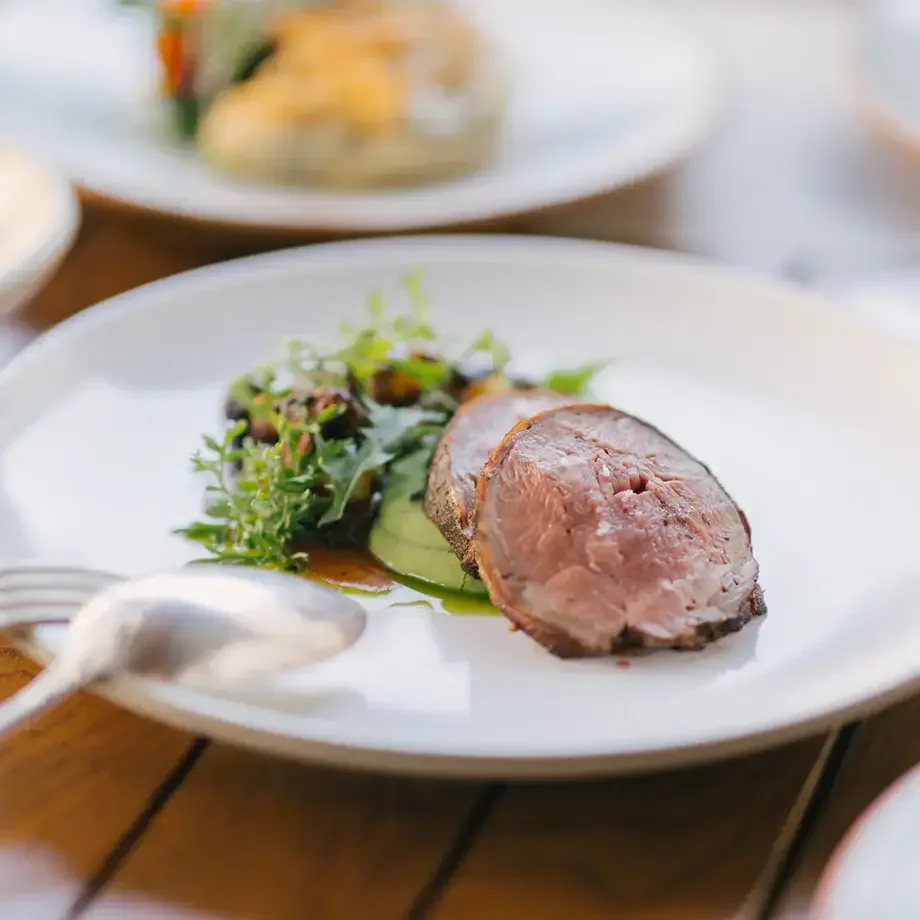
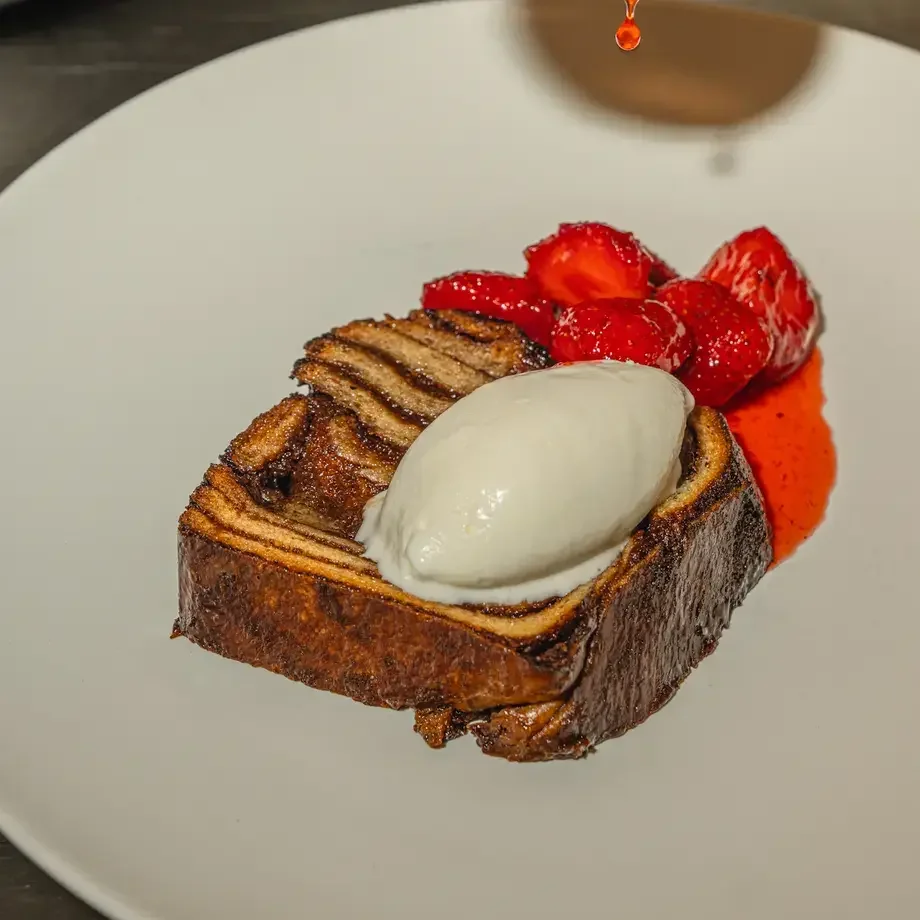
The spanakopita is followed by a harissa-spiced leg of lamb and chocolate babka. The dishes reflect Horovitz’s family history more than strict religious dietary laws. “This menu is not very kosher,” he says. “But I’m constantly trying to call back to my own personal experience growing up in a very blended, nontraditional Jewish family.”
For Horovitz, gathering together matters more than following a prescribed format, and he encourages home cooks to make the meal their own. “A Yom Kippur meal doesn’t have to fit one particular template,” he says. “Food is one of the strongest ways we preserve traditions, even when those traditions change as they move through different families and generations.” The menu he shares here reflects that philosophy.
To drink, Horovitz suggests a Chambouka, his take on a French 75 made with Champagne and Boukha, a Tunisian fig eau-de-vie. “It feels celebratory, and Boukha is delicious on its own if you haven’t had the chance to try it,” he says. His final piece of advice is to delegate. “People are already feeling guilty for a year of past transgressions, so I’m sure they’d be more than willing to help you truss a lamb leg or cook some beans for dinner!”