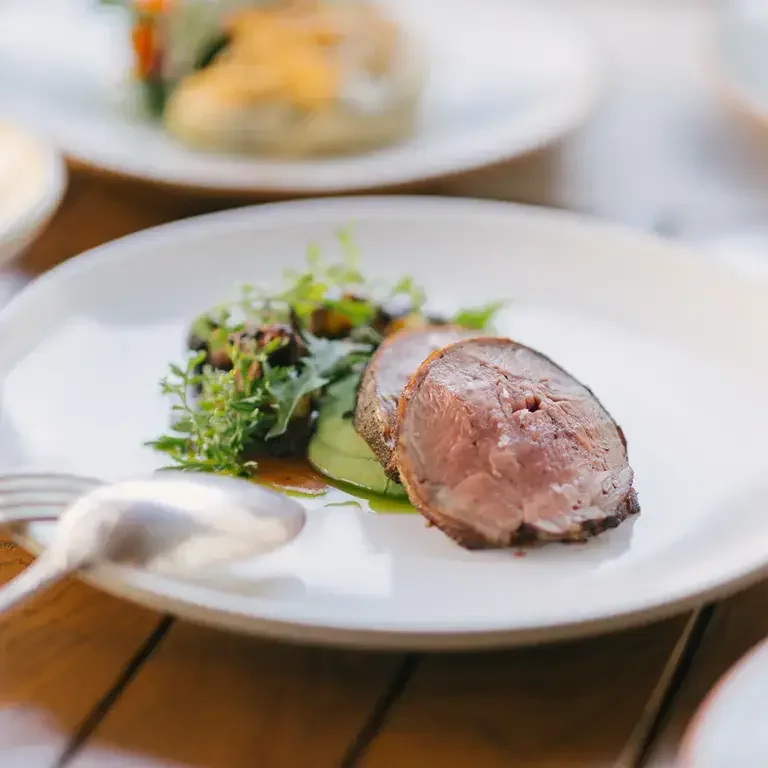
Harissa Spiced Lamb Leg. Credit: Cat Fennel

FOR THE LAMB
Leg of lamb: 1 (2.7 to 3.6 kg)
FOR THE SPICE PASTE
Harissa paste: 1.5 tbsp
Garlic cloves: 4 (peeled)
Fresh ginger: 2-inch piece (peeled)
Cumin seeds: 1.5 tsp
Coriander seeds: 1.5 tsp
Green cardamom seeds, sometimes labeled decorticated cardamom: 1/8 tsp
Urfa chile flakes: 1 tbsp
Date molasses or pomegranate molasses: 4 tbsp
Ground white pepper: 1 tbsp
Kosher salt: 2 tbsp
Celery seeds: 1 tsp
FOR THE VEGETABLES
Parsnips: 2 (peeled and cut into thick rounds)
Large cabbage: 1 (cut into large dice)
Fennel bulb: 1 (sliced)
Leeks: 2 (thoroughly washed and cut into thick rounds)
Bay leaves: 2
Garlic: 1 head
FOR FINISHING THE LAMB
Date molasses or pomegranate molasses: 1 tsp
Kosher salt: to taste
Freshly ground black pepper: to taste
Parsley, cilantro, and dill leaves: for garnishing
FOR THE WHITE BEAN PUREE
Dried cannellini or Great Northern beans: 910 g
Baking soda: 2 tsp
Garlic: 1 head (halved crosswise)
Bay leaves: 3
Meyer lemon peel: 2-3 strips
Rosemary: 1 sprig
Kosher salt: to taste
Olive oil: as needed
Reserved bean cooking liquid: as needed
FOR THE GREEN CHARMOULA
Coriander seeds: 1 tbsp
Cumin seeds: 1 tbsp
Parsley: 2 bunches (tough stems removed)
Cilantro: 2 bunches (tough stems removed)
Green jalapeño: 1/2 (minced)
Olive oil: 3/4 cup, plus more as needed
Kosher salt: to taste
- Unroll the leg of lamb on a work surface. Cover it with parchment paper or plastic wrap, then gently pound it with a meat mallet until relatively uniform in thickness.
- Combine the cumin seeds, coriander seeds, caraway seeds, cardamom seeds, and celery seeds in a dry skillet. Toast over medium heat, stirring frequently, until fragrant, 2 to 3 minutes. Let cool slightly, then finely grind in a spice grinder.
- Transfer the ground spices to a food processor. Add the garlic, ginger, kosher salt, Urfa chile flakes, molasses, harissa paste, and white pepper. Process until a thick, relatively smooth paste forms.
- Coat the lamb evenly with the spice paste, working it into all the crevices. Roll the lamb tightly into a log and secure it with butcher’s twine, then wrap tightly in aluminum foil. If butcher’s twine is unavailable, wrap the lamb tightly in foil to help it hold its shape.
- Refrigerate the lamb for at least 4 hours or overnight.
- Place the beans in a large bowl and cover them with at least 3 inches (7.5 cm) of cold water. Stir in the baking soda and soak for at least 8 hours or overnight.
- Remove the lamb from the refrigerator 1 hour before roasting.
- Preheat the oven to 250°F. Arrange the parsnips, cabbage, fennel, leeks, bay leaves, and whole head of garlic in a roasting pan. Set a roasting rack over the vegetables and place the wrapped lamb on the rack.
- Roast until an instant-read thermometer inserted into the thickest part of the lamb registers 135°F, 3 to 4 hours, depending on the size and shape of the leg.
- While the lamb roasts, drain and thoroughly rinse the soaked beans. Transfer them to a large pot and add enough fresh water to cover them by approximately 3 inches (7.5 cm). Add the halved garlic head, bay leaves, Meyer lemon peel, and rosemary.
- Bring the beans to a boil, then reduce the heat and simmer until completely tender and creamy, 1 to 1½ hours. Season generously with kosher salt during the final 20 minutes of cooking.
- Bring a large pot of generously salted water to a boil and prepare a bowl of ice water. Add the parsley and cilantro to the boiling water and blanch until bright green, 20 to 30 seconds.
- Immediately transfer the herbs to the ice water. Once cold, drain them and squeeze out as much excess water as possible.
- Combine the coriander and cumin seeds in a dry skillet. Toast over medium heat, stirring frequently, until fragrant, 2 to 3 minutes. Let cool slightly, then finely grind in a spice grinder.
- Combine the blanched herbs, ground spices, jalapeño, and olive oil in a blender. Blend until smooth and vibrant green, adding more olive oil as needed to achieve a spoonable consistency.
- Season with kosher salt to taste and set aside.
- Drain the cooked beans, reserving the cooking liquid. Discard the bay leaves, lemon peel, and rosemary.
- Squeeze the softened garlic cloves from their skins and add the garlic to the beans. Discard the skins.
- Working in batches if necessary, puree the beans and garlic in a food processor or blender. With the machine running, gradually add olive oil and enough reserved cooking liquid to create a completely smooth, spreadable puree.
- Season with kosher salt to taste. Transfer the puree to a saucepan and keep warm over low heat, stirring occasionally, until ready to serve.
- When the lamb reaches 135°F, remove it from the oven and let it rest, still wrapped, for 30 minutes.
- Preheat the broiler. Carefully unwrap the lamb and remove the butcher’s twine, reserving any juices collected inside the foil. Transfer the lamb to a foil-lined rimmed sheet pan and gently pat it dry.
- Brush the lamb with the finishing molasses and season lightly with kosher salt and black pepper.
- Broil the lamb, rotating the pan as needed, until the exterior is deeply golden and lightly charred and the center reaches 145°F, 5 to 10 minutes. Watch closely because the molasses can burn quickly.
- Remove the lamb from the broiler and let it rest for at least 3 minutes before slicing.
- Just before serving, spoon the green charmoula over the warm white bean puree. Fold it through once or twice, leaving visible streaks rather than mixing it completely, so the puree retains a marbled appearance.
- Remove and discard the bay leaves from the roasted vegetables.
- Slice the lamb and arrange it over the vegetables. Spoon the reserved lamb juices and pan drippings over the top.
- Serve with the white bean puree and green charmoula alongside. Garnish with parsley, cilantro, and dill leaves.