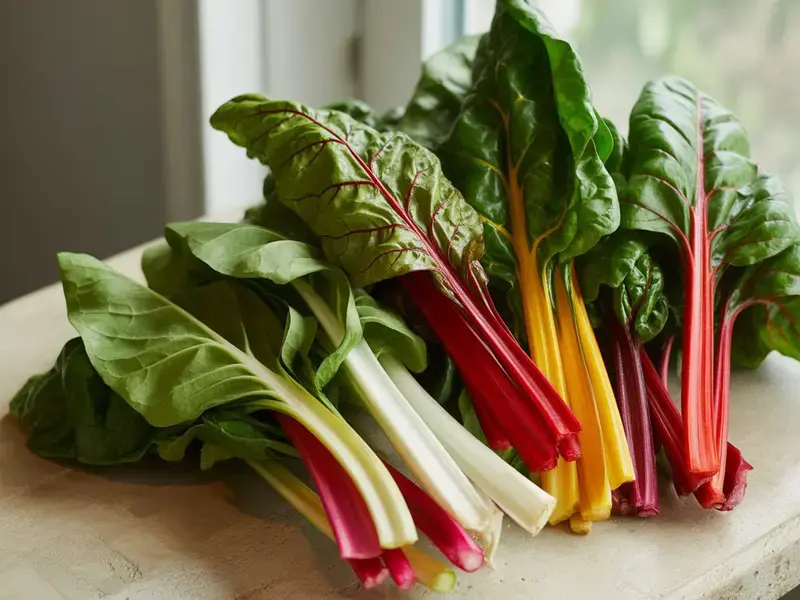
If you have ever seen the rainbow-colored bunches at the market and wondered what Swiss chard is, how to prep the stems, or what Swiss chard is used for in recipes, you are not alone. This versatile vegetable has tender leaves, crisp stems, and a flavor that can be mild or pleasantly earthy depending on how you cook it. Once you know how to prepare Swiss chard and which methods flatter it most, it becomes a reliable go-to for pastas, sautés, side dishes, and grain bowls.
What Does Swiss Chard Taste Like?
Swiss chard belongs to the same family as beets and spinach, and its flavor sits somewhere between the two.
- The leaves are mild, slightly earthy, and a bit mineral, often compared to spinach with more character.
- The stems are firmer and sweeter, with a faint beet-like note and a satisfying crunch when cooked just until tender.
Raw, Swiss chard can be a touch bitter and assertive, which is why it is usually cooked rather than used as a primary salad green. A quick sauté softens that edge and brings out a gentle sweetness, while longer braising develops deeper, savory notes.
If you are interested in the broader family of bitter or robust greens, Swiss chard often appears alongside kale, mustard greens, and dandelion in guides that explain what bitter greens are and how to cook them, showing how a little heat, fat, and acidity can transform their flavor.
How to Prepare and Clean Swiss Chard
Good prep is the key step in how to prepare Swiss chard before cooking. You want clean leaves, trimmed ends, and stems and leaves cut in a way that lets them cook evenly.
- Rinse thoroughly
Swiss chard can hold onto grit and soil at the base of the stems. Separate the stalks and rinse them under cold running water, paying attention to the creases where dirt can hide. - Trim the ends
Cut off any dried or discolored ends of the stems. If the outer layer of the stem feels tough, you can lightly peel it with a small knife or vegetable peeler. - Separate stems and leaves
The stems take longer to cook than the leaves. Use a knife to cut the leaves away from the central ribs, or fold each leaf in half and slice along the stem. Stack the leaves and roll them into a loose cigar to slice into ribbons, and cut the stems into small pieces or batons. - Dry the leaves
For sautés and stir-fries, spin the leaves dry or pat them with a clean towel. Excess water can make them steam rather than sear.
Once cleaned and separated, you can decide whether to cook stems and leaves together (adding stems first) or use them in different preparations.
Cooking Methods: Sautéing, Braising, Baking
Swiss chard is flexible in the pan and the oven. Understanding how to cook Swiss chard comes down to matching the method to the texture you want.
Sautéing
Sautéing is the fastest way to get Swiss chard on the table and a great starting point if you are just learning how to cook a Swiss chard vegetable.
- Heat olive oil or butter in a large skillet.
- Add chopped stems first and cook a few minutes until beginning to soften.
- Add garlic or shallots if you like, then pile in the leaves.
- Season with salt and pepper and cook until the leaves wilt and the stems are tender but still have some bite.
Finish with lemon juice, chili flakes, or grated cheese. This method works well as a side dish or as a base for eggs, grains, or beans.
Braising
Braising Swiss chard in a bit of stock, tomato, or wine gives a softer, silkier texture and mellows any bitterness.
- Sauté aromatics and stems briefly.
- Add the leaves, a splash of liquid, and seasonings.
- Cover and simmer gently until everything is tender, then uncover to reduce any excess liquid.
Braising is ideal when you want chard to sit alongside slow-cooked meats or in brothy dishes.
Baking
Baked dishes let Swiss chard play a supporting role in gratins, frittatas, and casseroles.
- Lightly sauté stems and leaves first to remove excess moisture.
- Fold them into egg mixtures, cream, cheese, or béchamel.
- Bake until set and lightly browned on top.
This approach is perfect for brunch dishes, savory pies, or pasta bakes, where the greens add color and depth rather than being the main focus.
Recipe Ideas and Culinary Uses
Once you know what Swiss chard is used for, it becomes easy to slot it into your cooking wherever you reach for spinach or kale.
- Pastas: Swiss chard pairs particularly well with sausage, garlic, and chili in robust pasta dishes, like orecchiette tossed with browned sausage, wilted chard, and olive oil.
- Grain bowls: Fold sautéed chard into warm grains with roasted vegetables, nuts, and a bright dressing.
- Egg dishes: Use chard in frittatas, omelets, or baked eggs where its flavor stands up to cheese and herbs.
- Soups and stews: Add chopped stems early and leaves toward the end for texture contrast in brothy soups or bean stews.
- Simple sides: Serve garlicky sautéed Swiss chard alongside roast chicken, grilled fish, or seared steak as a quick, elegant green.
Swiss chard is also a good way to bring leafy greens into hearty, restaurant-style plates, such as orecchiette with sausage and chard or other chef-driven recipes that rely on its ability to carry garlic, chili, and olive oil.
Storage, Seasonality and Substitutes
Swiss chard is generally in season from late spring through autumn, though in many markets you will find it almost year-round. Stems can be white, red, yellow, or rainbow-colored; the cooking behavior is similar, so you can choose based on flavor and appearance.
For storage:
- Keep unwashed Swiss chard in the refrigerator, wrapped loosely in a damp paper towel and placed in a perforated bag. It is best within a few days, while stems are crisp and leaves are perky.
- If you have washed and cut it, dry thoroughly, store in an airtight container with a paper towel, and use as soon as possible to avoid wilting.
If you need a substitute, think about texture and flavor:
- For cooked dishes, kale, collard greens, or beet greens behave similarly, though kale and collards are tougher and may need slightly more cooking time.
- For gentler dishes, spinach can stand in for the leaves, but you will miss the texture and sweetness of the stems.
Understanding what Swiss chard is, how it tastes, and the core methods for prepping and cooking it means those colorful bunches at the market turn from a question mark into a reliable ingredient you can use across pastas, sides, soups, and baked dishes all year long.