If you are wondering what to serve with scallops—especially pan-seared or grilled—the key is to think in terms of balance rather than volume. Scallops bring sweetness, gentle brininess, and a soft, almost custardy texture, so the best side dishes for scallops add acidity, crunch, or silkiness without overwhelming them. A few well-chosen vegetables, a restrained starch, and an elegant sauce are usually all you need, whether you are serving seared scallops as a starter or as the centerpiece of the plate.
Below, ideas on how to match flavors with scallops, how to use vegetables and citrus as accents, and which simple sauces and condiments make them feel restaurant-level with very little on the side.
How to Match Flavors with Scallops
Before picking specific side dishes, it helps to understand what scallops bring to the plate and how to complement that profile.
Scallops are:
- Sweet and gently briny rather than strongly “fishy”
- Delicate in texture, especially when just cooked in the center
- Rich on the surface if you achieve a good sear in butter or oil
Good pairings either contrast with these qualities or echo them.
- Contrast: acidity, light bitterness, and crunch keep each bite lively. Think lemon or lime, a bright vinaigrette, bitter greens like arugula or radicchio, shaved fennel or radish, and toasted nuts.
- Echo: naturally sweet vegetables (peas, carrots, leeks, corn) and gentle umami (mushrooms, browned butter, light shellfish stock) reinforce the scallops’ character without turning the dish heavy.
Grilled scallops, for example, are often at their best with something very simple and focused—a few charred vegetables and a citrus-forward dressing are enough to feel complete.
Vegetable Sides That Work
Vegetables are where you build structure and freshness around scallops. They should frame the seafood, not compete with it.
Green vegetables
Green vegetables bring both color and a clean edge:
- Asparagus (blanched then grilled or sautéed) is a classic match, especially in spring.
- Green beans and sugar snap peas add crunch and sweetness when cooked just until crisp-tender.
- Spinach or Swiss chard, wilted quickly with garlic and olive oil, give a silky base without stealing attention from the scallops.
Season lightly—olive oil, salt, pepper, maybe a squeeze of lemon at the end.
Root and allium sides
Roots and alliums add gentle sweetness and depth that sit nicely behind the scallops:
- Leeks or spring onions, slowly cooked in butter until soft and lightly caramelized, make an elegant bed for seared scallops.
- Thin slices or small wedges of celeriac, parsnips, or carrots, roasted until golden, add earthiness and texture without overpowering the seafood.
These sides work especially well in cooler seasons, when you want the plate to feel a bit more substantial while keeping the scallops as the star.
Grains, Purees and Creamy Bases
When you want more of a “main course” feel, grains and purees give the plate substance while staying neutral enough to let the scallops lead.
Grain and rice sides
Light grains and rice can support scallops without weighing them down:
- Lemon and herb risotto or a very lightly enriched rice dish provides a creamy, starchy base that echoes the scallops’ richness.
- Farro or other chewy grains cooked in a delicate stock, then finished with herbs and a little olive oil, make a refined bed for a few seared scallops on top.
Keep flavors subtle—this is not the place for heavy spices or smoky notes.
Vegetable purees
Purees are ideal when you want a restaurant-style presentation:
- Cauliflower purée, parsnip purée, or celeriac purée gives a smooth, slightly sweet base that catches scallop juices and sauce.
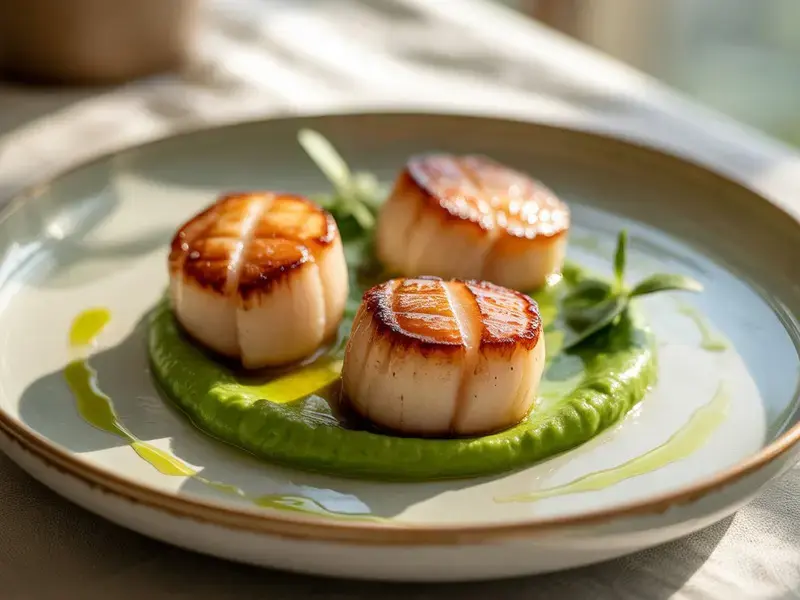
- A bright pea purée adds both color and sweetness that mirrors the scallops’ own sweetness.
Spoon a small pool of purée on the plate and nestle the scallops on top rather than smearing too much—this keeps the dish light and visually focused.
Creamy vegetable sides
Lightly creamy sides can bridge between grain and vegetable:
- Potato gratin or very soft pommes purée in small portions can work as a comfort element with scallops, especially in colder months.
- Just keep the portion size modest and balance with plenty of brightness elsewhere on the plate.
Fresh Salads and Citrus Accents
Salads and citrus details are your main tools for lift and contrast. They prevent the dish from tipping into richness and help each bite of scallop feel fresh.
Simple green salads
A small, sharply dressed green salad works well alongside or even under scallops:
- Use tender but flavorful greens—arugula, frisée, or mixed baby lettuces.
- Dress with a light vinaigrette (citrus or mild vinegar, good olive oil, a touch of mustard), tasting carefully so the acidity brightens without overwhelming the scallops.
Serve in a separate small bowl or nestle a compact mound beside the scallops to keep textures distinct.
Composed salads with raw vegetables
Composed salads can bring crunch, color, and acidity:
- Shaved fennel and radish with citrus segments and herbs.
- Tomato and cucumber salads in warmer months, seasoned simply with olive oil, lemon, and salt.
These are especially effective when scallops are the starter for a menu—you get contrast and freshness without heavy starch.
Citrus as a finishing element
Citrus does not have to be a full salad:
- A final squeeze of lemon or lime over the scallops at the table.
- A few orange or grapefruit segments placed strategically on the plate.
Think of citrus as both seasoning and garnish—small amounts, placed with intent.
Elegant Sauces and Condiments
Scallops do not need heavy sauces; they shine with light, well-balanced preparations that gloss rather than smother.
Browned butter and herb sauces
Browned butter is a classic companion:
- Cook butter until it turns nutty and golden, then finish with lemon juice and chopped herbs (like parsley or chives).
- Spoon around (not over) the scallops so the seared surfaces stay visible and the sauce mingles with any purée or vegetables on the plate.
You can add toasted nuts—hazelnuts, almonds, or pine nuts—for texture if you want the sauce to feel more substantial.
Light cream, stock and wine sauces
For a slightly richer direction:
- Deglaze the scallop pan with white wine or dry vermouth, reduce, then finish with a splash of cream or a knob of butter.
- Use a shellfish or light fish stock reduced with aromatics and finished with butter for a glossy, concentrated sauce that still feels light.
Aim for sauces that are loose and satin-like, not thick; they should coat the scallops and vegetables lightly.
Citrusy dressings and vinaigrettes
For grilled or very simply cooked scallops, vinaigrettes can stand in for classic sauces:
- Whisk citrus juice with olive oil, a little mustard, and finely chopped herbs.
- Drizzle over scallops and their vegetable accompaniments just before serving.
Taste carefully: the dressing should be bright enough to cut richness but not so sharp that it competes with the scallops’ sweetness.
With scallops, the question of what to serve them with is less about filling the plate and more about choosing a few precise elements—vegetables, a grain or purée if needed, fresh salad and citrus accents, and an elegant sauce—that each play a clear role. When those pieces are in balance, both seared and grilled scallops feel complete, refined, and fully supported without ever being crowded.