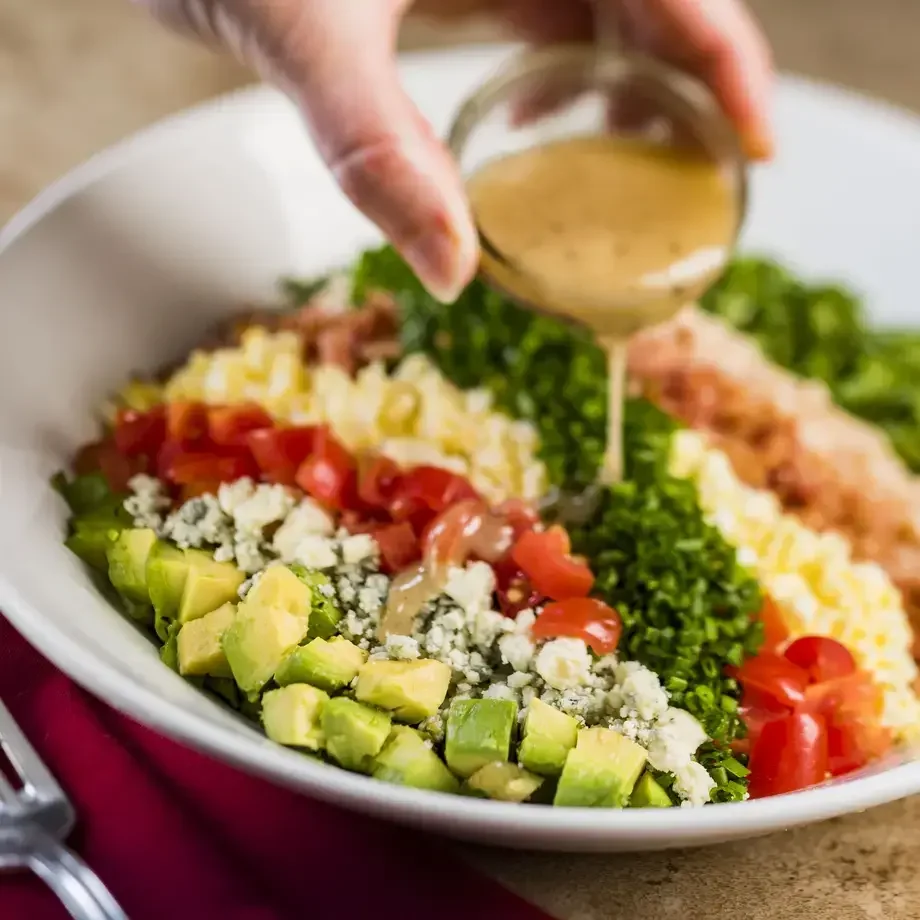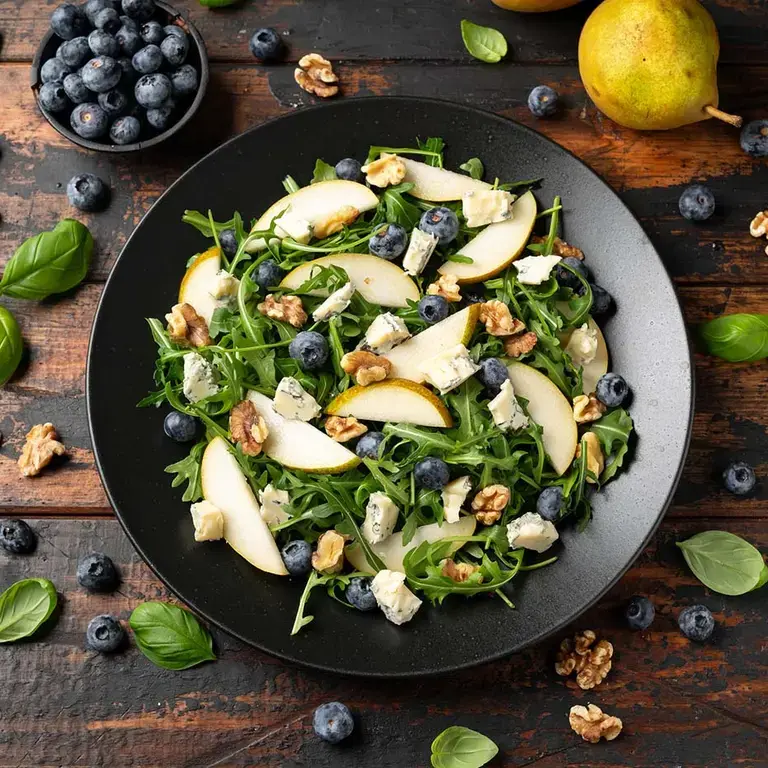

One easy tip to make this recipe even quicker is to create the vinaigrette ahead of time. You can make it up to one week in advance of enjoying the salad, and store in an airtight container in the fridge until ready to use.
If preferred, you can substitute the arugula for other greens. Varieties, such as baby spinach, also work well in this recipe and pairs neatly with the richness of the Gorgonzola. However, we like the peppery notes that arugula adds to the mix with the creamy, saltiness of the cheese and sweetness of the pear. Some chefs will also build in other classic salad elements, such as radicchio, to add complexity and depth of flavor to the dish.
Choosing the Right Pears and Cheese
For this salad you can use any type of pear that you usually like to eat at home. Bartlett pears are a tasty option for this dish as they are really juicy with thin skins. You could also try making this salad with a combination of thinly sliced apples and pears, to add a bright, crispness to the plate.
There are actually thousands of varieties of pears available around the world, and we’ve picked our top 10 styles here, along with sharing guidance on how best to enjoy them. Green Anjou pears are another suitable option to use in this recipe with a refreshing lemon and lime flavor profile.
Gorgonzola is typically featured in a pear and blue cheese recipe as it’s both creamy and salty, and complements the sweet, floral flavors of the pear. But you can swap Gorgonzola for other blue cheeses, such as Roquefort. There are a few subtle differences between the two cheeses that are worth being aware of. First, Roquefort is made in France, whereas Gorgonzola is made in Italy. Roquefort tends to also be sharper and saltier than Gorgonzola, and will add a stronger flavor to your salad. Once you’ve experimented with both of these styles, try exploring blue cheese from all over Europe to find your preferred cheese for this salad.
Suggested Dressings and Crunchy Toppings
We’ve shared a classic pear Gorgonzola salad dressing in the recipe above, using a simple vinaigrette to brighten flavors of the fruit and the cheese, without dominating the dish. You can build on the above and add a touch of freshly squeezed lemon juice to the vinaigrette to bring a citrus element to the salad. Or try introducing herbs, such as thyme, to add a freshness to the dressing.
If you’re not a fan of walnuts there are plenty of other nuts that work well in this salad. Try making maple-roasted pecans to add to the top of the dish, if you’d like a touch of sweetness with the crunch.