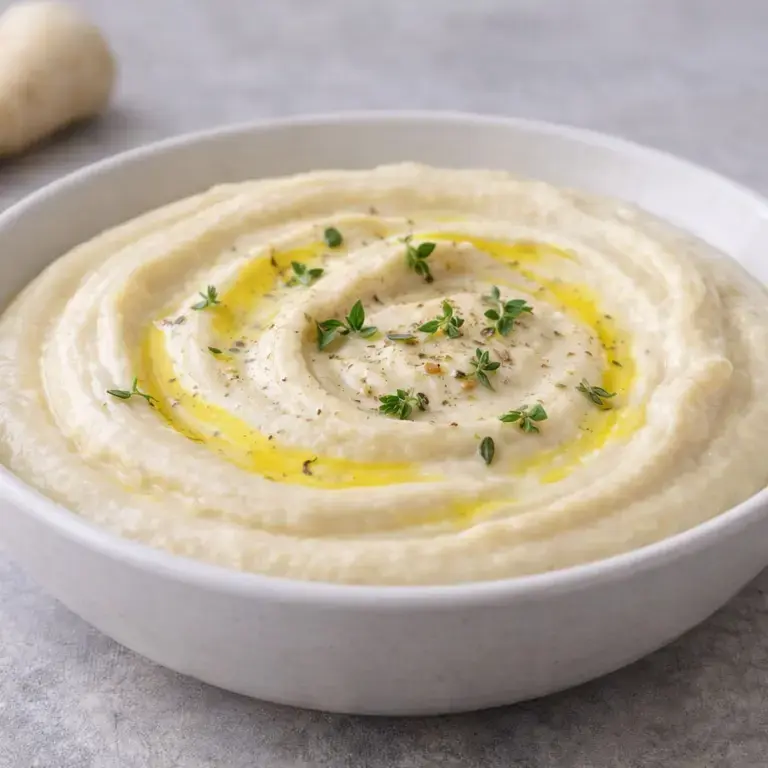

For the most delicious purée of parsnip, opt for small-to-medium-sized parsnips. Larger parsnips tend to have a woody core, which can add an unwanted bitter flavor to the side dish. Some chefs will choose to boil the parsnips prior to adding to the food processor, instead of roasting, but taking the time to roast the parsnips adds even richer, deeper flavor to the purée.
There’s also the choice of which processor or blender to use to vary the texture of the purée. In the recipe above we’ve suggested using a food processor, as this creates a creamy texture that’s fluffy and akin to mashed potatoes for a delicious side dish. However, if you prefer a smoother, silkier purée, this can be easily achieved with a high-powered blender. You can also add in the additional step of passing the purée through a mesh strainer for an even smoother finish.
Flavor Variations and Pairings
Parsnip purée benefits from a few flavor enhancers to create the tastiest side dish. Roasted garlic cloves are a classic addition to this recipe, and add an elevated aromatic element. A dash of freshly squeezed lemon juice towards the end of the recipe helps to lift and brighten the flavor of the parsnips. Or, for a sweeter take on this side dish, try adding apple to the recipe for another flavor combination.
Parsnips also pair well with the sweet taste of carrots, and for a heartier side dish in the colder months try making this parsnip and carrot bake for a warming vegetarian dinner. For more inspiration on how to cook with root vegetables, such as carrots and parsnips, take a look at our helpful guide, rounding up the top 11 root vegetables to incorporate into your recipes at home.
Parsnip purée is rich and sweet, and pairs well with contrasting savory, acidic foods. Seared duck is a typical accompaniment with this sweet side dish, balancing out the richness of the duck. For an elegant plating, try spooning the parsnip purée underneath a crispy skin-on roasted chicken for a comforting entrée.
How to Store and Reheat
This purée can be stored in the refrigerator in an airtight container for up to three days. If you need to reheat the purée before serving, this is best done on the stovetop in a small saucepan with a splash of milk to loosen the texture. Make sure you stir it frequently to prevent the purée from sticking to the pan.