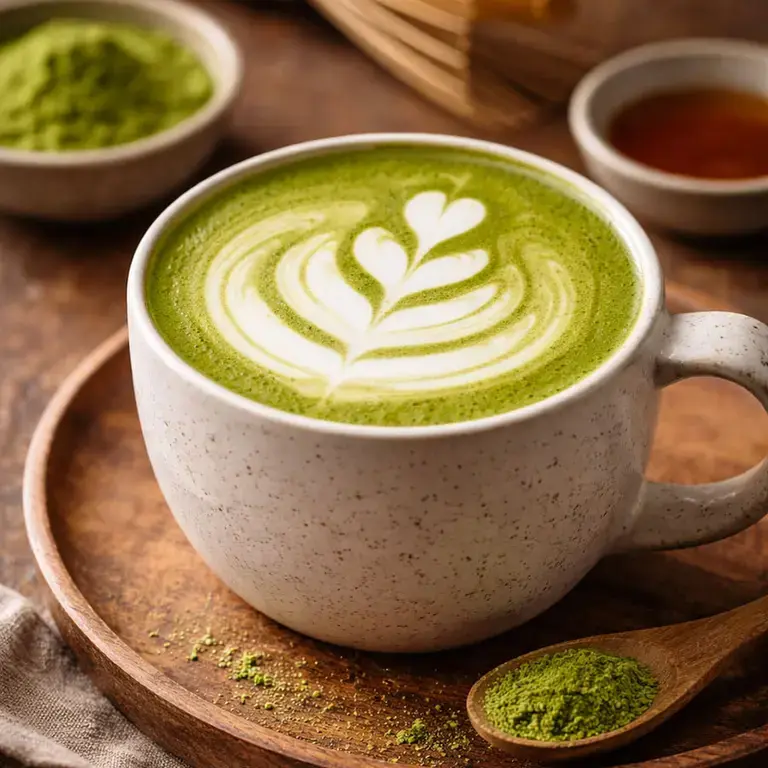

If you’re new to what a matcha latte is, start by learning about the basics of what is matcha. Matcha is a finely-ground green tea powder that's typically whisked into water or milk to create a concentrated flavor. Introduced to Zen Buddhist monks in Japan in the 12th century, it has formed a critical part of the Japanese tea ceremony ever since.
Matcha has a complex flavor with a balance of grassy freshness and deep umami richness. When the bitterness of matcha is present, it’s typically subtle and clean. Matcha also offers earthy, vegetal notes when prepared with water, and is a vibrant, striking green color. In recent years its use has grown worldwide, both in drinks and cooking.
Matcha lattes are one of the most popular ways to enjoy this tea powder, and can now be found on the menus of most reputable coffee houses. A creamy, bright green beverage, matcha is combined with hot water to create a paste and then whisked with steamed milk or your preferred non-dairy milk. It does contain caffeine and can be sweetened using honey or maple syrup, as in the recipe above.
Matcha Latte Variations
One of the most appealing parts of a matcha latte is the way it can be personalized and tailored to your taste buds. For those with a sweet tooth, make a vanilla matcha latte by swapping the maple syrup for vanilla syrup, to bring an additional sweetness to the drink.
If you’re making this drink for its colorful properties, a strawberry matcha, with strawberry syrup or mashed strawberries at the bottom of the glass, adds a vibrant color contrast that’s perfect for sharing on social feeds. For a seasonal twist in the fall, add a dash of pumpkin syrup and nutmeg to the glass for a pumpkin spice matcha latte.
If you need even more of a caffeine kick from your matcha latte, make a dirty matcha. This involves adding a shot of espresso to this recipe, for a drink that’s guaranteed to keep you alert and awake.
How to Serve and Enjoy Matcha Latte
When it comes to matcha, the temperature is important. Aim to serve it hot, but not extra hot, to avoid the bitterness of the matcha coming through. Alternatively chill the milk, for an iced variation.
In the recipe above we’ve suggested using oat milk for a slightly sweet flavor to offset the earthiness of the matcha, but you can use whole milk or any variety of non-dairy milk as preferred.
Matcha lattes are best served in a clear glass when iced, or a coffee mug for a hot drink. Enjoy with a shortbread cookie for a sweet pairing in the early afternoon or a mochi (Japanese sweet).
Storage and Preparation Notes
Matcha should be stored in an airtight container, away from light and heat in a cool, dark place. Once you’ve opened the matcha, store it in the refrigerator for the longest shelf life and maximum freshness.
When preparing matcha, always sieve it first, as it clumps easily and this texture can be hard to rectify once added to the water and milk.