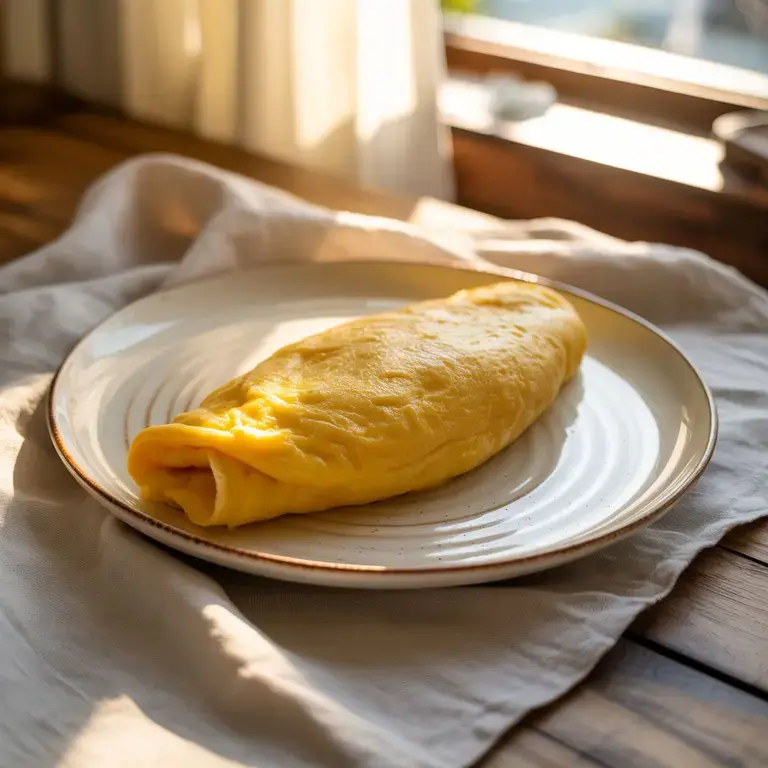

In professional kitchens chefs will usually cook a French omelette over high heat for the entirety of the time spent in the pan. If you can master this technique, you end up with a perfectly light crispy outer exterior for your omelette, with a soft, scrambled inner core. However, for most home chefs this can be tricky to get spot on without burning both your butter and omelette. In the recipe above we’ve suggested cooking over medium heat to allow you greater time and control to get the omelette right at home.
When melting the butter, make sure you add the eggs before it starts to brown. Though browning butter can be a useful technique for other dishes, when making a French omelette it’ll add an undesirable nutty and slightly bitter taste to your eggs.
After you’ve turned the omelette out onto the plate, if you find it doesn’t quite have the right cigar-shape, you can use a couple of forks to adjust the omelette’s position. To finish the dish, brush the omelette with a touch of melted butter to create a shiny effect.
If preferred you can make an omelette using only egg yolks. You’ll make the omelette using the same method above, but simply separate the egg yolks from the whites before adding them to the pan. Some chefs prefer this recipe for its richer taste and denser texture. Or take your omelette skills to the next level with a tornado omelette. Visually striking, this is the perfect option when cooking omelettes for friends and family to add an elevated touch.
The Right Pan and Technique for a Perfect Omelette
When making a French-style omelette, you need to source a skillet that has a nonstick surface. It doesn’t have to be an overly expensive option, but simply a high-quality pan that’s in good condition. These pans lose their nonstick effect quickly and once the omelette starts sticking to the pan it’s hard to rescue the dish.
To protect the pan, make sure you don’t use any metal tools. You can either use a rubber spatula or many chefs will use a wooden fork both to scramble the eggs and manipulate them in the pan. This will ensure you don’t scratch the pan while cooking and damage the nonstick surface.
Fillings to Elevate Your French Omelette
We’ve shared a basic recipe above which you can build on using different seasonings and ingredients as desired. There are varying techniques that are best to follow to add seasonings and ingredients, however. For any spices or herbs, beat these directly into the egg prior to adding to the pan. Not only does this help to distribute the seasonings evenly throughout the dish, it also gives the omelette an appealing pop of color. Fresh parsley and chives are commonly found in French omelettes, adding an irresistible freshness to the buttery flavors.
Cheese is of course another classic omelette add-in. Though you can add grated cheese to the beaten eggs, if you want to create a melted cheese center, sprinkle the cheese over the eggs once you’ve finished the scrambling process. When you start to fold the omelette the cheese will all roll into the middle and create a delicious gooey texture.
Finally, if you want to add larger ingredients to your omelette, for a classic French serving it's typical to place these on the top of the omelette, instead of cooking altogether. Opt for creamy sautéed mushrooms or braised short ribs for a sophisticated touch.