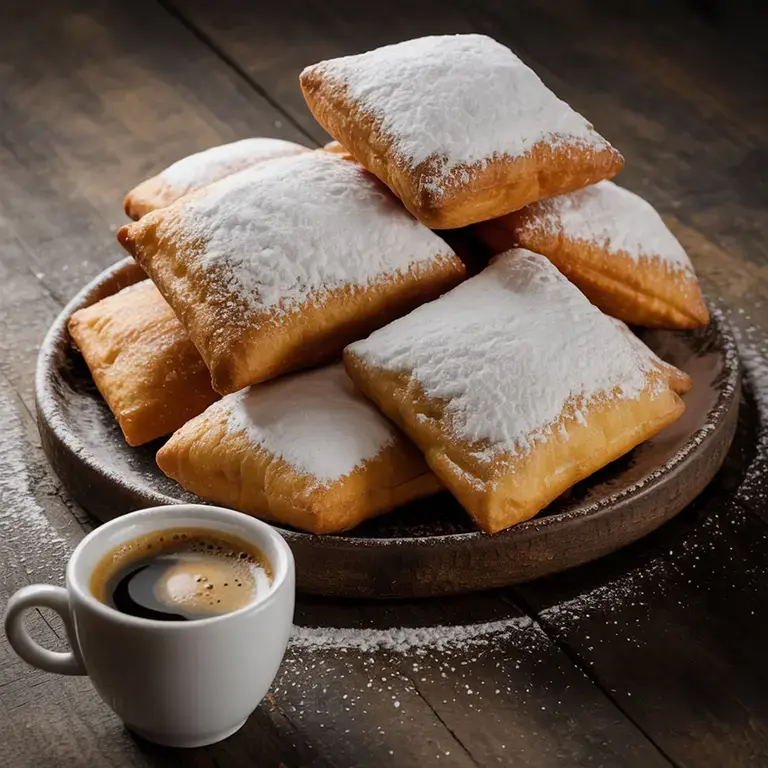

For New Orleans beignets make sure you use warm liquid for the yeast mixture. Either warm milk or water will work. The liquid needs to be at 100°F as too high a temperature will kill the yeast off. Getting this mixture just right helps create the signature fluffy exterior of beignets. Traditional beignets are also cut into squares, as suggested in this recipe. Roll the dough to around a quarter inch thickness and cut into three inch squares for a classic look.
Frying the beignets at the right temperature is also a critical step in the recipe to achieve the right texture for this sweet treat. The oil should be at 350°F and frying in batches will help to maintain the temperature of the oil. If too cool, the beignets will absorb the oil and become greasy, whereas too hot the outside of the beignets will burn before the inside has a chance to cook.
For more deep-fried food inspiration, take a look at our round-up of 17 easy recipes to try at home, including churros and dumplings.
The Origins of Beignets
If you’re wondering what a beignet is, it’s a French-style, deep-fried pastry that's puffy, golden-brown, and served with a generous helping of confectioners’ sugar. Though now deeply associated with New Orleans culture, the recipe has roots in medieval France, where cooks made fried dough treats similar to the modern French beignets we know today. The beignet pronunciation is typically French, spoken as “bay.nyay.”
In the 1700s, beignets reached North America with the French colonists who settled in Louisiana. This recipe later evolved into the square fried dough beignets commonly found today as staple treats in New Orleans bakeries. In 1862 the now world-famous Café du Monde opened, which popularized the New Orleans-style beignets, served with a side of café au lait. Once you’ve sampled an iconic beignet, take a look at our latest guide of where to eat in New Orleans for all the local food inspiration you’ll need.
How to Serve Beignets
Beignets are served hot, generously coated in confectioners’ sugar, often with a coffee or café au lait on the side. Modern recipes will sometimes include dipping sauces, such as chocolate or caramel sauce, for added indulgence.
For more indulgent dessert inspiration have a read of our article featuring eight delicious gourmet dessert ideas or try baking a savory dessert twist, with a maple bacon cupcake and rosemary cookies.