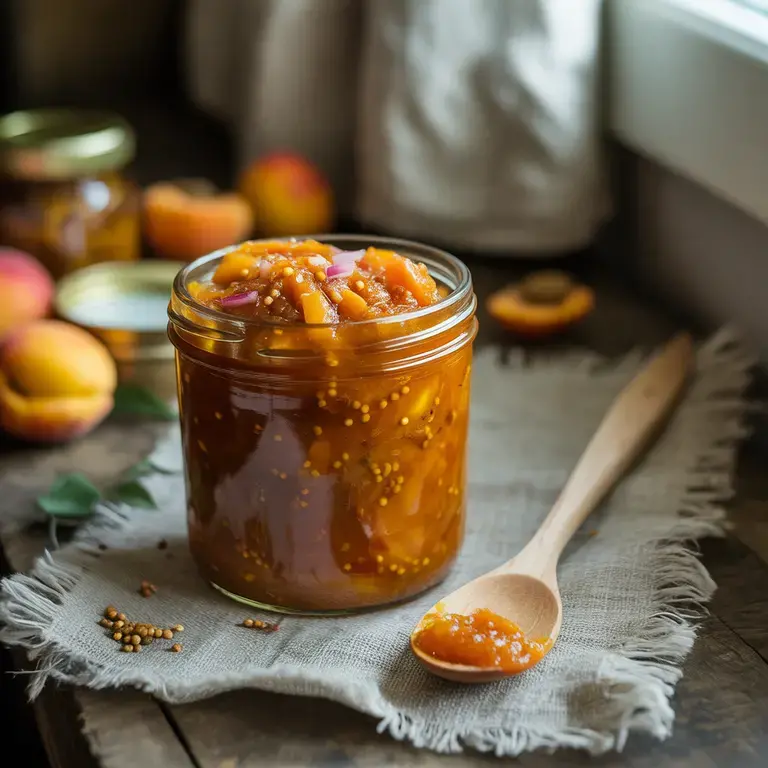

To start, you first need to pit the apricots. You can do this by carefully using a knife to halve the apricots, stopping when you hit the seed.
Separate the halves and gently squeeze the pitted half to remove the pit. Though the apricots only need to be chopped roughly, it’s a good idea to chop them into similar sizes so they cook at even rates.
Apricot chutney recipes classically call for chunky textures, but if you’d prefer a smoother chutney you can add the ingredients to a food processor before transferring into the pan to cook. In fact, the most popular chutney varieties in India tend to be used as a smooth sauce.
When the British returned home from India after the rule of the British Raj, they recreated the chutneys found in India with more local ingredients, such as apples, onions, and apricots, creating jammy, sugary, spiced reductions of fruit and chunky versions of Indian chutney. In India the smoother versions remain favorites to this day, used as dipping sauces for snacks including samosas.
If you’d like to add another Indian flavor to the chutney, you can combine the apricots with fruit, such as mangoes, to add a tropical layer. And some chefs will introduce other spices, including cayenne pepper, to bring even more heat to the condiment.
Pairings with Meat, Cheese, or Bread
The versatile flavors of apricot chutney mean it can be paired with a number of savory and sweet dishes. A delicious helping of apricot chutney with pork medallions, brings out the subtle sweetness of this meat and is a classic flavor combination.
A serving of homemade apricot chutney alongside a board of your favorite cheeses, is an irresistibly tasty way to end a dinner party. The sweet and tangy flavors pair beautifully with the creaminess of a fresh goat cheese, and contrast perfectly with hard cheeses, such as Manchego.
Lastly, to enjoy the flavors of the apricot chutney in full, try spreading onto a crusty slice of French bread. The chunky texture of the chutney contrasts appealingly with the fluffy bread and crunchy outer crust for a quick snack.
Storage and Preservation Tips
To prevent the spread of bacteria, you should properly sterilize the containers you intend to use to store the chutney in. Glass jars can be easily sterilized by being submerged in boiling water for 10 minutes in a deep saucepan, though take care that the jars don’t touch the sides of the pan while sterilizing.
Once safely in the jars, transfer the chutney to a cool, dark place, such as a pantry. The chutney should keep for at least one year in the pantry, if unopened. Once opened you’ll need to transfer the chutney to the fridge and use it within three weeks. Check for signs of spoilage, including mold, before using your chutney each time.
Making chutney is a useful way to extend the season of a flavor, and there are lots of other spring fruits you can experiment with to make preserves or chutney to have in the pantry.