
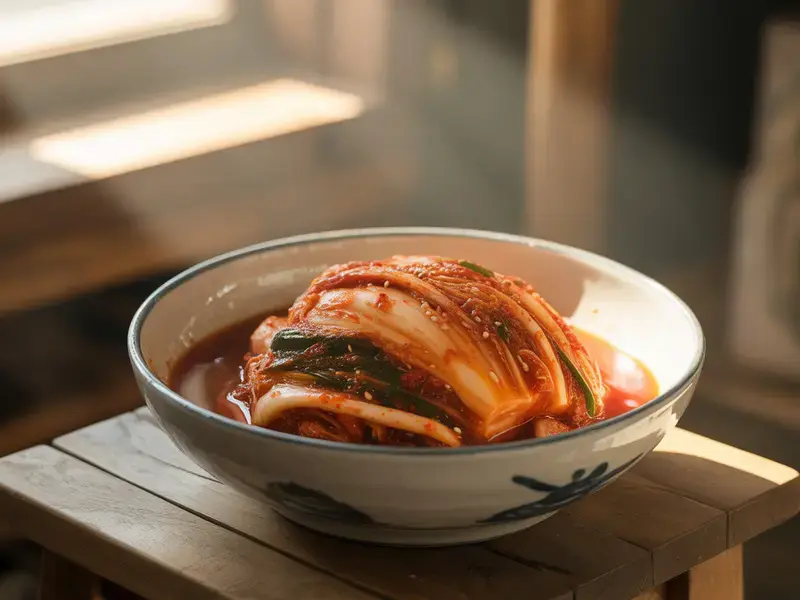
This centuries-old dish, made from seasoned and fermented vegetables, offers a complex balance of heat, acidity, and umami. Beyond its traditional roots, kimchi has evolved into a culinary inspiration across cultures, appearing in everything from classic stews to fusion dishes like kimchi mac n cheese.
What Is Kimchi?
At its core, kimchi is a Korean side dish made by fermenting vegetables—most commonly napa cabbage or radish—with salt, chili, garlic, and spices. The process not only preserves the vegetables but also transforms their flavor and texture through fermentation, creating a dish that’s simultaneously refreshing, spicy, and slightly sour.
While cabbage kimchi (baechu kimchi) is the most famous, there are over a hundred regional variations. Each family and season brings subtle differences—some include seafood-based sauces for umami depth, while others rely purely on vegetables and spice for brightness.
A milder, non-spicy version known as white kimchi (baek kimchi) omits chili pepper altogether, allowing the natural sweetness and crunch of the vegetables to shine. This variation highlights the diversity of kimchi, proving that the dish’s essence lies as much in its balance of flavors as in its heat.
What Is Kimchi Made Of?
The ingredients of kimchi vary, but the foundation remains consistent.
- Main vegetable: Typically napa cabbage, Korean radish (mu), or cucumber.
- Salt: Draws out moisture and helps preserve the crispness of the vegetables.
- Seasoning paste: Made from gochugaru (Korean chili flakes), garlic, ginger, and green onions.
- Fermentation starter: Often includes fish sauce, salted shrimp, or anchovy paste for umami; vegan versions skip these and still achieve depth through seaweed or soy sauce.
The vegetables are salted, rinsed, and coated with the seasoning mixture before being packed tightly into jars or crocks to ferment. Over time—anywhere from a few days to several weeks—the flavors intensify and meld, producing kimchi’s signature tangy-salty-spicy character.
How Does Kimchi Taste?
The taste of kimchi is as vibrant as its color. Expect a bold combination of salty, sour, spicy, and umami-rich notes, with a refreshing crunch that keeps each bite lively. The fermentation process produces lactic acid, giving kimchi its characteristic tang similar to yogurt or sauerkraut, but with far more complexity from chili, garlic, and ginger.
Freshly made kimchi is crisp and lightly salted, while well-aged kimchi develops deeper sourness and umami intensity. This aging quality is what makes it so versatile—it can be eaten raw, pan-fried, or cooked into dishes where its acidity balances richness, such as stews or grilled meats.
Different varieties also offer distinct flavor experiences:
- Classic cabbage kimchi: Spicy, savory, and balanced.
- Radish kimchi (kkakdugi): Crisp, peppery, and juicy.
- White kimchi: Mild and refreshing, with subtle garlic and ginger notes.
The diversity of taste and texture has made kimchi a favorite ingredient beyond traditional Korean cuisine—its brightness can elevate even Western dishes like burgers, tacos, or creamy pastas.
How to Eat and Use Kimchi in Cooking
While kimchi is traditionally served as a side dish (banchan), it’s also a powerful ingredient that adds depth and acidity to countless preparations.
Here are some refined ways to use kimchi in cooking.
- As a side or topping: Serve it alongside rice, grilled meats, or fish to cut through richness.
- In soups and stews: Kimchi jjigae (kimchi stew) combines aged kimchi with tofu or pork for a comforting, spicy meal.
- In fusion dishes: Use chopped kimchi to spice up fried rice, tacos, or modern twists like kimchi mac n cheese, where the fermented heat contrasts perfectly with creamy sauces.
- In condiments: Blend kimchi into mayonnaise or aioli for sandwiches or seafood dishes, creating a tangy, umami-driven spread.
Chefs often pair kimchi with ingredients that balance its acidity—creamy elements like cheese, eggs, or avocado work beautifully, while sweet components such as honey or roasted vegetables create harmony on the palate.
Can You Make Kimchi at Home?
Absolutely—and making kimchi at home is a rewarding introduction to the world of fermentation. The process is simple but requires attention to cleanliness and time.
Basic method:
- Cut and salt the cabbage, letting it rest until softened.
- Rinse, drain, and mix with a paste made from chili flakes, garlic, ginger, and optional fish sauce or soy sauce.
- Pack tightly into sterilized jars, leaving room for expansion.
- Let it ferment at room temperature for 1–3 days, then refrigerate to slow the process.
The longer it ferments, the tangier and more complex the flavor becomes. White kimchi follows the same steps but omits chili for a lighter, subtler profile.
For enthusiasts of fermented foods, experimenting with kimchi opens the door to countless variations—different vegetables, spice levels, and aging times all produce unique results.
Vibrant, nutritious, and endlessly adaptable, kimchi embodies the art of fermentation: the transformation of humble ingredients into something alive with flavor and history. Whether you enjoy it simply as a side or folded into kimchi mac n cheese, this Korean classic continues to inspire chefs and food lovers around the world—one fiery, tangy bite at a time.