
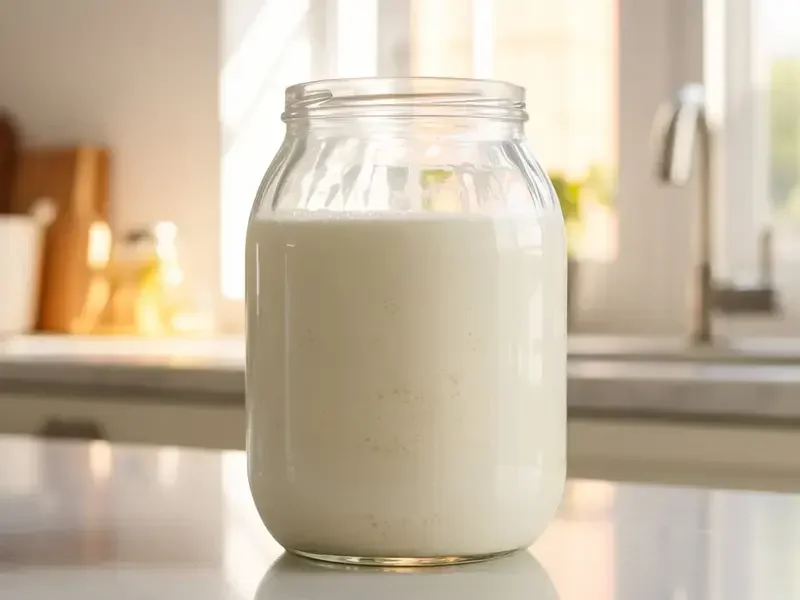
Originating from the Caucasus Mountains, this lightly effervescent drink has become a modern staple for chefs and health enthusiasts alike. Whether enjoyed on its own or used in cooking, kefir captures the art of milk fermentation, blending tradition and innovation in every sip.
What Is Kefir Made Of?
Kefir is a fermented dairy beverage made by combining milk with kefir grains—a symbiotic culture of bacteria and yeasts (often abbreviated as SCOBY). These grains resemble tiny cauliflower florets and contain lactose-fermenting microorganisms that convert milk sugars into lactic acid, producing kefir’s signature tang and gentle fizz.
Traditional kefir is typically made with cow’s milk, but it can also be prepared with goat, sheep, or plant-based milks like coconut or almond for a vegan variation.
During milk fermentation, the cultures break down lactose, making kefir easier to digest than fresh milk while enriching it with probiotics, vitamins, and minerals. The longer the fermentation, the tangier and thicker the texture becomes.
Homemade kefir follows a simple process:
- Add kefir grains to fresh milk.
- Cover and leave at room temperature for 18–24 hours.
- Strain the grains (which can be reused) and refrigerate the liquid to slow fermentation.
This process transforms milk into a living, nutrient-rich drink with subtle variations in flavor depending on fermentation time and the type of milk used.
Flavor and Texture Explained
The taste of kefir is complex—refreshingly tart with a slight effervescence, reminiscent of drinkable yogurt but more lively. Some describe it as a cross between yogurt and buttermilk, with faint yeasty or fruity notes that result from natural fermentation.
Its texture varies from light and pourable to creamy and thick, depending on the fermentation period and milk type. Cow’s milk kefir tends to be smooth and mild, while goat’s milk kefir is tangier and more aromatic. Plant-based kefirs, such as those made from coconut milk, add a hint of natural sweetness.
Kefir’s acidity provides a clean contrast that makes it ideal for pairing with both sweet and savory dishes. It can replace yogurt or cream in recipes, adding depth without heaviness—a reflection of how fermented foods balance richness and brightness in refined cooking.
How to Use Kefir in Cooking
Beyond drinking it plain, kefir is a remarkably versatile ingredient in the kitchen. Its natural tang and subtle effervescence bring balance and freshness to many dishes.
- In breakfast dishes: Pour over granola, blend into smoothies, or use in overnight oats for a probiotic boost.
- In baking: Substitute kefir for buttermilk or yogurt in pancakes, muffins, or cakes to create tender crumbs and delicate tang.
- In dressings and sauces: Combine kefir with herbs, lemon, and olive oil for a lighter version of ranch or Caesar dressing.
- In savory recipes: Use it as a marinade for fish or chicken—its acidity helps tenderize proteins while infusing subtle flavor.
- In desserts: Blend with honey and berries for a refreshing mousse or use it as a base for cultured ice cream.
For chefs exploring fermented foods, kefir adds not only flavor but also structure. Its acidity balances fat and sweetness, while its live cultures bring a unique, natural complexity to both modern and traditional recipes.
Storage, Fermentation, and Shelf Life
Proper handling ensures that kefir retains its flavor and beneficial properties. Once fermented, it should be refrigerated to slow the activity of the cultures.
- Storage: Keep kefir in a sealed glass bottle in the refrigerator. It remains fresh for about one to two weeks, though the flavor continues to develop.
- Fermentation control: Warmer temperatures speed up fermentation, resulting in a tangier, thicker product. Cooler conditions yield a milder taste.
- Shelf life: Store-bought kefir typically lasts until its expiration date, while homemade kefir can be refreshed continuously by reusing the grains. If it separates into curds and whey, it’s still safe—simply stir before serving.
Because kefir is a living product, each batch has its own personality—reflecting the milk, microbes, and environment that shaped it.
Delicate yet powerful, kefir embodies the elegance of natural fermentation. From its ancient origins to its place in modern gastronomy, this cultured drink bridges nutrition and flavor, offering endless opportunities to experiment, pair, and savor. Whether sipped plain or folded into a recipe, kefir proves that true refinement often begins with the simplest act: letting nature do its work.