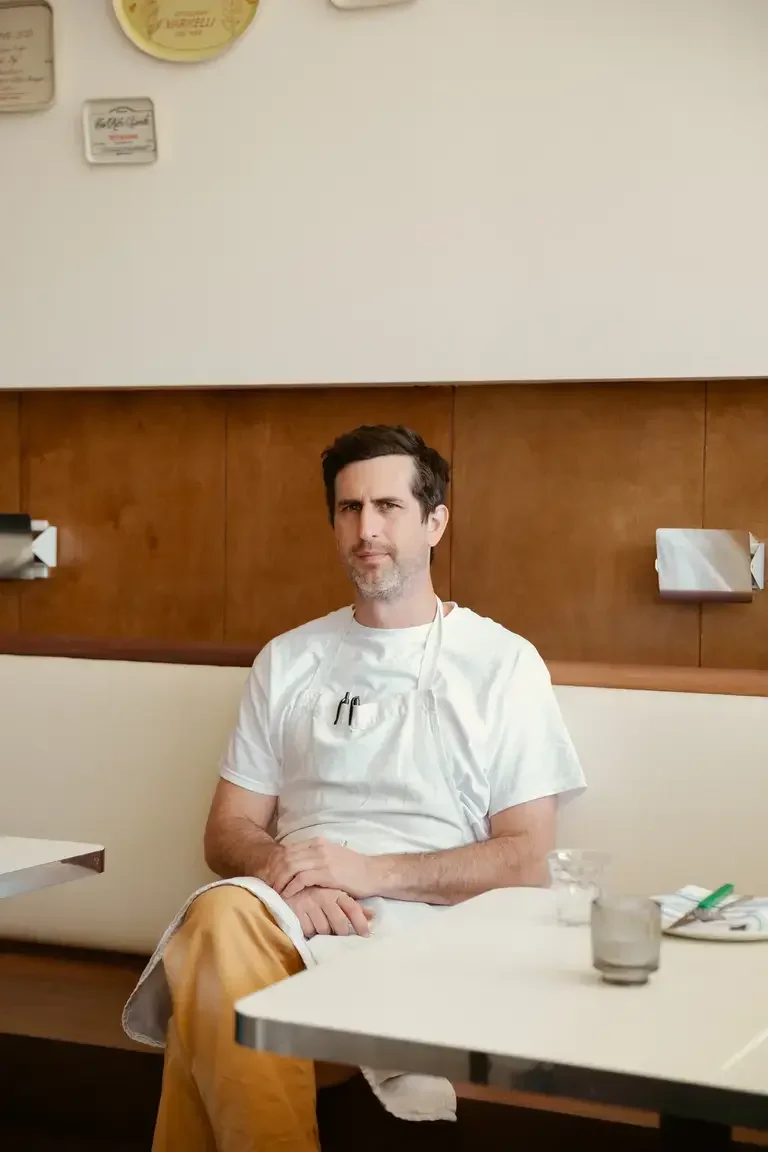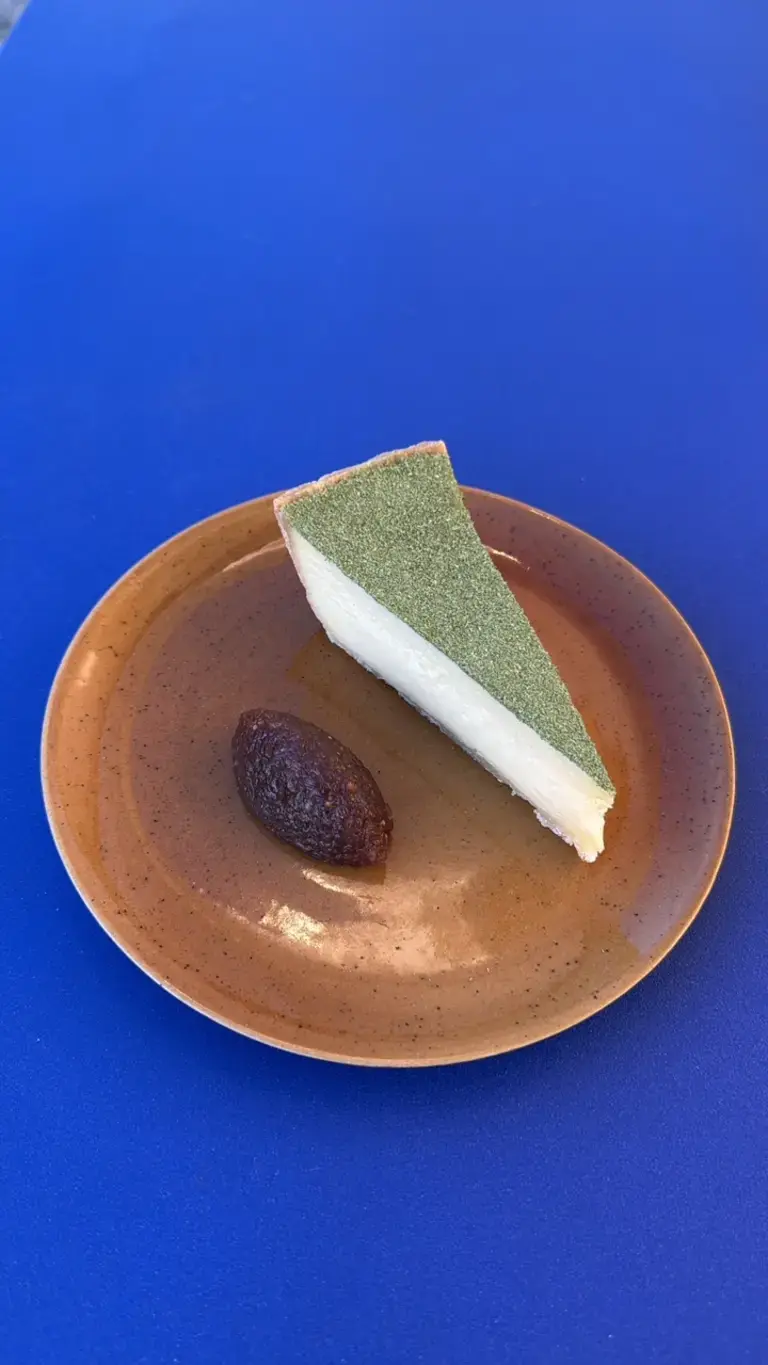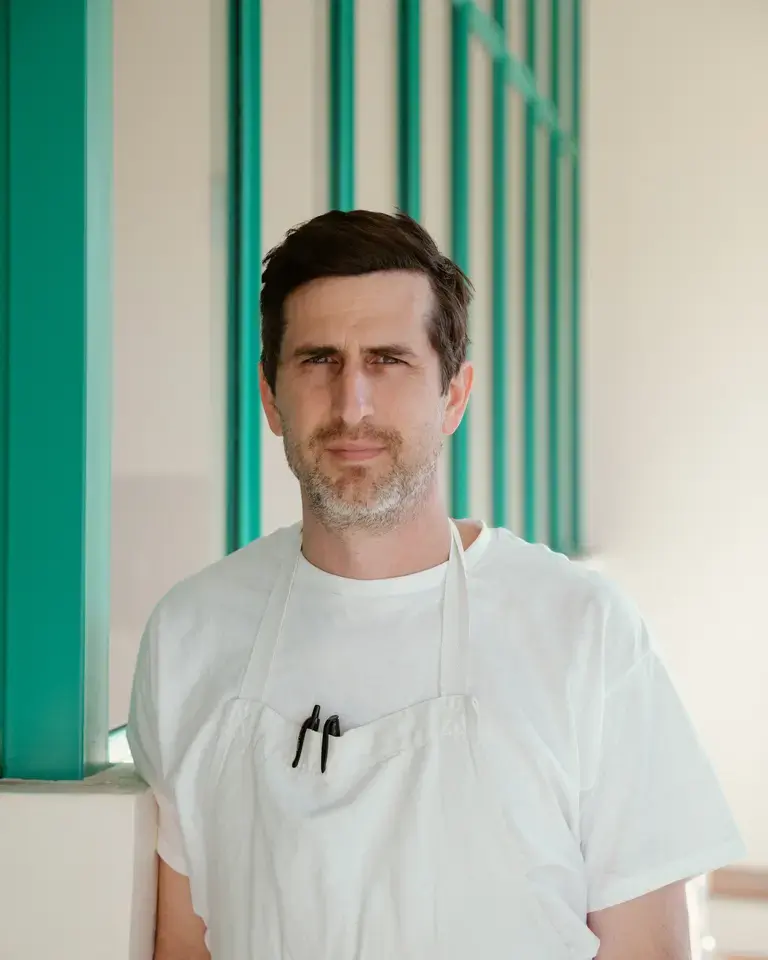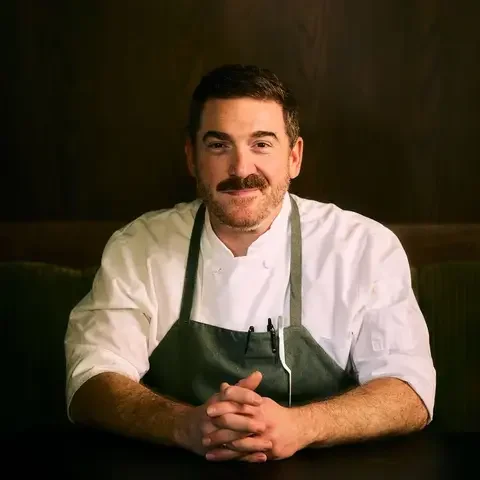
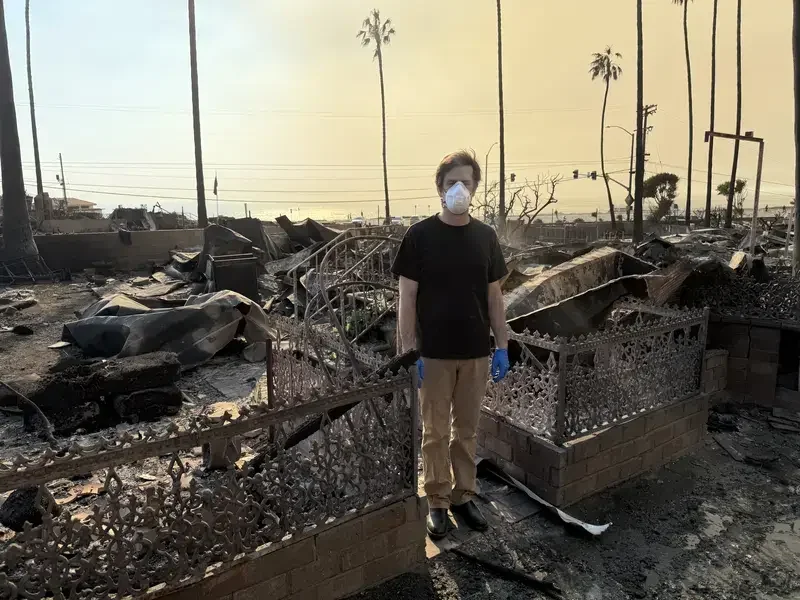
As my family fled Altadena on the night of January 7, 2025, escaping the growing flames of the Eaton Canyon Fire, I punched in the number for one of my best friends, Travis Hayden. I had seen him just a few hours earlier, interviewing him for my podcast, Snacky Tunes, about his role as the executive chef at his new restaurant, Bar Etoile, alongside his partners, Julian Kurland and Jill Bernheimer. The call, however, was not a follow-up to our discussion about his French-meets–LA farmers market bistro opening menu; it was a safety check on him and his bungalow in the Pacific Palisades.
“It’s all gone,” he told me.
A few hours later, my family would follow suit, as the wildfire leveled our entire community.
Where It All Started
I met Travis back in the sweaty mid-aughts in a fast-changing Williamsburg. Brought together by shared passions for music (he worked as a manager in the industry), endless summer hangs, and running around the city until dawn, our true shared love was the burgeoning food scene happening in our backyard. These were the halcyon days of Tiki Disco at Roberta’s and late-night meals at Dressler—a time when we saw kids our age taking over the culinary conversation and sneaking us in the back door.
“That’s when I started exploring food and developing a palate,” Travis remembers. “The first meal that I had when I moved to Williamsburg was at Diner, which was around the corner from my apartment. It changed my relationship to food because I was like, ‘Oh, this is what food is.’ They’re using items from farmers markets, and they’re pairing it with really good wine. It was a whole new world that I had never experienced, and I became more and more interested in cooking food for myself at that time.”
I had recently sold my first cooking show to IFC (Dinner with the Band) and converted an old loft on North 4th and Wythe (now a J.Crew) into a 1,200-square-foot culinary studio with all the kitchen equipment and culinary toys one could want. When the show wasn’t taping, we’d throw decadent potlucks where we tested new recipes, shared endless bottles of natural wine, and tried obsessively to perfect the skin on Thomas Keller’s roasted chicken. While my dishes would usually turn out respectably, roasted bone marrow with fresh parsley, a nod to Robert et Louise, I began to notice that Travis was taking his cooking to another level.
“This is the first time I started cooking recipes, asking questions,” Travis reflects. “We were surrounded by chefs. We had access to them. I remember making clam chowder. Brian Ray from Buddakan was there. He tasted it and said, ‘More salt.’ I put in more salt. He tasted it again. He said, ‘Add even more salt.’ I put in what I thought was a mountain of salt. I thought it was way too much salt, but he reminded me I was making two gallons of clam chowder. Of course, it needed all that salt, but in my mind, I couldn’t conceive that.”
We felt we were in the middle of it all, music, culture, food, and we were, surrounded by chefs, writers, DJs, and people making things happen. Brooklyn was a living experiment, and cooking was the most visceral way to take part in it. But by 2013, things had shifted in the music industry, and Travis began to look west.
“I had started my own management company and merged into a bigger one in LA to save the business,” says Travis, “but my heart wasn’t in it, especially as I crossed into my thirties.”
He moved that same year, and I followed two years later. Despite the growing issues in the music and media fields, there was a growing movement in the culinary community, similar to what we had felt in the early 2000s. While it was still defining itself, the farmers markets were better than anything we’d seen back east, and the creative energy stemming from those restaurants was more infectious than any other scene we were a part of, professional or otherwise.
“Moving to LA was so different from the established New York dining scene,” he said. “LA had its own thing going on. Animal and Night + Market were the most exciting restaurants. I moved to the Westside on purpose, and one place I loved was Rustic Canyon. I went on a recommendation from our friend Khuong, and I had never tasted food like that. I thought, ‘I want to make food like this.’ If I could just learn how to make food like this, I’d be really happy.”
Meanwhile, the music industry was in freefall, and Travis was feeling it firsthand. “I had been out here for four years, trying to save my company but wanting to leave for quite some time,” he told me. “My heart wasn’t in it. Ironically, as I became more successful, the less creative I was. I was at a desk doing contracts. It didn’t excite me. I thought of myself at 50 or 60, and it disgusted me.”
So he walked away.