
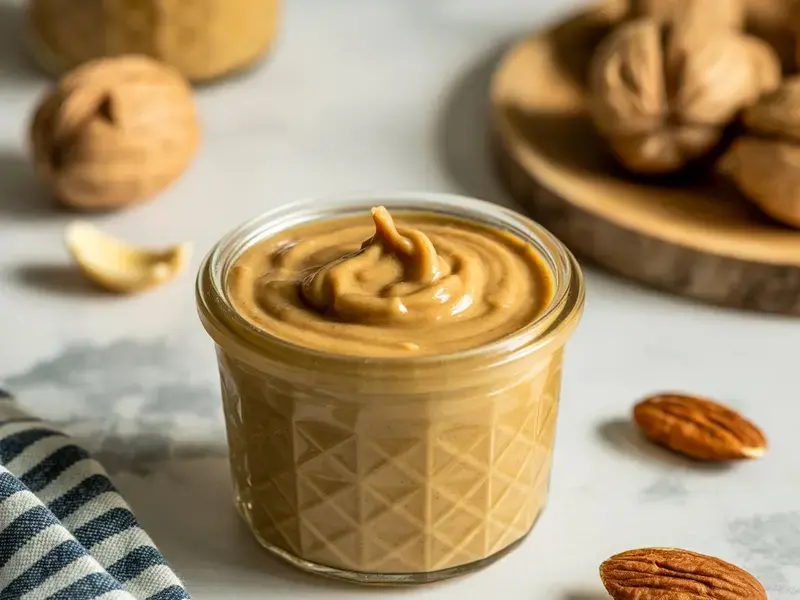
Chefs and home cooks alike use them to add creaminess, depth, and natural sweetness to both savory and sweet dishes. Whether used as a sauce base, dessert component, or clever butter substitute, nut butters bring a luxurious texture and a subtle complexity that elevate every bite.
What Are Nut Butters?
At their core, nut butters are made by grinding different roasted nuts until their natural oils are released, transforming them into a smooth, spreadable paste. While peanut butter is the most familiar, today’s culinary scene embraces a vast range of alternatives—from almond and cashew to pistachio and macadamia.
The beauty of nut butters lies in their simplicity: most contain just one ingredient—the nut itself. This purity allows the true character of each nut to shine through, offering a spectrum of flavors that range from mild and buttery to bold and toasted.
They’re also naturally rich in protein, healthy fats, and micronutrients, making them a popular choice in healthy nut butter recipes. And beyond nutrition, they offer remarkable functionality in the kitchen, lending silkiness to sauces, moisture to baked goods, and stability to emulsions and dressings.
Types of Gourmet Nut Butters
Modern gastronomy has embraced an array of gourmet nut butters, each with a distinctive flavor profile and culinary personality.
- Almond butter: Delicate, slightly sweet, and versatile. Its subtle flavor makes it ideal for desserts, smoothies, and even savory sauces inspired by Middle Eastern tahini.
- Cashew butter: Naturally creamy and mild, cashew butter creates luscious textures in frostings, soups, and vegan cheese alternatives. Its sweetness pairs beautifully with tropical fruits or chocolate.
- Hazelnut butter: Deeply aromatic with roasted notes—often used in pastry creams, ganache, or as a sophisticated croissant filling.
- Pistachio butter: Elegant and vividly green, pistachio butter lends a luxurious touch to both sweet and savory creations, from macarons to seafood sauces.
- Walnut or pecan butter: Earthy and slightly bitter, these are excellent in salad dressings, pasta sauces, and autumnal desserts.
Some chefs go even further, blending nuts and seeds—such as almond-hazelnut or cashew-sesame—to create custom nut butter blends that balance sweetness, richness, and depth.
How to Use Nut Butters in Refined Recipes
Far from being limited to breakfast spreads, nut butters have become key ingredients in modern fine dining. Their rich, smooth texture adds body and umami to dishes without the heaviness of cream or butter.
Savory applications
- Whisk almond or cashew butter into vinaigrettes or sauces to create creamy, plant-based emulsions.
- Use peanut or pistachio butter as a base for satay-style sauces, enhancing grilled vegetables, chicken, or tofu.
- Stir walnut butter into pasta sauces for a silky, nutty finish that complements truffle or aged cheese.
Sweet preparations
- Incorporate nut butters into pastries, mousses, or ice creams for richness and complexity.
- Pair hazelnut or cashew butter with chocolate or caramel for refined desserts.
- Drizzle pistachio butter over panna cotta or yogurt for an elegant garnish.
They also serve as a brilliant substitute for butter in baking—particularly in vegan or health-conscious recipes—adding flavor and texture while reducing saturated fats. The natural oils in nut butters help keep cakes and cookies moist without compromising structure.
In fine dining, chefs often use nut butters as a flavor bridge, uniting contrasting elements on the plate: sweet with salty, creamy with crisp, or fruit with spice.
Storage Tips and Pairings
Because nut butters contain natural oils, they’re best stored in a cool, dark place—ideally refrigerated once opened to preserve freshness and prevent separation. If the oils rise to the surface, simply stir before using.
For pairing inspiration, consider the inherent flavor of the nut:
- Almond butter pairs beautifully with citrus, figs, and honey.
- Cashew butter complements coconut, ginger, and dark chocolate.
- Hazelnut butter enhances coffee, caramel, and ripe berries.
- Pistachio butter pairs well with seafood, saffron, or rose water for a Mediterranean touch.
When choosing healthy nut butters, opt for varieties without added sugar or hydrogenated oils. For a gourmet twist, explore artisan producers who lightly roast their nuts or add subtle infusions—like sea salt, vanilla, or smoked chili—for balance and sophistication.
Silky yet wholesome, nut butters embody the modern culinary ideal: simple ingredients transformed through craft and creativity. Whether whisked into sauces, baked into desserts, or spread on fresh sourdough, they prove that even the humblest ingredient can deliver gourmet elegance—one spoonful at a time.