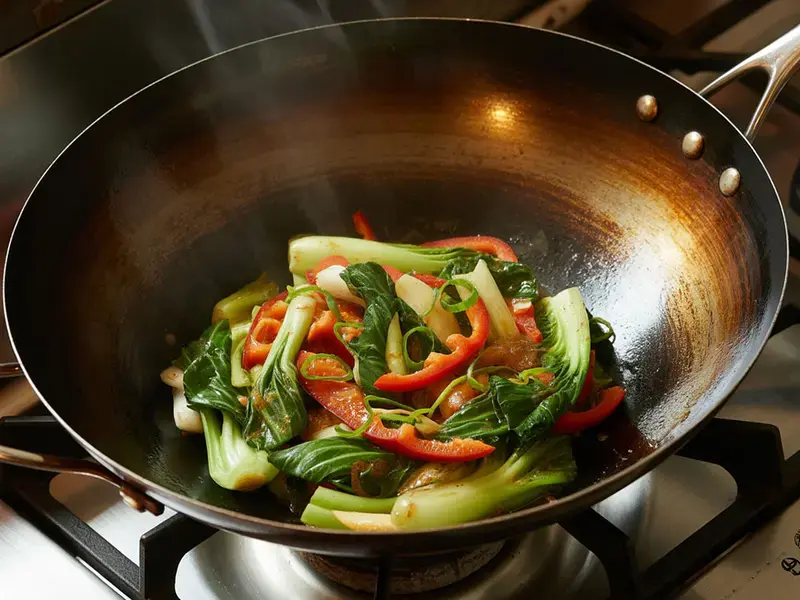
Learning how to season a wok is the first step toward mastering Asian cooking at home. That black, glossy patina you see on a chef's well-used wok did not happen by accident. It developed through deliberate seasoning and years of high-heat cooking. Seasoning transforms a raw metal pan into a naturally nonstick surface that improves with every use, imparting the coveted “wok hei,” that defines great stir-fried dishes.
Below is a complete guide to seasoning a wok: what the process actually does, which woks require it, instructions for first-time seasoning, the best oils to use, and how to maintain your wok's patina for years of excellent cooking.
What Does It Mean to Season a Wok?
Seasoning a wok involves building up thin layers of polymerized oil on the cooking surface. When oil is heated past its smoke point on bare metal, it undergoes a chemical transformation, bonding to the surface and creating a hard, slick coating. This coating, or patina, serves multiple purposes that make the wok more functional.
First, the patina creates a naturally nonstick surface. Food releases cleanly without sticking, allowing you to toss ingredients freely and achieve the high-heat searing essential to the stir-fry technique. Second, seasoning protects the metal from rust as the oil barrier prevents water from reaching the bare metal. Third, a seasoned surface contributes flavor. Each cooking session adds to the patina, building layers of seasoning that impart subtle complexity to your food.
The process of seasoning a wok is ongoing. Initial seasoning establishes the foundation, but the patina continues developing through regular use.
Do All Woks Need Seasoning?
Not every wok requires seasoning, and understanding which materials need treatment prevents wasted effort and potential damage.
- Carbon steel woks: These absolutely require seasoning. Carbon steel is the traditional material for woks, prized for its responsiveness to heat changes and ability to develop an excellent patina.
- Cast iron woks: Like carbon steel, cast iron requires seasoning to prevent rust and create nonstick properties.
- Stainless steel woks: Understanding how to season a stainless steel wok is actually straightforward; you do not need to, as it does not rust or develop a patina.
- Nonstick woks: Factory-coated nonstick woks require no seasoning and should never be seasoned as this damages the coating.
- Pre-seasoned woks: Some manufacturers sell carbon steel woks with a factory-applied seasoning. These benefit from additional seasoning at home but can be used immediately.
How to Season a Carbon Steel Wok for the First Time
Learning how to season a wok for the first time involves several stages that strip away factory coatings and build up protective oil layers.
What You'll Need
You need your new carbon steel wok, dish soap, a scrubbing sponge or steel wool, paper towels, an oil with a high smoke point, long-handled tongs, and excellent ventilation.
Step 1: Remove Factory Coating
New carbon steel woks have a protective coating that prevents rust during shipping and storage. This coating must be completely removed before seasoning.
Fill your sink with hot, soapy water. Scrub the entire wok inside and out with an abrasive sponge or steel wool until the water runs clear and the metal feels clean. Rinse thoroughly and dry immediately with a clean towel. Then place the wok over low heat for a minute to evaporate any remaining moisture.
Step 2: Heat the Wok
Place the clean, dry wok over high heat. As it heats, the metal will begin changing color. The silver steel will turn golden, then blue, then dark gray or black in patches.
Rotate the wok over the burner, tilting it so all surfaces reach high temperature and change color. This process takes 10 to 15 minutes. The wok will smoke slightly and may smell metallic. When the entire interior has darkened, remove from the heat and let it cool until warm but handleable.
Step 3: First Oil Application
Add a tablespoon of high-smoke-point oil to the warm wok. Using tongs to hold the paper towels, spread the oil across the entire interior surface in a thin, even layer. Wipe away excess oil. Too much oil creates a sticky, uneven surface. Too few leaves gaps in protection.
Step 4: Heat Again
Return the oiled wok to high heat. The oil will begin smoking almost immediately. Continue heating until the smoking subsides, indicating the oil has polymerized and bonded to the metal. Rotate the wok to ensure all surfaces receive even heat for five minutes.
Remove from heat and allow to cool slightly. The wok should now appear darker, with a subtle sheen rather than the raw metallic look it had before.
Step 5: Repeat
Repeat the oil application and heating process two or three more times. Each layer builds upon the last, creating a durable, effective patina. By the final repetition, the wok should look noticeably darker and feel smoother to the touch.
Step 6: Cook Something
The best way to reinforce initial seasoning is to cook an easy recipe using plenty of oil and aromatic ingredients like ginger, scallions, and garlic. The cooking process continues building the patina while testing your seasoning success.
Alternative Method: Oven Seasoning
Oven seasoning offers an alternative approach to how to season a wok. After removing the factory coating and drying the wok completely, apply a thin layer of high-smoke-point oil to all surfaces. Wipe away excess until the surface appears nearly dry.
Place the oiled wok upside down in an oven preheated to 450°F to 500°F (230°C to 260°C), positioning a baking sheet below to catch any drips. Bake for one hour, then allow the wok to cool inside completely. Repeat this process two or three times.
Best Oils for Seasoning a Wok
The ideal oil has a high smoke point, polymerizes effectively, and leaves no unpleasant flavors.
- Flaxseed oil: Offers excellent polymerization, though it can become sticky if applied too thickly. Has a lower smoke point than some alternatives.
- Rapeseed oil: High smoke point and neutral flavor make it a popular choice for both seasoning and cooking.
- Vegetable or canola oil: Affordable, widely available, and effective. These neutral oils work well for most cooks.
- Peanut oil: Traditional choice in Chinese cooking with a high smoke point and subtle flavor that complements Asian dishes.
- Avocado oil: Its very high smoke point makes it excellent for seasoning, though it is more expensive than other options.
Avoid butter, olive oil, and other low-smoke-point fats for seasoning.
How to Maintain Wok Seasoning
Proper maintenance keeps your seasoning strong and your wok performing beautifully for decades.
- Clean immediately after cooking: Rinse the hot wok under warm water, using a bamboo brush or non-abrasive scrubber.
- Dry thoroughly: Place the cleaned wok over low heat for a minute to evaporate all moisture.
- Apply protective oil: While still warm, wipe a thin layer of oil over the interior surface before storing.
- Store properly: Keep your wok in a dry location.
- Use regularly: Each session adds to the seasoning, especially high-heat cooking with oil.
- Re-season when needed: If your wok develops rust, sticky patches, or significant seasoning loss, strip it and re-season from scratch following the initial process.