
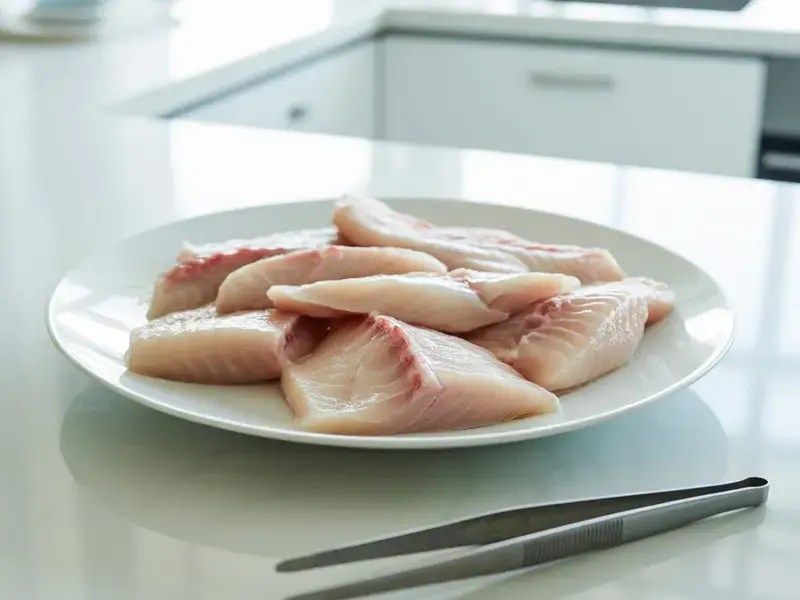
Whether it’s a delicate sole, a firm bass, or a richly flavored salmon, knowing how to clean a fish is a fundamental skill that transforms cooking from routine to refined. With a few essential tools and the right technique, you can handle different types of fish like a professional chef—preserving their texture, flavor, and presentation.
Tools You Need to Clean a Fish
Before you begin, gather the proper tools—sharpness and precision are key to achieving clean, even cuts.
- Fillet knife: A flexible, razor-sharp blade that glides smoothly along the fish’s bones and skin.
- Scaling tool or knife: Used to remove the outer scales without damaging the skin.
- Cutting board: Non-slip and large enough to accommodate the whole fish.
- Kitchen shears: Ideal for trimming fins and tail.
- Clean towels or paper towels: To keep your grip steady while handling slippery fish.
It’s best to work near a sink for easy rinsing, with all your tools sanitized and ready. Keeping a bowl of cold water nearby helps rinse away scales and blood, ensuring a pristine work surface throughout the process.
Step-by-Step Guide to Cleaning a Fish
- Rinse and inspect: Start by rinsing the fish under cold running water to remove any surface slime or debris. Pat it dry with a towel so it’s easier to handle.
- Remove the scales: Hold the fish firmly by the tail and scrape from tail to head using a scaler or the back of a knife. Do this on both sides until the skin feels smooth. Rinse to wash away loose scales.
- Make the first incision: Place the fish on its side. Insert your knife just behind the gills and cut diagonally toward the head until you reach the backbone—but don’t slice through it yet.
- Gut the fish: Turn the blade toward the belly and make a shallow cut from the anal vent up to the base of the head. Carefully remove the internal organs with your hands or a spoon, being mindful not to rupture the gallbladder, which can impart bitterness.
- Rinse the cavity: Clean the inside thoroughly under cold water, ensuring no blood or membrane remains. For some types of fish, such as bass or trout, a thin dark line along the backbone (the bloodline) can be scraped away for a cleaner taste.
- Optional—remove the head and fins: Depending on your recipe, you can keep the head for presentation or remove it for filleting. Trim fins with kitchen shears if desired.
Once gutted and cleaned, your fish is ready to be scaled, filleted, or cooked whole depending on the preparation.
Tips for Scaling and Filleting
Scaling and filleting require patience and practice, but with the right touch, you’ll achieve restaurant-level results.
Scaling
- Always scale before gutting if you plan to cook the fish whole.
- Work slowly to avoid tearing the skin, which enhances both presentation and flavor retention during cooking.
- Cover your workspace with paper towels to catch stray scales—they can scatter easily.
Filleting
- Lay the cleaned fish on its side and make a precise cut just behind the gills, down to the backbone.
- Run the knife gently along the bones, using smooth, long strokes rather than sawing motions.
- Lift the fillet off the frame, keeping your blade angled slightly toward the bones to minimize waste.
- Repeat on the other side.
- To remove the skin, place the fillet skin-side down, hold the tail end, and slide the knife between the skin and flesh at a shallow angle—using the same method chefs employ when skinning salmon.
Different species require slight adjustments: flat fish like flounder have four fillets instead of two, while oily fish like mackerel or sardines benefit from gentler handling to preserve their delicate flesh.
How to Store Fresh Fish
Proper storage preserves the freshness and flavor of your cleaned fish until it’s time to cook.
- Keep it cold: Place cleaned fish in a shallow dish over ice, covered loosely with plastic wrap or parchment. Replace the ice as it melts.
- Refrigerate immediately: Fresh fish should be used within one to two days. Store fillets in the coldest part of the refrigerator (ideally around 32°F / 0°C).
- Freezing: If freezing, pat the fish dry, wrap tightly in plastic and foil, and use within three months to maintain texture.
- Avoid soaking: Excess moisture affects flavor and texture—dry fish sears and bakes more evenly.
For optimal results, let refrigerated fish rest at room temperature for about 15 minutes before cooking—this ensures even doneness, whether you’re grilling, steaming, or baking.
Mastering how to clean and prepare a fish is more than a technical exercise—it’s a way to respect the ingredient itself. Each step, from scaling to filleting, highlights precision, care, and the pursuit of freshness that defines fine dining. Once you’ve learned this skill, a world of elegant seafood dishes—from pan-seared bass to aromatic baked trout—becomes yours to create.