Sorry, you need to enable JavaScript to visit this website.
David Gelb

David Gelb on Bringing Chef's Table to Life

8 Minute read

The biggest frustration of the show was always built into its premise: you could watch and hear these stories, but you could never taste the food. For ten years, people have come up to me and said some version of, “I watched the Francis Mallmann episode and I needed to be there, at that fire.” That longing was the show's one unsolvable problem until it occurred to us it didn't have to be. The festival is our answer to a decade of people asking how to get inside the screen. Park City is us finally opening the door and saying, come in, sit down.

The show was never really about food. It's about why these people cook, the human story under the plate. So the festival had to carry that same idea, not just line chefs up behind tasting stations. My partner Justin Connor and I took inspiration from Ein Prosit in Udine, Italy, where the whole town becomes the venue and you genuinely live a day in the life of the chefs. That's why we're taking over Park City's restaurants for one-time-only lunches and dinners, woven together with demonstrations and conversations, so you understand the person before you eat their food. On the show, the meal is the final act, after you've earned the emotional context. We built the festival the same way: story first, then the plate lands and it means something.

A lot of them treat the chef as a vendor and the guest as a wristband. You wait around, you get two bites off a tray, you never actually meet the person who made it, and you leave overstuffed and somehow empty. The other mistake is scale for its own sake. Ten thousand people in a convention hall is the opposite of intimacy, and intimacy is the whole point of what we do. So we went the other direction: smaller, curated, built around real seated meals and genuine access. It's the difference between collecting plates and actually being at someone's table.

Talent is the price of admission. Everyone here can obviously cook at the highest level. What we’re really looking for is the same thing we look for when casting an episode: a point of view and a story worth telling. Francis Mallmann and Dario Cecchini aren’t just great cooks. The way they think about food is a whole worldview, and you feel it in everything they make. We also wanted people who’d take big creative swings, do the thing they never get to do inside their own restaurant on a normal Tuesday. The festival is a permission structure. So we gravitated toward chefs who are generous, a little fearless, and genuinely want to connect with a guest rather than perform at them.

A lot of it, and unapologetically so. Over ten years, we’ve built something closer to a family than a roster. These are people who trusted us with their most personal stories, and that trust doesn’t expire when the credits roll. Bringing them to one mountain town is partly a reunion and partly something new, because most of them have never cooked side by side. There’s a real charge to putting Francis Mallmann, Dario Cecchini, Virgilio Martínez, and Pía León in the same place for a weekend.

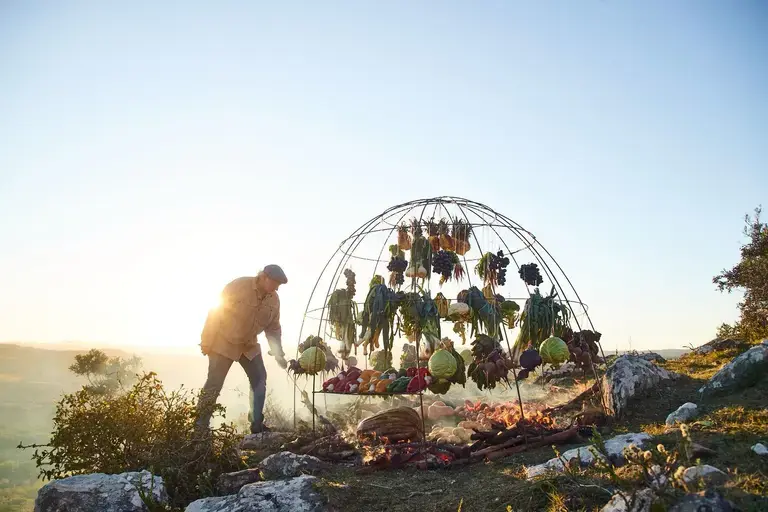
Francis Mallmann, honestly, because so much of his magic is physical in a way the screen can only hint at. You can shoot the fire and the smoke and the Patagonian wind—we did—but you can’t transmit the heat on your face or the smell of the embers, and that’s half of who he is. There’s something ancient about gathering around a fire to eat and tell stories. It’s one of the oldest things we do as humans, and it’s exactly what the screen can’t give you. To put a guest at one of his open-fire meals in the mountains is about as close as you can get to stepping inside his episode. That said, I feel that across the whole lineup. The festival is one “finally” moment after another: chefs we’ve only been able to show you, now standing right in front of you.

Someone leaving Park City having had a meal they’ll think about for the rest of their life, and a conversation with the person who cooked it that they didn’t see coming. If people walk away not just full but with real respect for the craft and the brutal work behind every plate, we’ve done the job. I’m less interested in headcount than in whether the intimacy survives at this scale. And selfishly, success is the chefs leaving energized, having taken those swings and connected with people the way their day-to-day rarely lets them. If they want to come back, we got it right.

A universe, no question. The festival is one room in a much bigger house. This year alone, the same idea shows up as the dinner series in New York, Los Angeles, and San Francisco, the festival in Park City, and Chef’s Table Honors in Las Vegas. The throughline isn’t luxury for its own sake; it’s the belief that these stories deserve to live off the screen, in real rooms, with real food and real people in them. Luxury is a means to intimacy here, not the end. What we’re actually building is a set of places where the show’s central idea, that obsessive devotion to a craft produces something transcendent, can be experienced instead of just watched.

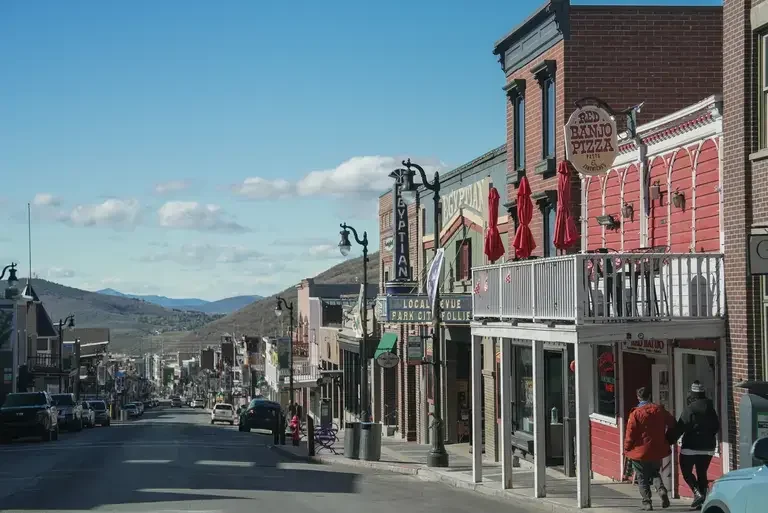
The Sundance parallel isn’t lost on me, and Park City is the right canvas for the same reasons it worked for film. It’s intimate, it’s walkable, the whole town can become the venue, and the mountains do something to people. Food deserves its own gathering place: a fixed point on the calendar where the culture convenes, not as a trade show but as a genuine community moment. What Sundance gave independent film was a hometown. I’d love for this to become that for the way we think about chefs and cooking. Whether we’ve earned the comparison is for the guests to decide, but the ambition is real, and Park City is a very deliberate choice.

The show argued that chefs are artists and storytellers, not just service workers behind a swinging door, and I think that landed. What I hope the festival changes is the distance. On screen, even at our most intimate, there’s always glass between you and the chef. I want to collapse that, to put a guest across an actual table from someone whose life they’ve watched, tasting the thing they’ve only ever seen. Gathering to share a meal and tell stories is one of the most human things there is, and that’s the part no screen can ever replace. If the show made people respect chefs, I hope the festival makes them feel something harder to manufacture: presence. The sense that they were really there.

Spread the flavor - share this story.

Join the community
Badge
Join us for unlimited access to the very best of Fine Dining Lovers
Unlock all our articles
Badge
Continue reading and access all our exclusive stories by registering now.

Already a member? LOG IN