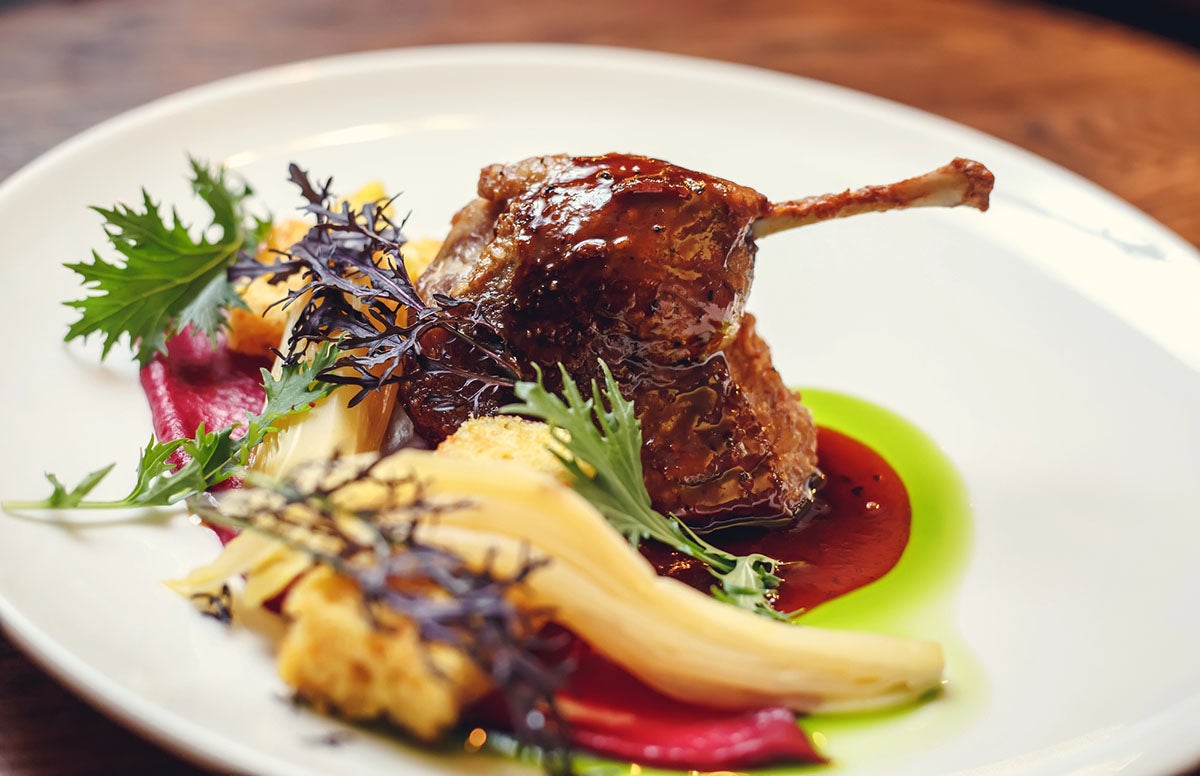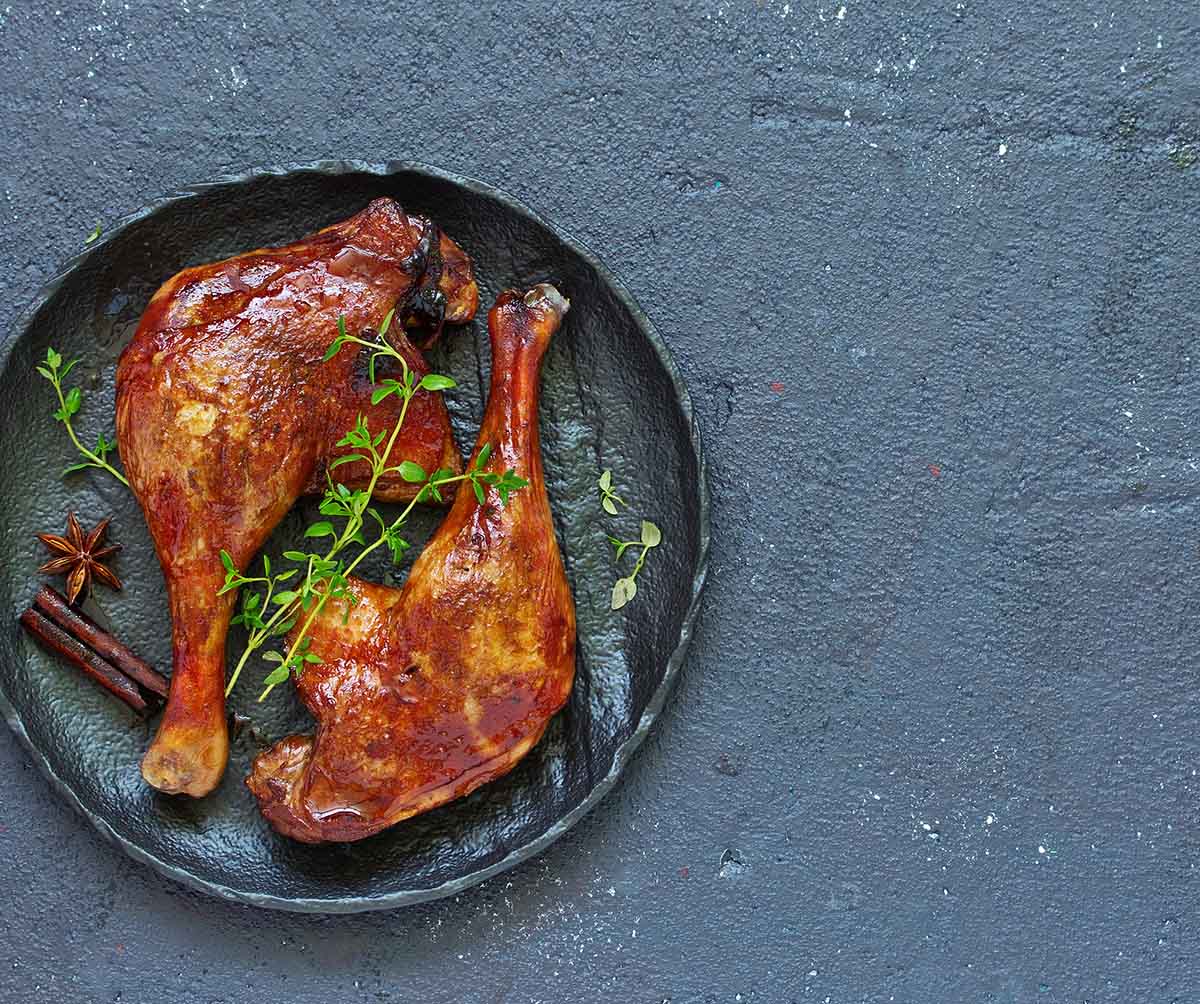
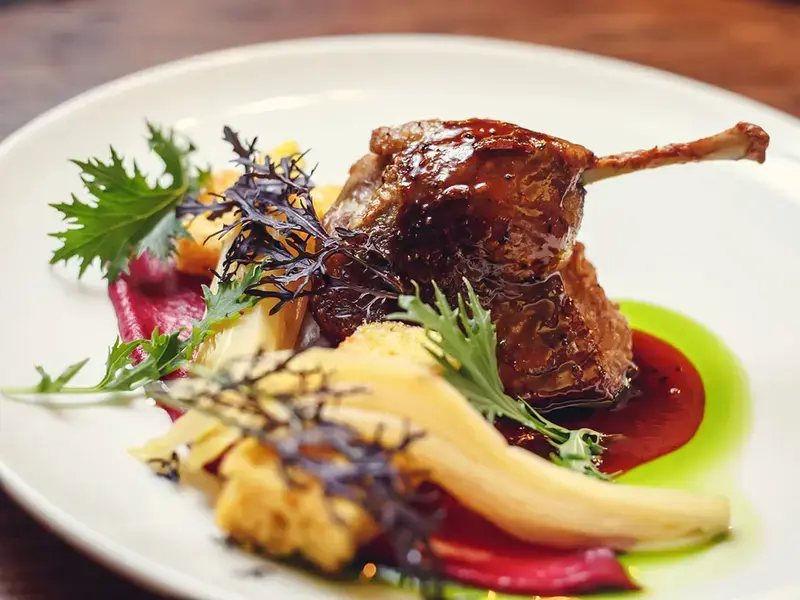
Confit is a traditional French preservation technique involving slow-cooking ingredients at a low temperature in fat, with duck confit being one of the most well-known dishes that makes use of this method. Explore the history of confit below, along with classic dishes and uses.
Origins and History (Gascony, 13th Century)
The confit technique is closely associated with southwestern France, namely Gascony, where the preservation of meat formed an important part of seasonal cooking and agricultural food culture. The definition of confit is derived from the French word, confire, which means to preserve.
This method allowed cooks to keep meat for months before modern refrigeration became widely available. The meat that was stored submerged in the fat was protected from air and spoilage. Salting, cooking, and storing meat in fat also had the added benefit of making it exceptionally tender.
Duck and goose farming has long been associated with the region of Gascony, and these birds provide a range of products, from liver to eggs to fat. Confit therefore evolved as an important regional technique for making the most of available food, and confit meat became an essential ingredient in cassoulet.
How It Works: Confit vs. Frying and Braising
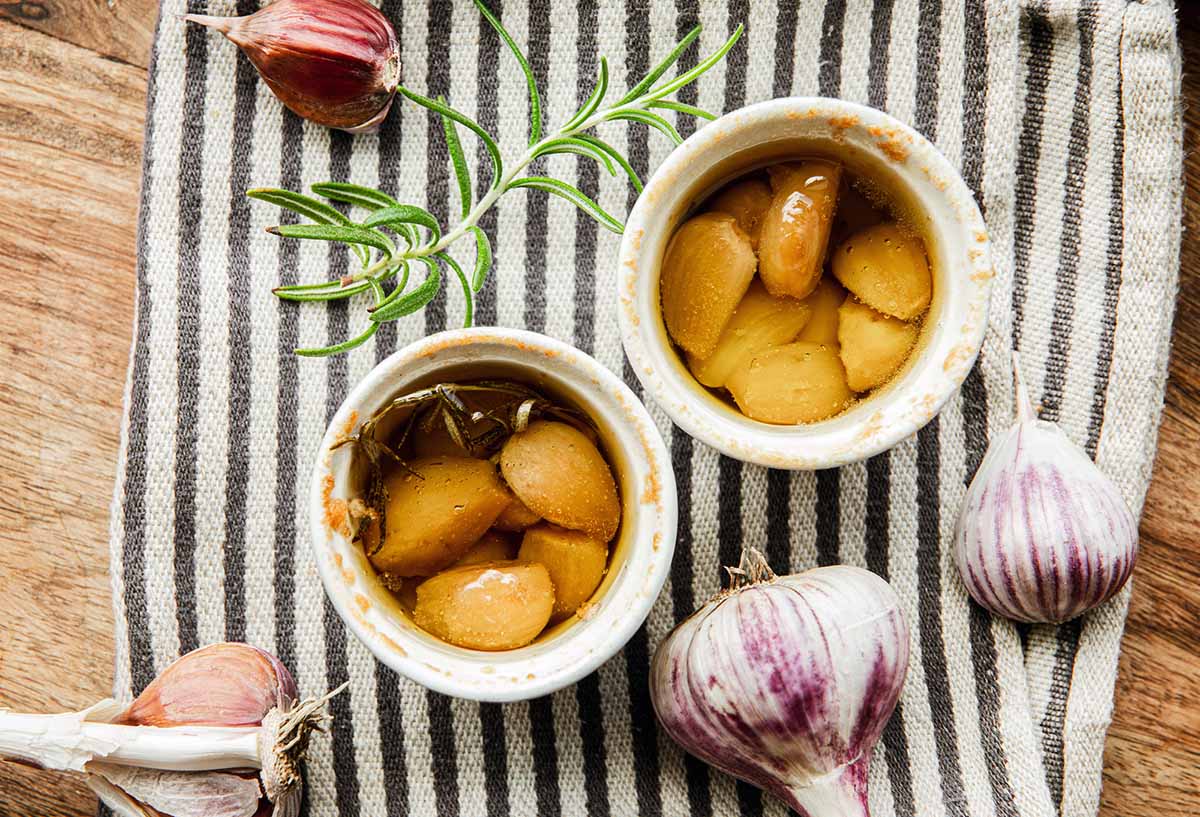
Traditional confit means to slowly cook meat at low temperature in fat, tenderizing the flesh through gradual cooking. First, the meat is rubbed with salt, often with seasonings such as garlic, thyme, and bay leaves. It’s then left to cure overnight. The salt seasons the meat intensely and draws out moisture, which helps to preserve it.
Following curing, the meat is wiped clean or dried, and slowly cooked submerged in duck or goose fat. It is then cooked gently for several hours, during which time the low temperature allows the tissues to break down gradually creating a tender, rich, moist meat. The fat provides a stable environment and prevents the surface from drying out during the long cooking process.
Traditionally, the meat was then preserved in its cooking fat, however, today the technique is more commonly used to impart flavor. After cooking in fat, chefs will often crisp the skin of ingredients such as duck or goose legs in a hot pan to finish.
In comparison, braising produces a similarly tender texture, but the meat is instead cooked in stock or another cooking liquid. Frying creates a crispier, browned exterior with the meat cooked at high temperature for a much shorter time, producing less tender meat.