If you have ever wondered what it means to blanch vegetables, why recipes insist on a pot of boiling water followed by an ice bath, or whether you really need this step before freezing produce, you are not alone. Learning how to blanch vegetables properly helps you preserve color, texture, and flavor, and it opens the door to better salads, side dishes, and freezer-friendly preparations at home.
Below, a practical guide to blanching vegetables: what it is, when to use it, how to do it step by step, and the common mistakes to avoid.
What Is Blanching in Cooking?
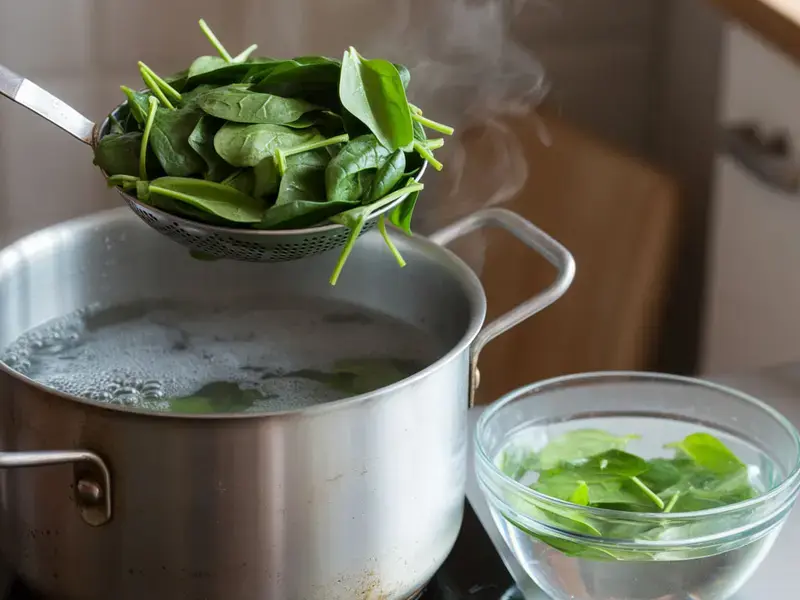
In cooking, blanching vegetables means briefly boiling them in well-salted water, then stopping the cooking immediately in ice water. It is a controlled, partial cooking method: just long enough to set the color, soften the texture slightly, and tame any raw harshness, without taking the vegetables all the way to tender.
The key elements are:
- High heat: vegetables go into a pot of water that is already at a rolling boil.
- Short time: usually from 30 seconds to a few minutes, depending on the vegetable and cut.
- Shocking in ice water: transferring vegetables to an ice bath to stop the cooking and lock in color.
Chefs use blanching to fix chlorophyll in green vegetables, to make peeling easier (think tomatoes or peaches), to remove some bitterness, and as a first step before sautéing, grilling, or freezing. When you follow a focused technique, such as a guide on how to blanch asparagus, you are applying this same principle: controlled heat followed by immediate cooling.
When Should You Blanch Vegetables?
Not every vegetable needs blanching, but knowing when to blanch vegetables makes a noticeable difference.
You should consider blanching when you want to:
- Set color and preserve freshness: green beans, broccoli, asparagus, and sugar snap peas become vivid and stay bright.
- Improve texture: dense vegetables like carrots or Brussels sprouts benefit from a brief pre-cook before roasting or sautéing.
- Tame bitterness or harshness: kale, broccoli rabe, and some cabbages mellow beautifully after a quick blanch.
- Prepare for freezing: blanching vegetables for freezing helps preserve flavor, color, and texture over time.
Blanching is particularly helpful if you work with seasonal produce and want to keep it longer. For example, when fresh fava beans are in season, a careful sequence of blanching, cooling, and peeling allows you to freeze fresh fava beans and enjoy them year-round. The same logic applies to many vegetables when you are planning your freezer strategy.
If you are unsure why to blanch vegetables before freezing or cooking, it often comes down to enzyme activity: blanching slows the natural enzymes that would otherwise degrade color, flavor, and texture during storage.
How to Blanch Vegetables Step by Step
Once you understand the logic, the method for how to blanch vegetables is straightforward. The details (especially timing) vary by vegetable, but the basic process stays the same.
- Prepare the vegetables
Wash, trim, and cut vegetables into even pieces. Uniform size helps them cook at the same rate. - Set up two pots
- A large pot of well-salted water brought to a rolling boil.
- A large bowl filled with ice water and extra ice on hand.
- Boil in batches
Add a small handful of vegetables to the boiling water. Do not overcrowd: you want the water to return to a boil quickly. - Time carefully
Start timing as soon as the water returns to a boil. Depending on the vegetable and cut, blanching can take from 30 seconds (for tender greens) to 3–4 minutes (for dense or larger pieces). - Shock in ice water
Use a slotted spoon or spider to transfer the vegetables immediately to the ice bath. Stir gently so all pieces cool quickly. - Drain and dry
Once completely cold, drain the vegetables well and pat them dry. Excess water can dilute flavor and interfere with later cooking or freezing.
This same framework applies whether you are blanching asparagus for a salad, green beans for a side dish, or mixed vegetables that you plan to freeze. If you are exploring can you freeze vegetables and looking at different techniques, you will see blanching mentioned repeatedly as a crucial pre-freezing step.
Tips for Blanching Different Vegetables
While the method is consistent, fine-tuning your approach for each vegetable will give the best results.
- Green vegetables (asparagus, green beans, broccoli, peas): use plenty of salt in the water to season and help keep the color vibrant. For asparagus, a dedicated guide to how to blanch asparagus shows why very short cooking times and immediate cooling are essential to maintain a crisp-tender texture.
- Leafy greens (spinach, chard, kale): blanch in small batches, as they release a lot of water. Squeeze out excess moisture after cooling if you plan to sauté or bake them.
- Dense vegetables (carrots, Brussels sprouts, cauliflower): cut into bite-size pieces and blanch a little longer, just until the raw crunch softens but the vegetables remain firm.
- Beans and legumes (fava beans): blanching makes peeling and freezing easier. Techniques used when learning how to freeze fresh fava beans and enjoy them year-round can be adapted for other tender legumes.
- Vegetables for freezing: when blanching vegetables for freezing, be meticulous with timing and cooling. Overblanched vegetables turn mushy when thawed, while underblanched ones can lose quality faster in the freezer.
Common Mistakes to Avoid
Even though blanching vegetables is a simple technique, a few common errors can undermine the result.
- Water that is not salty enough: blanching water should be generously seasoned. Without salt, vegetables can taste flat and underseasoned.
- Starting in cold water: always add vegetables to water that is already boiling vigorously. Starting from cold or barely simmering water leads to uneven cooking and dull color.
- Overcrowding the pot: if you add too many vegetables at once, the water temperature drops and cooking slows. Blanch in small batches so the water stays at a boil.
- Skipping the ice bath: draining vegetables without shocking them in ice water allows residual heat to continue cooking them, leading to soft, faded results.
- Not drying properly: excess water clinging to blanched vegetables can dilute dressings, cause splattering in hot oil, or contribute to ice crystals when freezing.
Understanding how and why to blanch vegetables turns this from a fussy extra step into a smart, efficient technique. It is the bridge between raw produce and polished dishes: vibrant green beans with a perfect snap, asparagus that stays tender-crisp, or a freezer drawer stocked with vegetables that still taste like the season they were harvested.