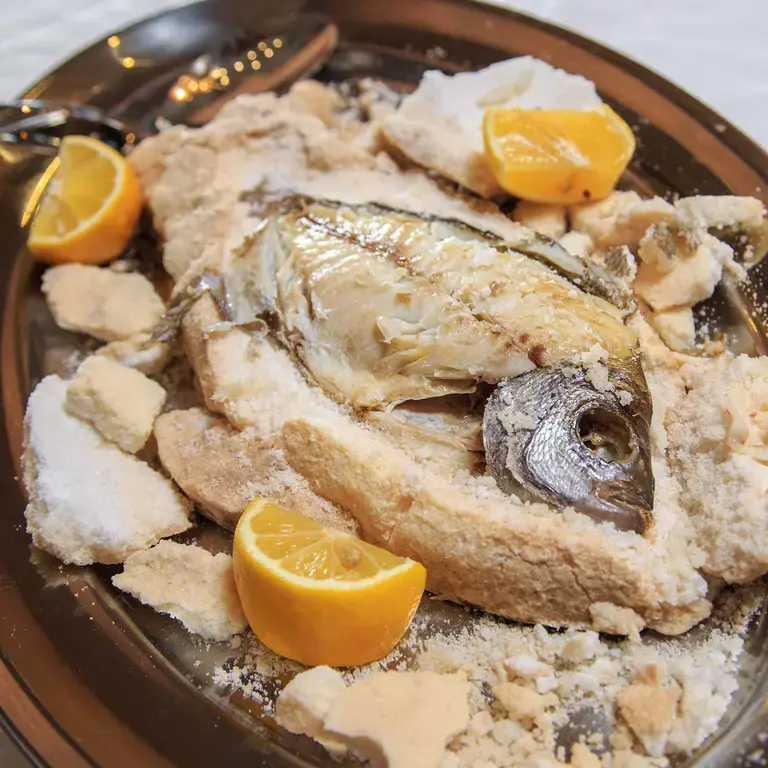

You may be asking yourself what’s the benefit of cooking fish in salt crust? By covering and encasing the fish in salt, this acts as an almost sealed cooking environment that traps steam during roasting. This locks all of the moisture in, for a juicy and tender fish that’s tastier than a simple, whole-roasted fish in the oven and worth the extra trouble.
It’s important to moisten the salt in order to pack it around the fish. While some chefs use egg whites to do this, we’ve kept it simple in the recipe above using water. You need the salt just malleable enough to pack around the fish and hold its form, without becoming soggy. It only needs to be lightly moist to form the salt crust. And for the choice of salt, opt for a coarse variety, such as Kosher salt or sea salt. The larger crystals help to form a crust with more structure, that’s better for this dish. There are lots of varieties of salt, however, and you can try experimenting with various gourmet styles to adapt the flavor of the fish.
When removing the crust after roasting, it can stick to the skin of the fish. You don’t want the skin to pull away with the crust, as it helps to shield the flesh from any loose salt chunks entering the fish and making it too salty to eat. To help prevent this issue, we’ve recommended oiling the skin of the fish prior to encasing it in the salt. This will help stop the skin from sticking to the salt when you remove it, and allow you to pull the skin off after clearing the salt for the perfect presentation.
What Type of Fish is Best for Salt Baking?
When choosing a fish for salt baking, look for whole varieties with firm, mild-flavored flesh. Types, such as sea bass, sea bream, and red snapper, work well in this recipe. The fish needs to be whole, of course, for the salt crust to form around it. Mild-flavored fish will also be better for pairing with a selection of aromatics and flavors, and won’t overpower the final taste of the dish. Take care to trim off the fins, or fin spines, prior to cooking to ensure these don’t poke you when packing the salt crust over the fish.
How to Crack and Serve a Salt Crust
Cracking the salt crust is a theatrical moment in the kitchen, and certainly a task that can be completed in front of guests at a dinner party. Crack the salt by tapping a spoon on the surface of the mound. Remove large chunks of salt that have fallen onto the fish, and sweep away any excess salt with a pastry brush. Eventually, the fish will be revealed. At this point you can then remove the skin, which will be too salty to eat, break up the flesh, and pull out the spine. The fish can be served family-style straight from the baking sheet, still on its bed of salt.