
There are a few simple ways to make the most of this red wine poached pear recipe. When purchasing your pears, look for varieties such as Bosc or Anjou, as these types of pears are firm, yet sweet, and won’t lose their form after poaching. Make sure the pears aren’t too ripe, otherwise they’re likely to turn mushy during the cooking process. If you find they’re too soft for this recipe when you start cooking, then try making pear muffins or a pear smoothie with the fruit instead.
Take care not to boil the pears while poaching. Too high a heat and too vigorous a simmer can encourage the pears to lose their structure. Keep the heat low and ensure it remains at a gentle simmer throughout the poaching process by regularly checking on the fruit.
For any leftover pears, explore a whole host of savory and sweet recipes using this delicious fruit. From risotto with pears to preserved pears, there’s no end to the number of ways you can make use of this fruit in your kitchen.
Best Wines and Spices for Poaching
When learning how to poach pears, one of the most important considerations is the red wine used for the liquid. You’ll need to select a wine that’s not too sweet or high in tannins, so it doesn’t overpower the floral and delicate flavors of the pear. Styles, such as pinot noir, add an inviting ruby color and fruitiness to the dish. Or, for a richer taste, merlot brings its soft, fruity notes and a plummy taste to the pears. Avoid varieties, such as cabernet sauvignon, which are high in tannins and can cause the pears to taste bitter after poaching.
In the recipe above we’ve kept the spices simple, with the addition of a cinnamon stick, but you can build on the ingredients list as desired. Nutmeg is a festive and seasonal addition to the dessert, and perfect when serving this dish during the holidays. Or, try using cardamom pods which add floral and citrus notes to the poaching liquid that effortlessly complement the flavors of the pears.
Serving Ideas for Elegant Plating
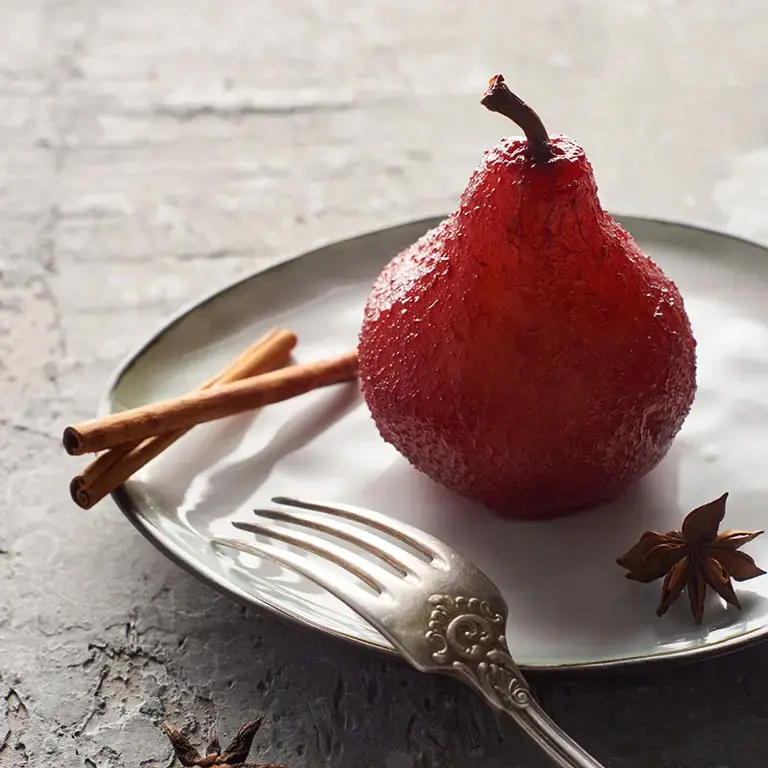
For the most elegant presentation, it’s important to keep your pears whole when poaching. Wash them thoroughly first, then use smooth and even peeling strokes from top to bottom to remove the skin. You can also trim a little off the base of the pear so it stands up without assistance.
For the presentation, position the pears whole in a delicate, glass serving bowl, sitting in the red wine reduction. A small cinnamon stick, or sprinkle of toasted hazelnuts, are both refined garnishes for the dish.
Some chefs will also plate the poached pears alongside a small serving of fresh vanilla ice cream, elevated with edible flowers for special occasions.