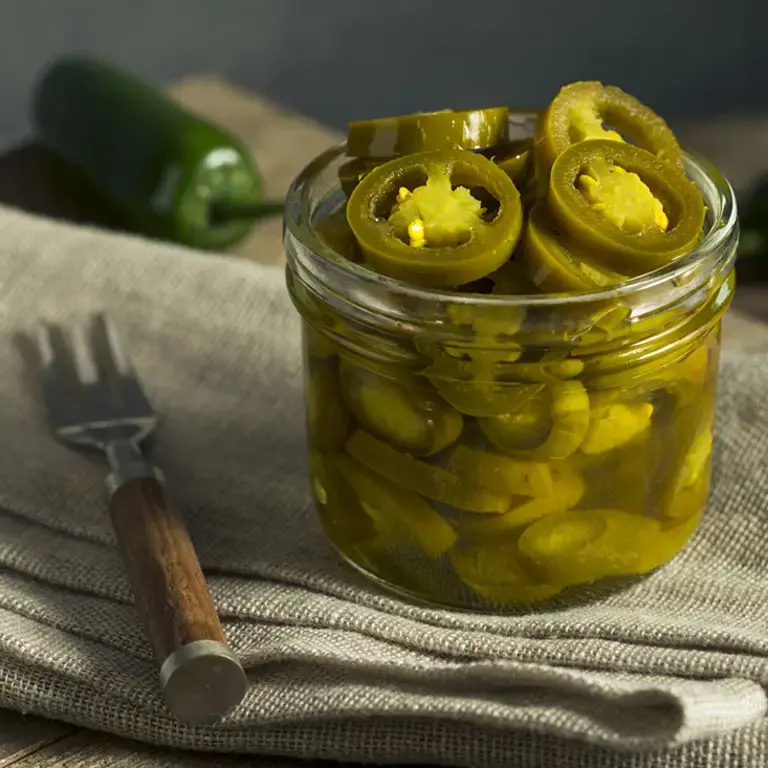

In this pickled jalapeño recipe we’ve shared a method for a quick pickling process. Easy to follow, it’s a fast way to create a large batch of these sweet, spicy, and salty pickled peppers to add to dishes throughout the week. You can use either red or green jalapeño peppers when pickling. Depending on the variety you choose, you’ll end up with slightly different flavor profiles. Green pickled jalapeños are crisp and tangy, perfect for adding to the top of pizzas and nachos. Red pickled jalapeños are sweeter and hotter, and ideal for garnishing delicious breakfast dishes, such as avocado on toast.
When choosing your peppers, look for fresh, firm ingredients and take care to slice them evenly before pickling. This will help to ensure that the peppers all pickle at the same rate.
During the cooking of the brine, don’t boil the liquid. Too much heat in the brine will soften the peppers and they’ll lose that desirable crunchy texture after pickling. A gentle simmer is all that’s needed to bring the components of the brine together, ready for transferring to the jars.
Once you’ve mastered pickling jalapeños there are plenty of other types of peppers to try cooking with and preserving. Pickled piquillo peppers are another popular choice, commonly found in Spanish cuisine, with a sweet, tangy, and distinctly smoky flavor.
Choosing the Right Vinegar and Spices
We’ve suggested using white vinegar to pickle the jalapeños for a few key reasons. First, it has a relatively neutral flavor that won’t overpower the taste of the peppers. Its sharp and clean taste also enhances the peppers’ spicy notes. Finally, it provides a cleaner visual appearance for the pickled peppers and can be easily sourced at your local grocery store.
To increase the heat, try adding a mixture of cumin seeds and whole cloves. Or, you could experiment with mixing in other chili peppers, such as habanero peppers, to add extra levels of spice.
How Long to Ferment and How to Store
In the recipe above we’ve outlined how to quick pickle the peppers, to prepare the jalapeños in as little as 10 minutes. However, some chefs will opt to ferment their peppers instead, for more complex notes and a longer shelf life. If you choose to follow this method, you’ll need to allow for five days minimum of fermentation, to let the flavors develop. You can even leave the peppers fermenting for up to three weeks, making sure to release any gas from the jar to prevent it from bubbling over during the process. Once you’re happy with the taste, you can transfer the fermented peppers to the fridge, where they’ll keep for around six months.
In the quick pickling method, the mixture of the white vinegar and salt acts as a natural preservative, and ensures the pickled peppers remain safe for consumption for up to two weeks when stored in the fridge.