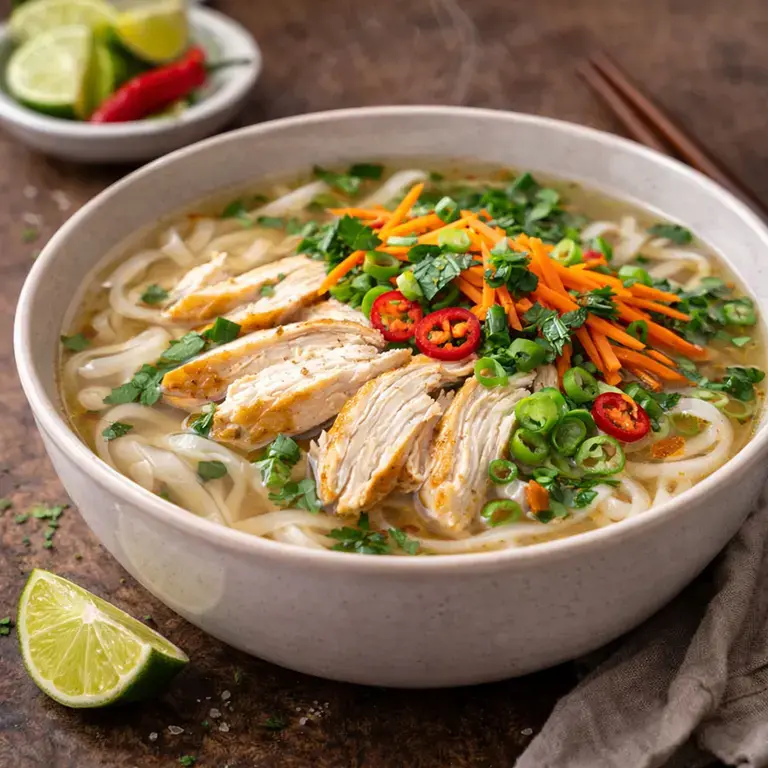

In this pho broth recipe we’ve recommended sautéing the garlic first before adding to the stock to enhance the overall aromatic flavors of the dish. Once the broth is assembled, make sure it only reaches a gentle simmer while covered and doesn’t boil, to keep the broth clear for that signature pho look.
We’ve shared a basic pho soup recipe above to work from but some chefs will add other ingredients, such as star anise and onion, to build in even more flavor. Whichever combination of ingredients you choose, taste as you go to adjust the seasoning as needed.
The Importance of the Broth
The broth in a Vietnamese pho noodle soup recipe is the core of all of the flavor and the key to getting the balance of flavors right for an authentic dish. Aim for a mixture of savory, aromatic, and lightly sweet notes. Charring the garlic cloves, and onions if using, also adds a deep smokiness and complexity to the base of the broth.
The tastiest pho broths are fragrant, clear, and warming. This is achieved through the low simmering of the broth with the meat. Many chefs will also use bone-in cuts of meat, as the bones release collagen, marrow, and minerals during the cooking process. Cuts such as beef knuckle bones or a whole chicken are commonly used in pho recipes.
Once you’ve mastered pho, explore other soup recipes with our selection of the top 10 soups you need to know, from Japanese miso soup to Spanish gazpacho.
Herbs, Toppings, and Condiments
Cilantro and scallions are essential ingredients in an authentic pho recipe and bring a desirable aromatic freshness to offset the rich depth of the broth. For toppings, some chefs will add ingredients such as bean sprouts or crispy fried onions, for a final crunchy texture.
A squeeze of fresh lime brightens the flavors, but you could also add hoisin sauce for an umami kick or sriracha sauce to increase the level of heat in your pho.
How to Serve Pho Properly
Pho should be served boiling hot, with the broth ladled over the core ingredients. It’s common to serve pho with a mixture of utensils, using chopsticks for the noodles and a spoon for the broth. It’s best enjoyed fresh and steaming hot from the stove, so make sure your guests are ready to eat when you start to plate up.