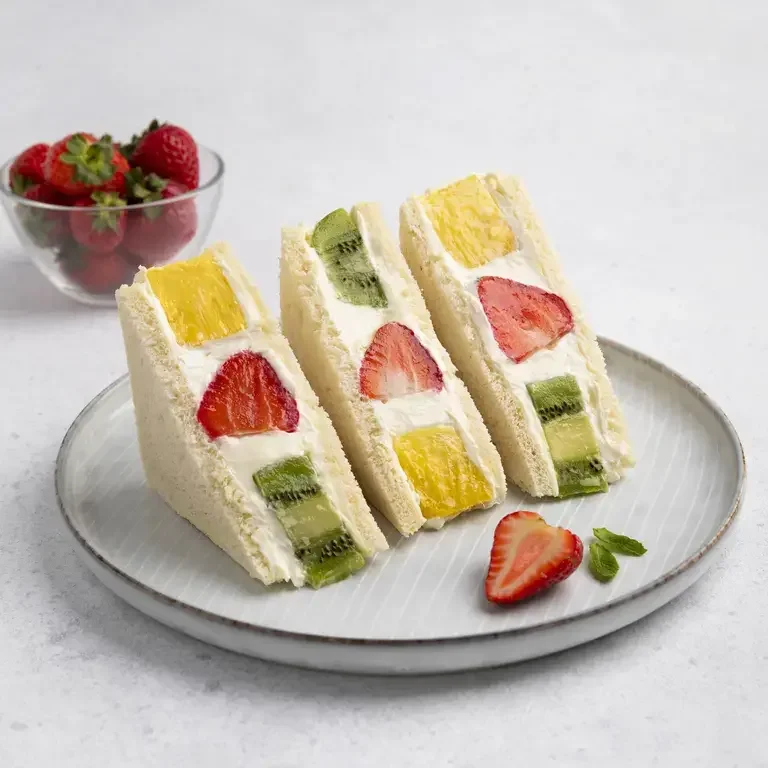

To create the most beautiful fruit sando, start by selecting fruit that’s roughly the same size. For a strawberry fruit sando, keep your selection of strawberries to no larger than two inches tall, to make sure they’ll fit easily in the sandwich for the final presentation.
Don’t skip the step of cooling your sando, as this will help to make it easier to cut. You can cut it right away, but you’re likely to lose some of the filling and neatness in presentation. Compressing the sandwich and wrapping it will also encourage the cream to move into any gaps you may have missed when spreading the cream onto the slices.
For the cream filling, you’re aiming to create a cream mixture that has enough structure to hold firm when sandwiched between the bread, but that also has a light fluffiness. Take care not to overwhip the cream, and stop regularly to check for the soft peaks. Some chefs will even introduce mascarpone to the recipe for added structure.
If you’re worried about the bread becoming soggy, you can spread a thin layer of jam onto the bread before adding the cream. This will act as a barrier between the cream and bread and help to keep your sandwich structure intact.
Traditional Japanese milk bread may be hard to source for your fruit sando recipe, so if you can’t find this in your local grocery store, you can use fluffy white bread instead. If you’re keen to explore further dishes from Japan, find all the inspiration you need in our Japanese guide.
Fruit Variations
In this sando Japanese fruit sandwich recipe we’ve suggested using strawberries, but there are lots of fruits you can switch in. Kiwis and mangoes work well in this recipe, offsetting some of the creaminess of the sandwich, and providing that desirable pop of color. Avoid using any excessively watery fruits, such as watermelon or oranges, as you’ll likely find the juice seeps and ruins your sando structure.
You also don’t need to stick to using one fruit exclusively. It’s possible to find variations of the fruit sando using a combination of fruits. Strawberries and kiwis work well together in this recipe with their clashing colors for a striking visual presentation. You could create a flower-like design using the fruit if you’re making this sando in the springtime, for a seasonally-inspired look.
Once you’ve had your fill of this sweet fruit treat, then it’s time to discover a world of sandwiches from a French Croque Monsieur to a British breakfast bap. Or dive into the eclectic realm of Japanese street food, for more easy bites to eat on the go.
How to Store and Serve
Japanese fruit sandos should be enjoyed on the day of making. Storing them in the fridge for too long will cause the bread to turn stale and the fruit will naturally start to lose its moisture in the fridge too. If you really need to store leftovers, then don’t eat the sando past one day.