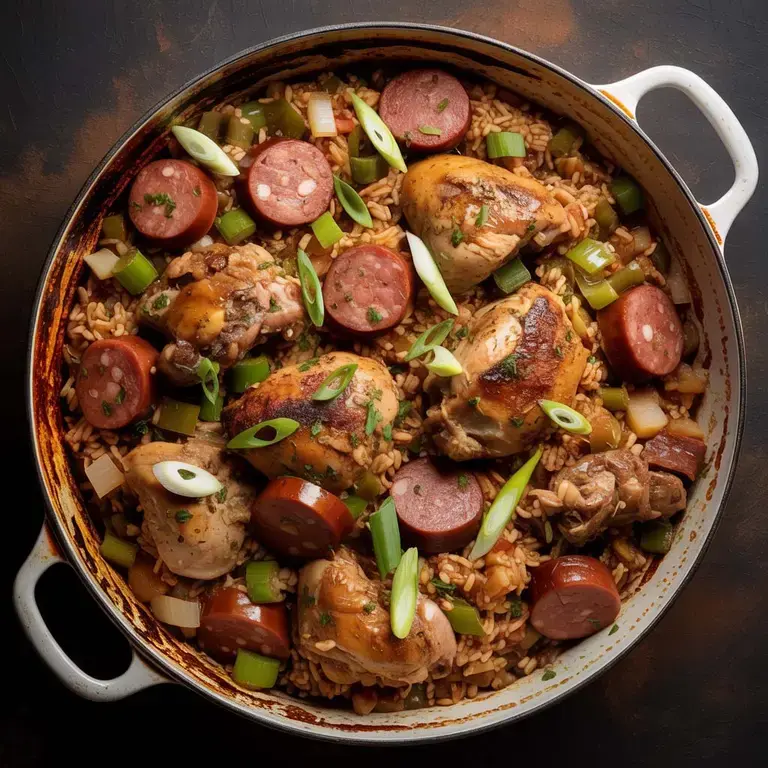

To make a truly authentic jambalaya recipe it’s all about building deep, complex flavor with heavily browned meat and spices. The signature flavor of this dish comes from browning the chicken and sausage to create a rich base on the bottom of the pan you’re using. Don’t overcrowd the pan when browning, as this will steam the meat instead of searing.
Cooking the rice to perfection guarantees the right texture for a classic jambalaya. Toast the rice first, before adding the flavorful chicken broth or stock for the rice grains to absorb. Cook low and slow and don’t stir the jambalaya too much while it’s simmering, as this can turn the rice mushy.
Jambalaya should be cooked in a heavy pan, such as a cast-iron pot or Dutch oven, as suggested in this recipe. This helps to ensure even heat distribution during the cooking process, along with optimum browning of the meats for the best results.
Cajun vs. Creole Jambalaya
A traditional jambalaya recipe with Cajun origins, makes use of ingredients common to the bayou parishes. Elements, such as andouille sausage, chicken, and rice are the hallmarks of a Cajun jambalaya. Cajun cuisine typically also uses the “holy trinity” of aromatics made up of an onion, green bell pepper, and celery.
A Creole jambalaya is influenced by Spanish and French cuisine, with ingredients such as tomatoes, seafood, and butter. Creole jambalaya is often more watery in texture than a Cajun-style jambalaya. Gumbo is another famous Southern dish, but differs from jambalaya in its use of the rice. A soup-like stew, gumbo is served over rice cooked separately and is a thickened liquid-based dish.
To learn more about Cajun and Creole cuisine, take a look at our detailed article outlining the key differences between these two styles. For more Cajun cuisine inspiration, try making a family-style Cajun seafood boil sharer, and learn all about the famous boudin sausage, for an alternative to andouille.