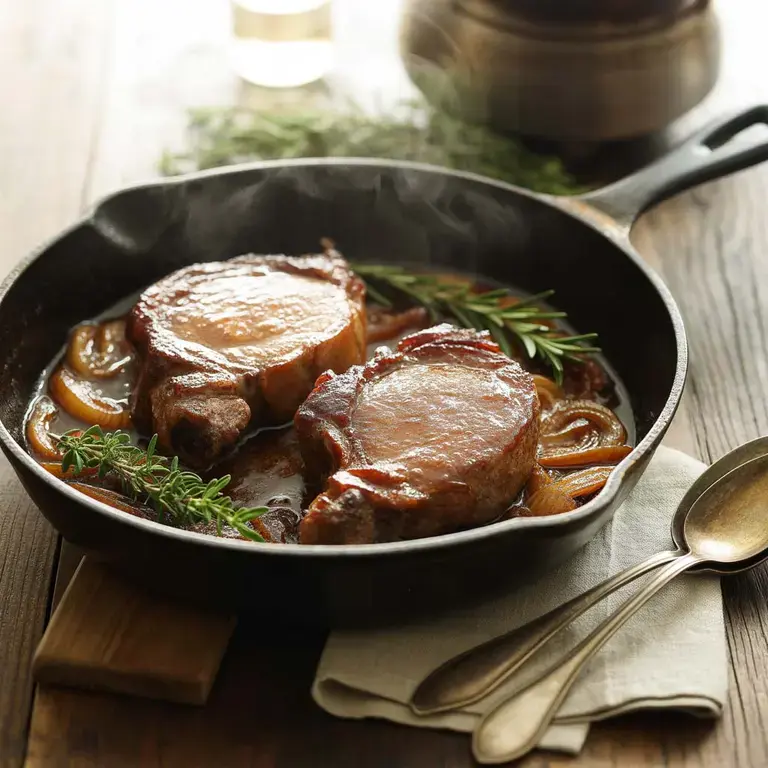

When selecting your pork chops, opt for the bone-in variety, regardless of the cut you choose. Leaving the bone in helps to retain moisture in the meat during cooking and stops the chops from drying out. It also has the added benefit of contributing even more flavor to the broth and the dish. Look for chops that are at least one inch thick, to prevent overcooking during the braising process.
Pork loin chops work well in the recipe above, needing only around 45 minutes of braising to reach the level of tenderness needed for the dish. You can, however, experiment with using different pork cuts, such as pork shoulder, which will need a little longer cooking time to tenderize fully.
In the method shared above, we’ve recommended using a skillet to braise and cook your pork chops. It is possible to also make oven-braised pork chops, if preferred. Using a skillet has a few advantages, including greater control over the cooking process and easier testing and seasoning as needed throughout the braising. Oven braising does take longer, but offers the benefit of steady, even cooking, which some chefs prefer.
Once you’ve mastered the art of braising, you can also simply fry pork chops for a quicker midweek meal. Take a look at our guide featuring the best tips on how to fry pork chops, including advice on timings and doneness, to get started.
Braising Liquids: Wine, Broth or Cider?
When it comes to the braising liquid, you can choose different ingredients depending on the final desired taste profile of the dish. In the recipe above we’ve recommended using chicken broth, as a classic go-to. Broth is fairly neutral and complements the flavors of the pork without dominating the dish.
For a richer option, use red wine in your cooking liquid instead of the broth. Deeper and more robust, the red wine brings a welcome acidity to the dish to cut through the fat of the pork chops, and helps to provide an overall balance. You could also use white wine in the braising liquid, but red wine adds a heartier feel to the plate that’s perfect if you’re making this recipe during the fall or winter.
Finally, cider can be used in place of the broth for a seasonal take on this winter comfort food dish. Pork and apple is a traditional flavor combination, and the cider pairs effortlessly with the richness of the pork chops, adding a natural sweetness to offset the savory notes of the meat.
Side Dishes to Complete the Meal
For a tasty winter meal, pair the braised pork chops with popular comfort food side dishes. Mashed potatoes bring a welcome creaminess and indulgence to the plate, and help to catch the sauce from the pork chops. Roasted root vegetables, such as carrots and parsnips, are also choice pairings for this dish. The slight sweetness of these vegetables complement the hearty savory notes of the pork chops.