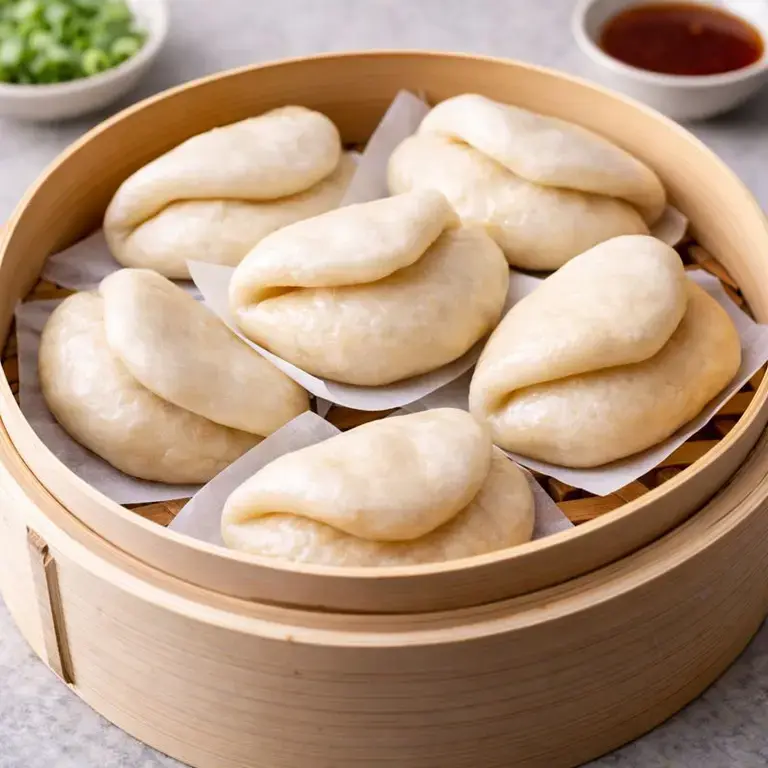

Wondering what a bao bun is? It’s a fluffy, slightly sweet steamed bun that’s found in Chinese cuisine as a light meal or snack. Bao buns are made of flour, yeast, sugar, and oil and packed with a variety of savory or sweet fillings. They differ from dumplings due to their bread-like dough and soft, pillowy texture.
When making the buns, use a neutral oil to allow the flavor of the fillings to come to the forefront. If you can’t source avocado oil at your local grocery store, grapeseed oil will also work as an alternative.
Make sure you find a warm place in the home for your dough to rise. Yeast needs a little warmth to help activate, and you’ll get the best texture out of your dough if you can let it rest in a cozy spot.
For more inspiration on different types of bread you can make at home, take a look at our selection of the top 15 varieties to try, including classic white bread.
Steaming the Buns
Bao buns should ideally be steamed in a bamboo steamer, lined with parchment paper to prevent them from sticking to the wood. The bao buns will expand during the steaming process, so make sure you leave a gap between the individual buns and steam in batches as needed. Though tempting, make sure you don’t lift the lid during steaming as this can cause the buns to collapse.
Filling Ideas
Bao buns can be filled with a variety of ingredients, from pork belly to plant-based alternatives. Char siu pork with hoisin sauce is a classic bao bun filling, with its sweet and savory notes. Miso-glazed mushrooms bring a kick of umami to the bun for a vegetarian alternative, and spiced eggplant is a mouthwatering pairing with the fluffy, sweet taste of the buns. Garnishes, such as pickled cucumber, bring a final freshness to the plate.
Storage and Reheating
Cooked bao buns can be kept in the fridge in an airtight container for up to two days. When reheating from the fridge, use the bamboo steamer again for a shorter time, around five minutes, to warm the buns through. You can also freeze the bao buns for up to two months, and reheat using the steamer without needing to thaw the buns first.