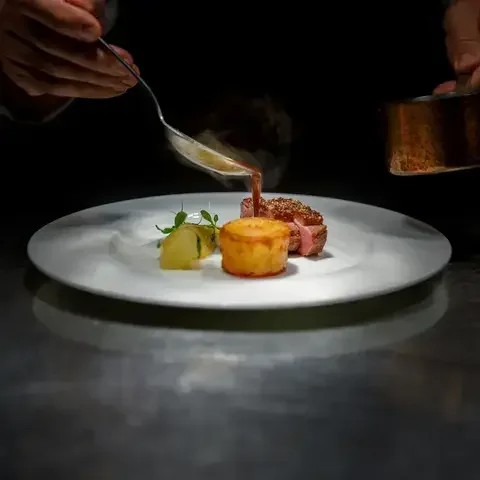
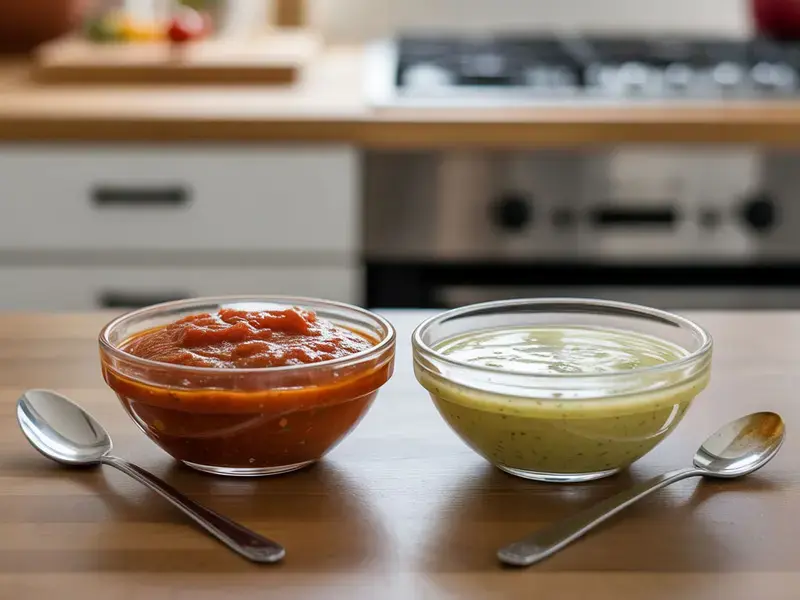
When cooks talk about sauce vs dressing, they are talking about more than just what goes on meat versus what goes on salad. Both are liquid or semi-liquid preparations that bring richness, balance, and character to a dish. Yet the difference between a sauce and a dressing becomes clear when you look at how they are used, what they are made from, and how they are meant to behave once they hit the plate.
Here is a closer look at sauces and dressings: what each one is, where they overlap, and how to decide which you are really making.
What Is a Sauce?
In classic cooking, a sauce is any flavorful liquid, thickened liquid, or purée that accompanies a dish to enhance or complete it. It is usually served with cooked foods: grilled meat, roasted vegetables, poached fish, pasta, or desserts.
Traditional French cuisine organizes sauces into “mother” sauces, such as béchamel, velouté, espagnole, hollandaise, and tomato, from which countless variations are derived. A dedicated exploration of the secrets of sauces shows how technique, temperature, and balance all come together in this world.
Sauces can be:
- Hot or warm, like a glossy pan sauce or a velvety hollandaise.
- Room temperature, like a romesco or pesto.
- Occasionally cold, like a classic mayonnaise or tartar sauce.
They often involve cooking steps: reduction to concentrate flavor, emulsification, simmering with stock, or careful whisking over gentle heat. In a guide to 12 classic sauces and how to make them, you will see how many of these preparations rely on structured methods such as roux, emulsions, and reductions.
Above all, a sauce is designed to cling, coat, or pool around the main ingredient, adding moisture and flavor without turning the dish into a salad.
What Is a Dressing?
A dressing is typically a fluid preparation intended to season and lightly coat raw or minimally cooked ingredients, most often salads but also grains, vegetables, or cold proteins.
The most familiar example is a vinaigrette: a simple emulsion of oil and acid, plus seasoning and aromatics. A detailed breakdown of how to make vinaigrette, from ratio to variations and proportions, shows how this basic structure can be adapted endlessly with different vinegars, citrus juices, mustards, and herbs.
Dressings tend to:
- Be used sparingly, to gloss and season ingredients rather than smother them.
- Stay cold or room temperature.
- Rely on a balance of fat and acid to wake up raw leaves, vegetables, or grains.
When you explore how to build a perfect salad, you will find that the dressing is treated almost like a final seasoning: it brings cohesion and brightness, but the focus stays on the vegetables, textures, and toppings rather than on the dressing itself.
So while a sauce might be the star on a plate of pasta or a piece of meat, a dressing is more of a supporting actor that makes fresh, crisp ingredients taste complete.
Key Differences Between Sauces and Dressings
Sauces and dressings share techniques and ingredients, which is why the difference between sauce and dressing can feel blurry. Still, a few distinctions help separate them.
- Primary use: sauces usually accompany cooked dishes, while dressings are mainly for salads and cold preparations.
- Texture and coverage: sauces often coat more heavily and may form a visible layer or pool; dressings are meant to lightly gloss and season.
- Temperature: sauces are frequently hot or warm, though not always; dressings are almost always cold or room temperature.
- Structure: sauces may be built on stock, reductions, roux, or enriched bases like cream or butter; dressings generally center on oil plus acid, sometimes with a creamy element like yogurt or mayonnaise.
Thinking in terms of function helps too: a sauce can change the character of a dish entirely, whereas a dressing tends to highlight and sharpen what is already there, especially in salads.
Examples of Each and Crossover Recipes
Classic sauce examples include:
- Béchamel or Mornay on vegetables or gratins.
- Hollandaise on eggs, asparagus, or fish.
- Velouté-based sauces for poultry.
- Red wine reductions for meat.
- Tomato sauces for pasta.
- Chocolate or caramel sauces for desserts.
Classic dressing examples include:
- Simple vinaigrettes for green salads.
- Creamy dressings with yogurt, buttermilk, or mayonnaise.
- Citrus-based dressings for seafood or grain salads.
- Tahini or nut-based dressings for roasted or raw vegetables.
Crossover recipes sit between sauce vs dressing. A spoonable green sauce like salsa verde, chimichurri, or a herb-loaded vinaigrette can behave as both:
- Drizzled over grilled meat or fish, it functions as a sauce.
- Tossed with leafy greens or vegetables, it functions as a dressing.
Can a Sauce Be a Dressing (and Vice Versa)?
The short answer is yes: some preparations can move between roles.
A vinaigrette thickened with mustard and herbs can be spooned over roast fish or vegetables and suddenly it is closer to a sauce. A classic mayonnaise, technically a cold sauce, becomes a base for dressings like aioli or remoulade when thinned and brightened with acid.
This fluidity is part of what makes the difference between a sauce and a dressing more about context than rigid definitions. Ask yourself:
- How is it being used: to finish a cooked dish, or to season raw ingredients.
- How heavily does it coat the food.
- At what temperature is it served.
Professional kitchens treat sauces and dressings as members of the same family, built from similar elements but assigned different tasks. Once you understand emulsions, reductions, and balance, you can move easily from one to the other, transforming a sauce into a dressing with a splash of acid or turning a dressing into a sauce with heat and stock.
In practice, understanding sauce vs dressing is less about policing vocabulary and more about control. When you know how each is meant to behave and where it shines, it becomes easier to decide whether your dish needs the enveloping richness of a sauce, the bright lift of a dressing, or something that cleverly borrows from both.