
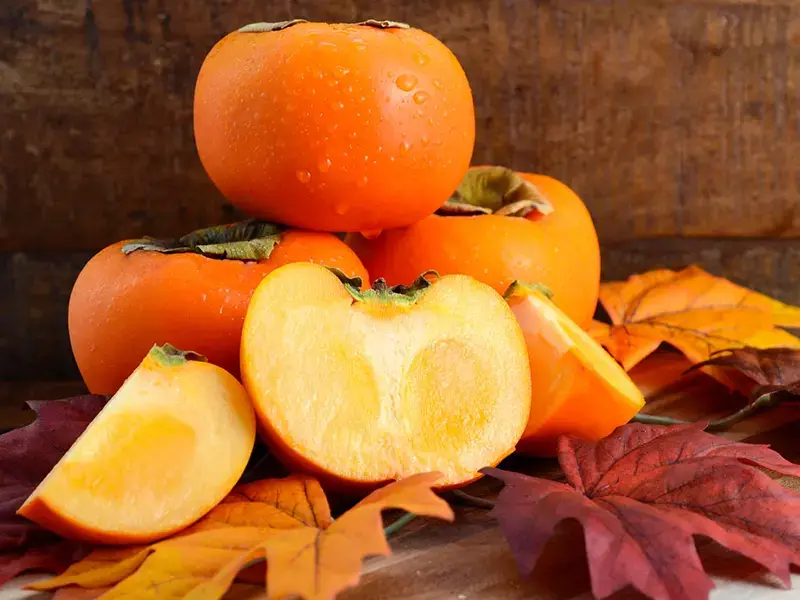
If you have ever wondered how many varieties of persimmons there are, or why some can be eaten while still firm while others need to be almost jelly-soft, it all comes down to the type of persimmon fruit you are dealing with. Understanding the main persimmon varieties makes it easier to choose the right one for snacking, salads, baking, or desserts, and helps you navigate their ripening and storage quirks.
Below is a guide to the most common types of persimmons, how to choose them, how to store and ripen them properly, and how to pair them in recipes – with ideas ranging from chef-style salads to comforting, cold-weather dishes.
What Are the Most Common Types of Persimmons?
Globally, there are dozens of persimmon varieties, but in US supermarkets and farmers’ markets you will mostly encounter a handful of key types. A good starting point is to think in terms of two broad families: astringent and non-astringent persimmons.
- Non-astringent persimmons: these can be eaten when they are still firm and crisp.
- Astringent persimmons: these must be fully soft and jelly-like before they lose their mouth-puckering tannins and become sweet.
Within these two families, some persimmon types are especially common.
Fuyu persimmons (non-astringent)
Fuyu are squat, rounded, and slightly flattened, often compared in shape to a tomato. They are usually eaten while still firm or just turning tender. Their flavor is sweet and mild, with notes of honey and pumpkin, and their texture when crisp makes them ideal for salads, cheese boards, or simply slicing and eating out of hand.
Hachiya persimmons (astringent)
Hachiya are elongated and acorn-shaped. When under-ripe, they are extremely astringent. When fully ripe, they become very soft, with a rich, custard-like interior that is perfect for spooning, baking, or puréeing into puddings and cakes.
Other notable persimmon varieties
Depending on where you shop, you might also find:
- Jiro: Another non-astringent type, similar to Fuyu, sometimes a little larger and flatter.
- Chocolate persimmons (Tsuru Noko): Known for brown-streaked flesh and a more complex, caramel-like flavor when fully ripe.
- Sharon fruit: A trade name often used for a seedless, non-astringent persimmon that can usually be eaten while firm.
If you are curious about the broader world of persimmons – from their botanical background to lesser-known cultivars – a dedicated guide with 26 things to know about persimmon offers a deeper dive into history, varieties, and culinary uses across cultures.
How to Choose the Right Variety for Cooking or Eating
Once you recognize the main types of persimmon fruit, choosing the right one becomes a matter of texture and application. Different persimmon types shine in different dishes.
For eating fresh
If the goal is to eat persimmons fresh, either as a snack or sliced into salads and boards, non-astringent varieties such as Fuyu and Jiro are usually the best choice.
- For a crisp bite: Choose firm, bright-orange Fuyus with smooth skin and no soft spots.
- For a slightly tender texture: Pick Fuyus that yield just a little to gentle pressure.
These varieties work beautifully in raw preparations. In a wild arugula and persimmon salad, for example, thin slices of Fuyu bring sweetness, color, and crunch to peppery greens, toasted nuts, and a sharp vinaigrette.
For baking and desserts
For baking, puddings, and spoonable desserts, Hachiya and other astringent persimmons are ideal once fully ripe. Their soft, jammy pulp adds moisture and a deep, honeyed sweetness.
- For cakes and quick breads: use Hachiya pulp in place of some or all of the fruit purée a recipe calls for, such as pumpkin or banana.
- For puddings and custards: fully ripe Hachiya flesh can be puréed and folded into cream, eggs, or starch-based mixtures.
If you are not sure how to work with ripe pulp, a focused guide on how to eat a persimmon, including tips and recipes, can be a useful companion when you are experimenting with different textures and uses.
For salads and raw vegetable pairings
Persimmons pair well with crunchy vegetables like fennel, radish, or kohlrabi. Certain persimmon varieties with firmer flesh are ideal here.
A persimmon and kohlrabi salad is a good example: crisp fruit slices underscore the delicate sweetness of kohlrabi and stand up to a lively citrus dressing. When planning similar dishes, non-astringent, sliceable types such as Fuyu are the most reliable choice.
Storage and Ripening Tips by Variety
Because different types of persimmons ripen differently, storage is not one-size-fits-all. How and where you keep them depends on the variety and how soon you plan to eat them.
Fuyu and other non-astringent persimmons
Fuyu and similar non-astringent persimmon varieties can be enjoyed at several stages of ripeness, from crisp to tender.
- To keep them firm: store at cool room temperature, away from direct sunlight.
- To slow ripening: transfer slightly ripe fruits to the refrigerator; they will hold their texture for several days.
- To encourage gentle softening: leave them in a fruit bowl at room temperature until they yield slightly to pressure.
Because these types are flexible, they can move easily from salads and snacks (when crisp) to tarts or compotes (when softer).
Hachiya and other astringent persimmons
Astringent persimmon types such as Hachiya require more patience. They are not ready to eat until fully soft.
- To ripen: keep Hachiya at room temperature, ideally in a single layer so they do not bruise, until they feel almost liquid inside when gently cradled.
- To speed things up: place them in a paper bag with an apple or banana; the ethylene gas helps hasten ripening.
- To hold once ripe: refrigerate ripe Hachiya for a short time, or scoop and freeze the pulp for later baking.
If you are managing several persimmon varieties at once and want a more detailed guide to ripeness and handling, exploring a comprehensive piece on how to store, ripen, and eat persimmons can help calibrate timing and texture for each type.
Knowing the main types of persimmons, recognizing how they should feel when ripe, and matching each variety to the right preparation is the key to enjoying this fruit at its best, from crisp salads to rich, autumnal desserts.