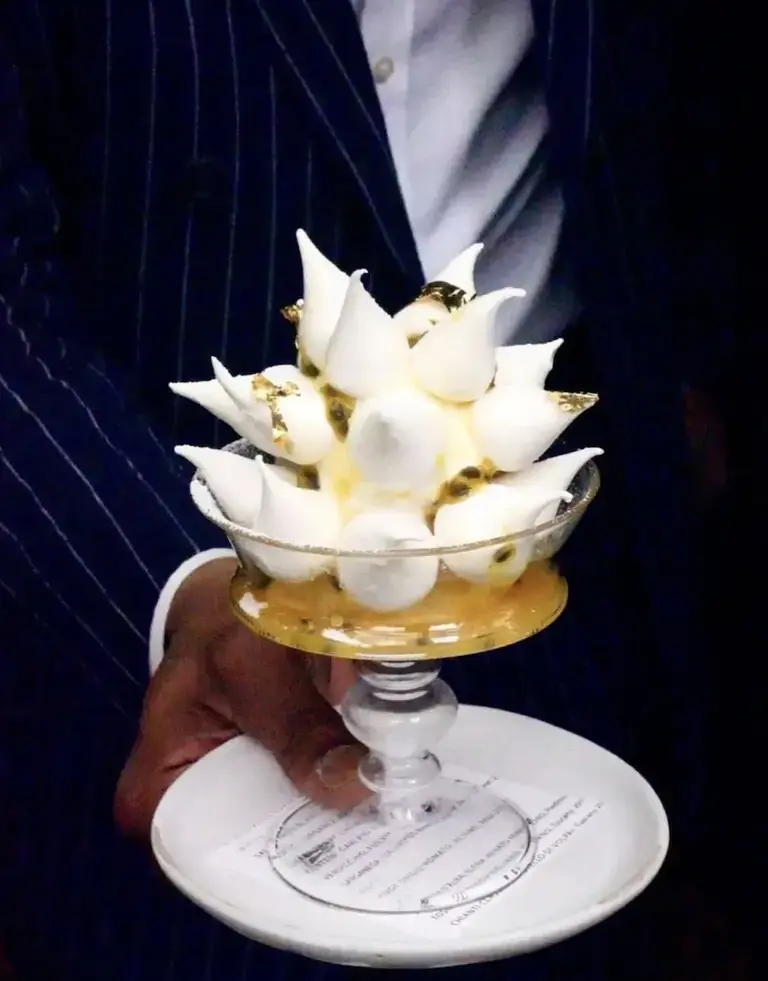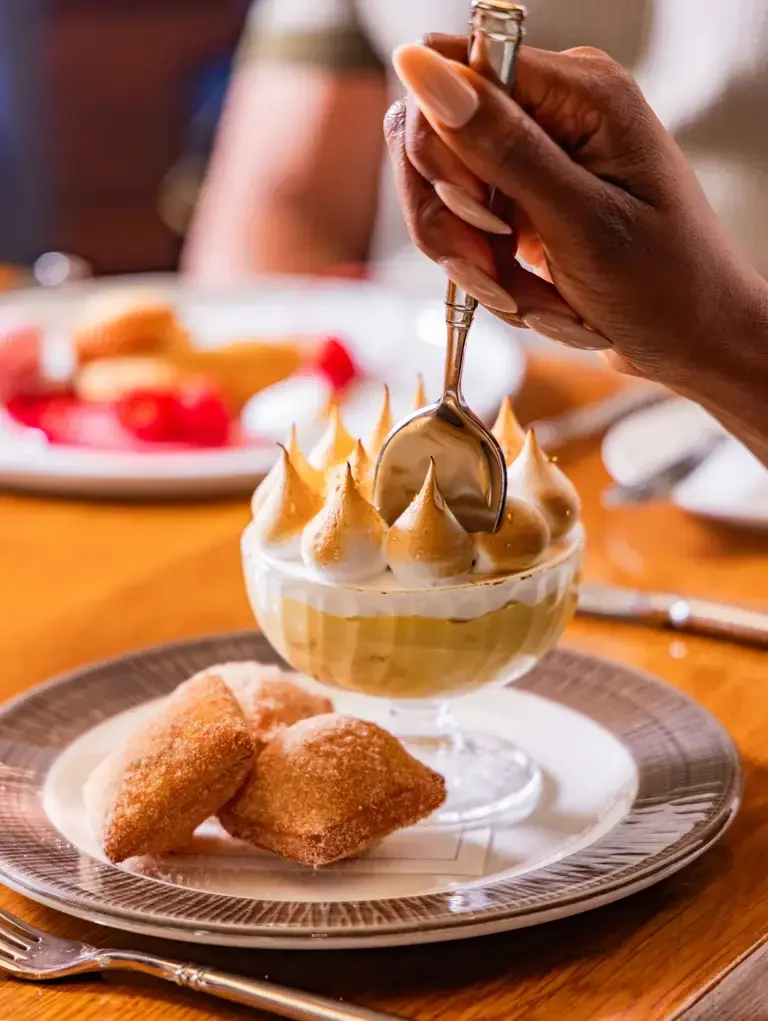
Meringue was whipped up back in the 17th century, but it is peaking in the 21st. Created by vigorously whisking egg whites and sugar, and sometimes an acidic element or a binding agent, it comes in three variations: Swiss, French, and Italian, each involving a slightly different technique. All can be transformed into snowy peaks, pillowy clouds, and alluring islands. As Chef Yotam Ottolenghi once said, “When you want to show off, you do meringues.”
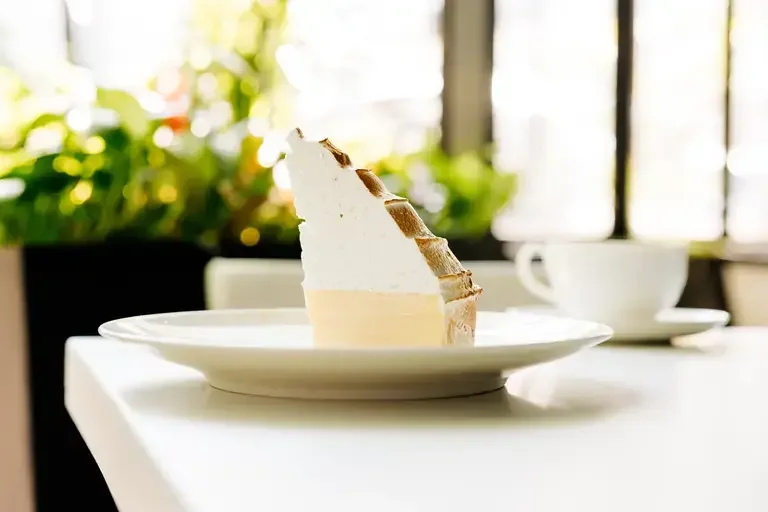
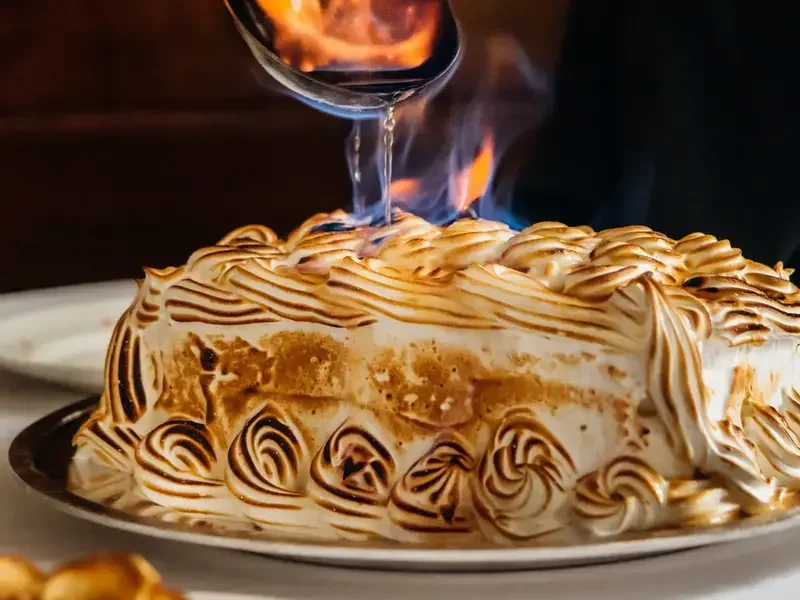
Classic desserts featuring the featherweight confection can be found everywhere these days. RPM Steak in Chicago offers a lemon meringue pie where golden torched meringue dwarfs the tart lemon curd; Arnaud’s in New Orleans is renowned for its baked Alaska, its meringue shell set ablaze tableside; and Gerrard Street Kitchen in Washington, D.C., is conjuring a floating island of poached meringue set adrift in a sea of orange blossom crème anglaise for its cherry blossom menu.
Meanwhile, pavlovas are popping. Pastry chef Sarah Osborn at Sado in St. Louis constructs one cradling coconut and charred lemon crémeux with coffee granita; New York City’s Quality Meats pastry chef Lucy Blanche riffs on an orange creamsicle with vanilla mascarpone mousse, citrus curd, and orange segments; and pastry chef Rachel Sherriffe at Marcus DC in Washington, D.C., offers one brimming with olive oil pastry cream, pickled Asian pears, citrus jam, and pomegranate Aperol jus.
But meringue is not simply a pretty dessert offering a sweet finish. For Alex Green, executive chef of Mileta in Lexington, Kentucky, it is also about reducing waste. The restaurant crafts pastas in house, which require a higher ratio of yolks to whites, leaving an excess of the latter. At first, he planned to make meringue kisses to top a parmesan soft serve sundae with balsamic caramel, olive oil, and flaky sea salt. The soft serve is itself a waste reduction effort, made with leftover rinds. Ultimately, he decided to painstakingly create dehydrated Swiss meringue sprinkles accented with thyme. “It plays off the salty-sweet, savory-sweet of the parmesan soft serve, which does read sweet and dessert-y, but not cloyingly sweet,” says Green.
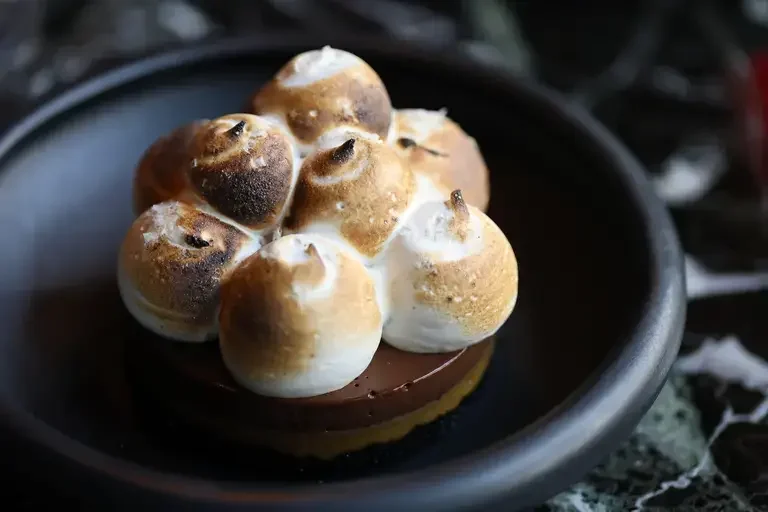
He also makes an Italian meringue with a decaffeinated espresso–amped sugar syrup that finishes a mocha tart with coffee crémeux and a cocoa crust. All this waste reduction has another benefit: saving money. “Food is not getting cheaper,” says Green. “We have to use up every part of the ingredient that we can.”