What does it take to become a sake expert?
On paper, becoming a sake expert is similar to becoming a wine sommelier. There are certifications, including the Wine & Spirit Education Trust (WSET), which offers sake education, and the Sake Service Institute (SSI), which provides related qualifications. You can study brewing techniques, rice varieties and polishing ratios, koji, yeast, and regional differences to develop a strong technical understanding of the category.
But in my opinion, an expert is someone who genuinely loves sake and follows it closely, because the category is evolving so much.
Sake is somewhat different from wine, which is a more established category with well-known regions and traditions. There’s Burgundy, Bordeaux, and newer stuff like orange wine, etc. Some of the sake styles that are popular in Japan today were developed only 20 or 30 years ago, despite the beverage’s centuries-long history. The sake people drank hundreds of years ago was very different from what we enjoy today.
Younger generations taking over breweries are increasingly concerned about sake’s future. They’re looking beyond Japan for new markets and consumers, while also experimenting with new styles and techniques inspired by wine and whiskey. They’re trying to reach people who may never have considered drinking sake before.
To me, being an expert means paying attention to all these changes. There’s always something new happening, so you have to keep learning.
Why do you think sake is more intimidating to Americans than wine? Are consumers misunderstanding it?
For one, a lot of people think of sake as this dry, throat-burning, high-alcohol, vodka-like drink. That’s what they’ve been familiar with for the past few decades.
Then there’s a growing group of people enjoying high-quality sake imported from Japan. It’s still a small portion of the market, but these consumers think, “Oh, sake is exactly like wine. There’s terminology, there are techniques, there’s regionality. Where can I start?” It can seem complicated. Of course, it’s very foreign, with different terminology from wine. The most difficult thing is that sake isn’t wine, but a lot of marketers in the industry try to make it look like wine. To me, that’s what makes it difficult.
I have tremendous respect for the pioneers who created the market, but there’s a huge gap between what people are familiar with and what high-quality sake can be. I think we’re in a transition period. People are becoming more interested in and curious about good-quality sake, so I think we’re moving in the right direction.
How is nama different from the more conventional sake Americans are exposed to?
Before shipping their products, breweries usually pasteurize sake, most commonly twice, to make it more stable. During pasteurization, some things are lost. There are well-known aromatic compounds in sake that smell like banana or apple, and those are delicate and can be lost during the process.
I shouldn’t say it’s better than other types of sake. It’s simply a decision by the brewer about what they want to make. They might just want something more aromatic and vibrant. Some nama can even have a little carbonation from the fermentation process, as yeast converts sugar into alcohol, and carbon dioxide is produced as a byproduct.
Our business model allows us to import nama directly from breweries. We document each step, including when the rice mash is still fermenting in the tank, and share that with consumers. When the brewery ships the product, we tell our customers the shipping date. We receive it about two weeks later, and then we use next-day air shipping to deliver orders to customers’ homes. That means we’re maintaining a complete cold chain.
How did you find a nama you wanted to bring to the U.S.?
Nama doesn’t necessarily mean it’s premium, but people in Japan often associate it with premium sake.
The first brewery we worked with for our fresh-sake project is a small, four-person operation in Saitama, Japan, near Tokyo. We chose to work with this brewery because its nama was previously available only near the brewery. It was the first time they had ever shipped that product overseas.
They had never really considered sending their nama abroad, and they only wanted to work with distributors and importers they truly trusted. One couple even flew to Japan to visit the brewery and thank the team. They showed them pictures of themselves and their friends enjoying the nama back home in Pennsylvania.
How long does sake typically last once it’s been opened?
The textbook answer is that sake lasts longer than wine, but it depends.
The types of sake I like, including nama, have vibrant flavors and aromas and a refined body. Those characteristics can change quickly, even after one day once you open the bottle. I like to drink them as quickly as possible.
There are some very high-quality, dry, crisp sakes that I love pairing with grilled food and other dishes. They hold up much better, and even after a week, you probably wouldn’t notice much difference in quality.
If you have a smaller portion left, you should consider transferring it into a smaller container to minimize the amount of oxygen in contact with the sake.
Refrigeration is also important. It’s better to keep it cold.
How should you pair different styles of sake with food?
The basic principle is similar to wine: richer flavors go well with richer, more heavily seasoned foods, while lighter styles work well with lighter dishes.
But I think what makes sake difficult to explain is that it can pair with pretty much anything. Because it has lower acidity than wine, it’s also good with certain veggies, such as asparagus, which can be notoriously difficult to pair with wine.
One of the most interesting things we’ve found was a pairing with McDonald’s chicken nuggets. One of our American colleagues said it was the most amazing chicken nugget pairing they’d ever tried when served with a classic, umami-rich dry sake.
The pairing wasn’t as good when we served the sake at room temperature, but warming it up a little made it perfect. Pizza is another good example because the cheese has umami, which enhances the umami in the sake. You might be surprised by how good these pairings can be. That’s the kind of experimentation I’d recommend.
Sake consumption in Japan is declining, but it’s increasing worldwide. Why do you think that is?
The decline in Japan can be explained partly by the country’s shrinking population and government intervention, as well as changes in drinking habits.
The increase in popularity in the global market can be attributed to the growing popularity of Japanese food. Sushi is already popular in the United States, and izakaya dining, ramen, and other Japanese foods are becoming more and more popular.
The difficult part is the U.S. regulations around alcohol and distribution. The lead times can be very long; it’s hard to maintain quality, and it’s difficult to get good products from Japan to American consumers at reasonable prices.
With nama sake, can you tell the difference more easily in the quality of the ingredients used to make it?
Not necessarily. Any sake can be made as nama. The small brewery in Saitama that we work with, for example, makes a pasteurized version of the same product, but it only releases the nama version locally. That’s the version we wanted to bring to the United States.
It’s not necessarily that the ingredients are better; it’s that the product is handled differently and can be much more difficult to access.
What do you wish more people knew before trying sake for the first time?
I’ve done a lot of tastings with average consumers who’ve only tried dry sake, as well as with more avid wine drinkers who understand terms like junmai and ginjo. Some people say, “I’ve had sake before, but I didn’t like it.” In those cases, they probably haven’t had enough exposure to the variety and versatility of sake.
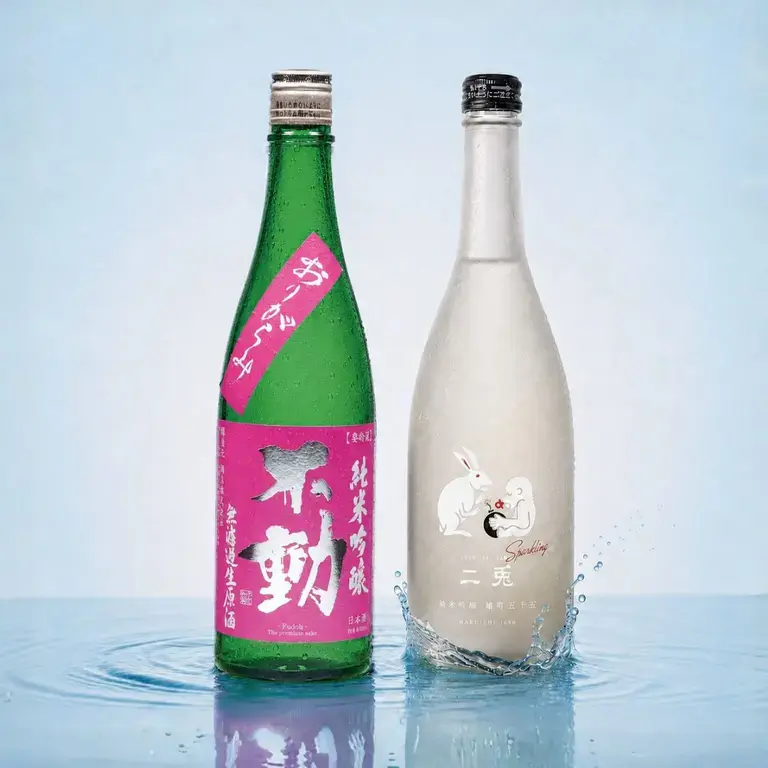
There are dry, sweet, aromatic, earthy, savory, and even sparkling styles. There’s no single taste that can describe sake.
I don’t want people to give up on sake. Once you find a style you like, you can explore even more depth within that specific category.