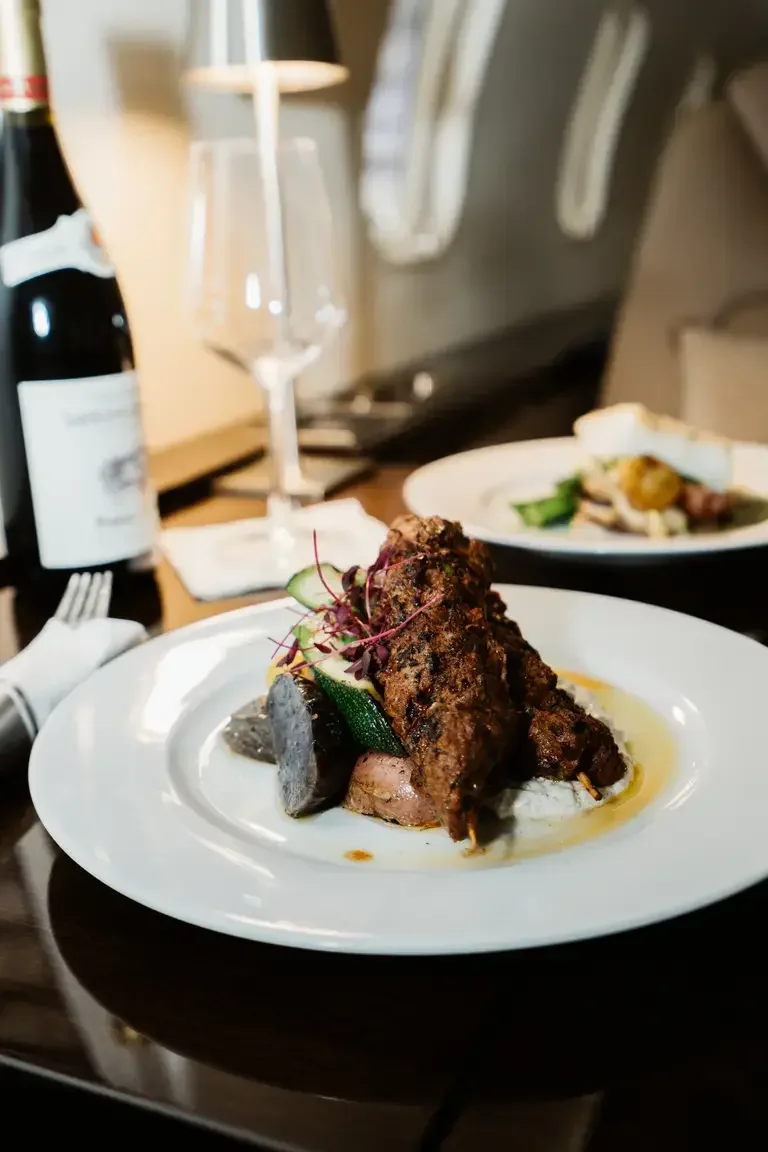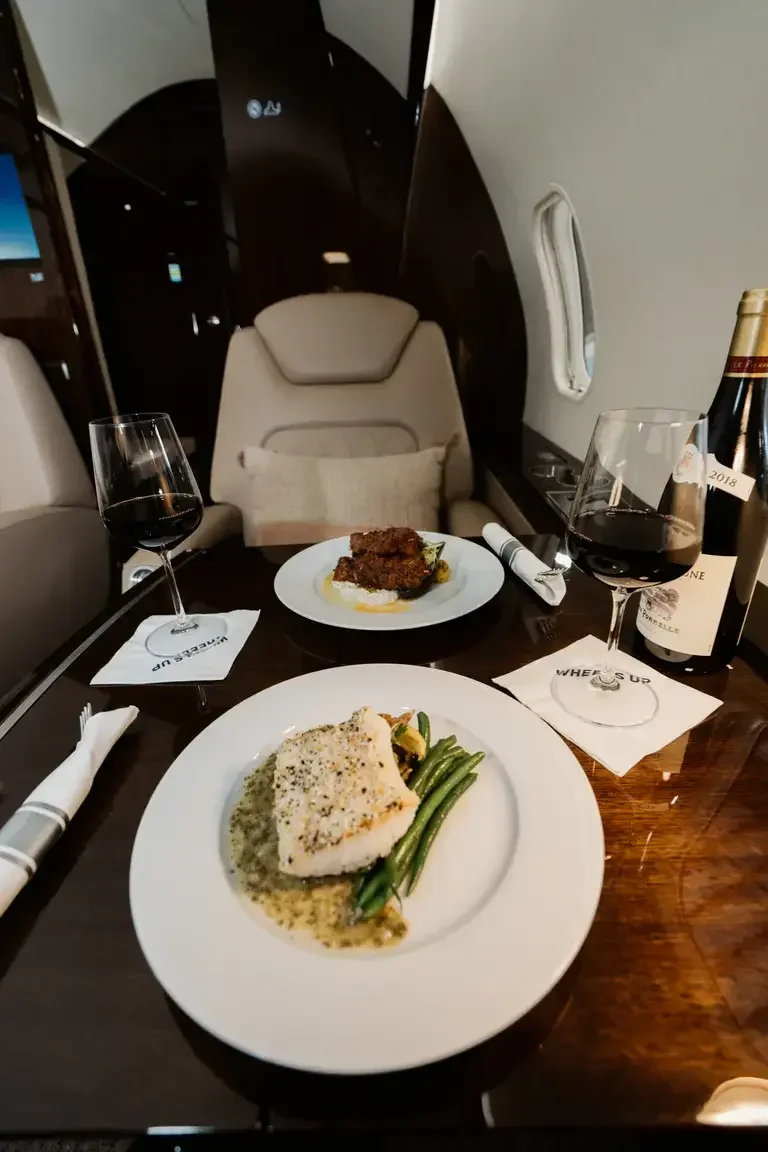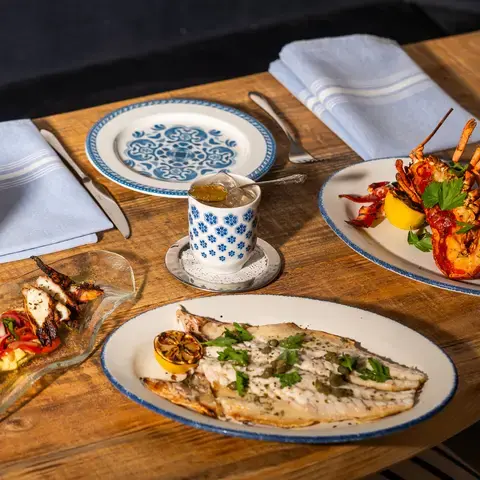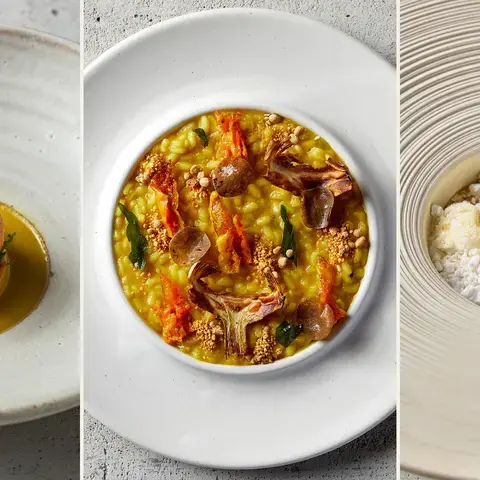
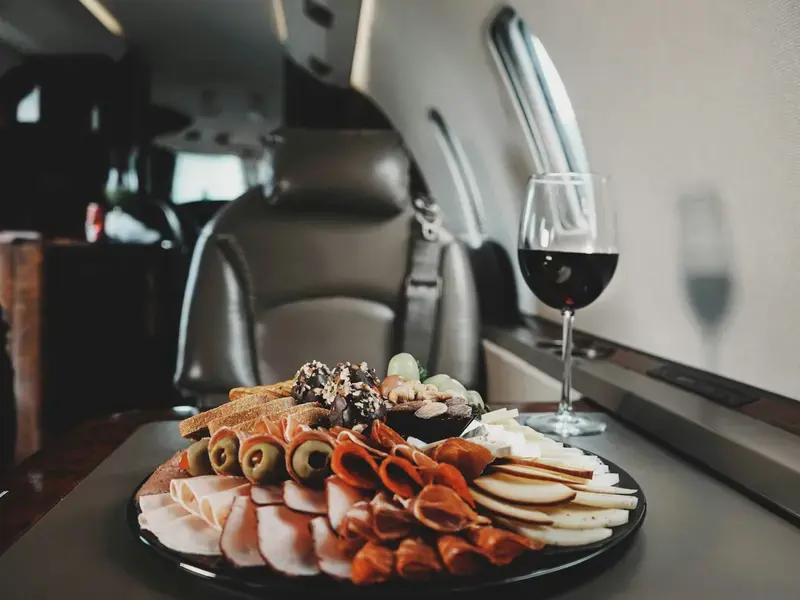
You’re soaring at 35,000 feet, about to dig into a thin-crust pizza from a restaurant in Naples. Or an order of hush puppies from a Greenville favorite. Or a medium-rare steak from a Manhattan chophouse. There’s a white tablecloth and actual (even extra-shiny) cutlery. For the cabin attendant, getting that steak to the table still rare starts well before takeoff.
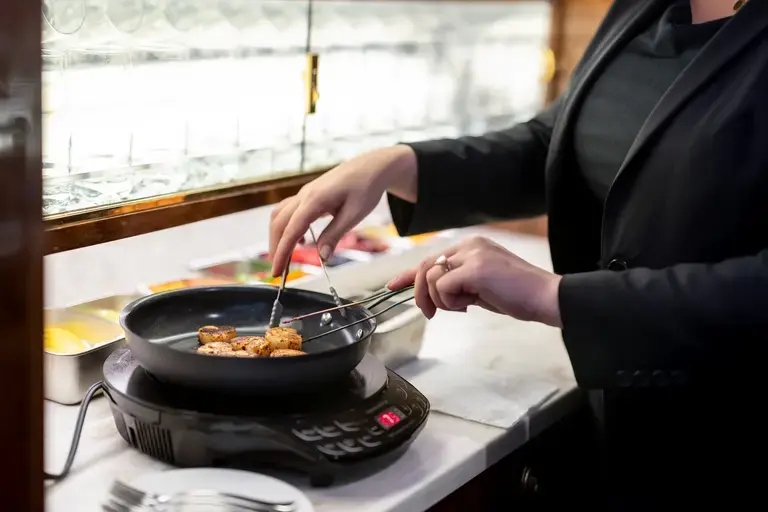
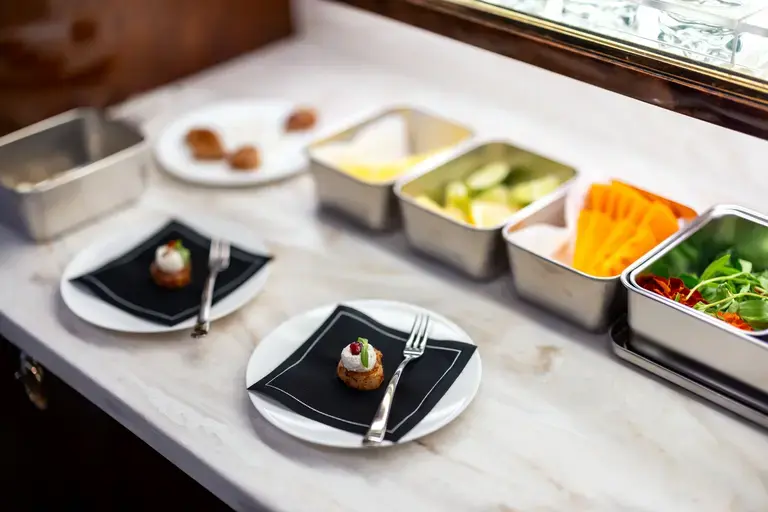
“Every [private] flight is personalized,” says Francesco Vanerio, vice president of customer experience at Flexjet. “Our owners book a flight and the services team picks up that phone call to ask them what they want to eat before their selections are input into the system.” The team takes into account what passengers like and what they can eat, as well as the departure time, flight length, route, and number of passengers. Depending on the order, the food might come from a caterer that specializes in private aviation, a restaurant, or a fresh market. It can be delivered to a fixed-base operator (FBO), a business that provides ground services at the airport, and loaded onto the jet from there. Once the pilot gives the go-ahead, cabin servers get to work. With passengers just steps from the galley, they have to work quickly and keep it tidy.
“The average person imagines that a client on a private jet must be drinking champagne and eating caviar on lobster,” says Kelley Lokensgard, chief cabin attendant at Silver Air Private Jets. She gets those orders, but on a routine flight, she says, clients are more likely to ask for something simpler. They might want to stick to their usual diet, try a local dish they missed on a business trip, or snack on a familiar comfort food. “Many clients request their favorite fast-food burger, a big plate of curly fries with all their favorite dips, and a cold soda over ice,” says Lokensgard.
Curly fries can be tricky to keep crisp on a private flight. For a steak ordered medium rare, Vanerio says the kitchen sears it on the ground so it won’t overcook when the crew heats it on board. On one flight, a passenger asked for pasta, and Vanerio made carbonara tableside, taking his cue from a popular Milanese restaurant.
Lokensgard likes to shop at fresh markets and cook from scratch on board. She’s made mushroom soup, poached fish in a variety of broths, and prepared smoked duck crepes with a fresh corn cream sauce and summer vegetables. “Cabin attendants tend to be ‘yes people’ who can get seriously creative in their menu sourcing,” she says. Food safety is where she draws the line. She’ll say no to sashimi, for instance, if there’s no way to keep the fish cold on the way to the plane. “It can be uncomfortable telling a client that something isn’t possible, but it would be way worse if your offering made them ill,” she says.
In October 2025, Wheels Up announced a partnership with AtYourJet and its culinary advisor, chef Robert Irvine, to make its in-flight menus more consistent across markets. “A dish that a Wheels Up member orders for a flight from Boston should look and taste the same as it does when they fly out of Naples or LA,” says Irvine, describing “the level of control they’re striving for.” His dishes include grilled chicken brochettes, beef filet with potato purée, salmon with roasted vegetables, and lamb kabobs. He describes them as “clean, balanced plates that hold their integrity from the kitchen to cabin.”
Say the owner asks for a cocktail, a friend wants a snack, and another passenger needs a blanket. “There’s one or two cabin servers who have to deal with different requests at once,” says Vanerio. “It’s a case of prioritizing,” he says, “because two minutes as a passenger feels very different than two minutes in the galley.” Flexjet teaches cabin servers how to juggle those requests at its Red Label Academy, which Vanerio leads. The goal is the kind of service you’d get at a five-star European hotel or a Michelin-starred restaurant. “We train to the highest standard but tell them they can scale it down to the individual,” he says. “It doesn’t have to be white glove [service] but it can be.”
Vanerio says the training also gives cabin servers the confidence to shop on their own and stock the plane with a few things that could save the day. “We all have a Mary Poppins’ bag onboard to help in the case that catering doesn’t show up or if the food doesn’t look as good, or if someone isn’t in the mood for something they chose last week.” At the academy, a cheese expert teaches them how to choose cheeses while traveling and how to whip up a cheese and charcuterie board on demand.