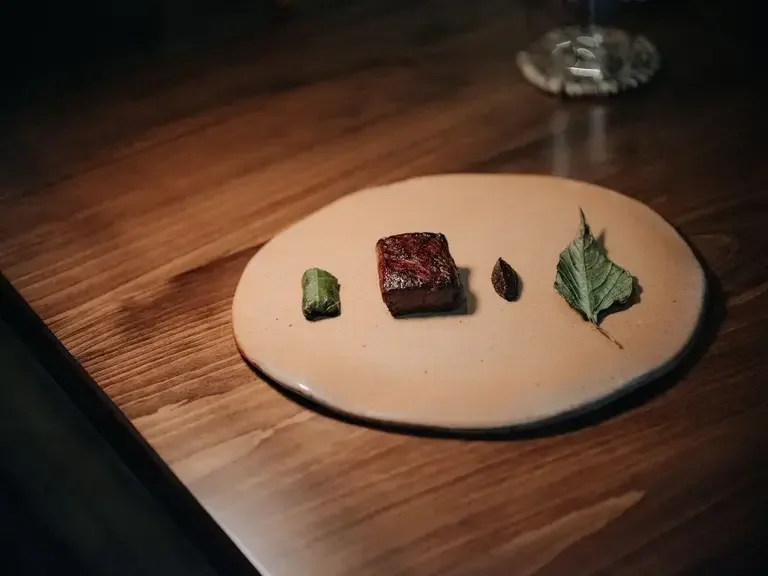
“This is called brittlebush,” says Aaron Lopez, gesturing to a scrubby shrub. Brown and bristling with thin branches like an upside-down brush, it grows beside the dirt trail we are following up a rocky hillside dotted with cacti and low brush in the desert west of Tucson, Arizona. The sun is still climbing on this mid-June morning, but the dry heat is already oppressive. I keep reaching for my water bottle. Hydrate or diedrate, as the saying goes.
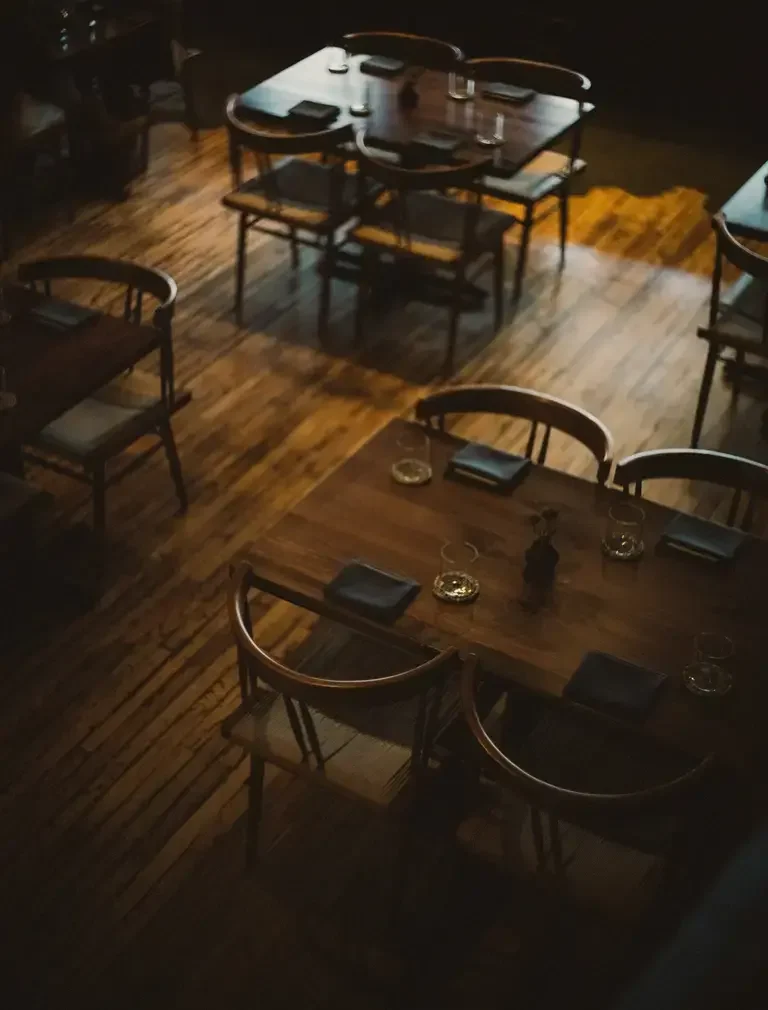
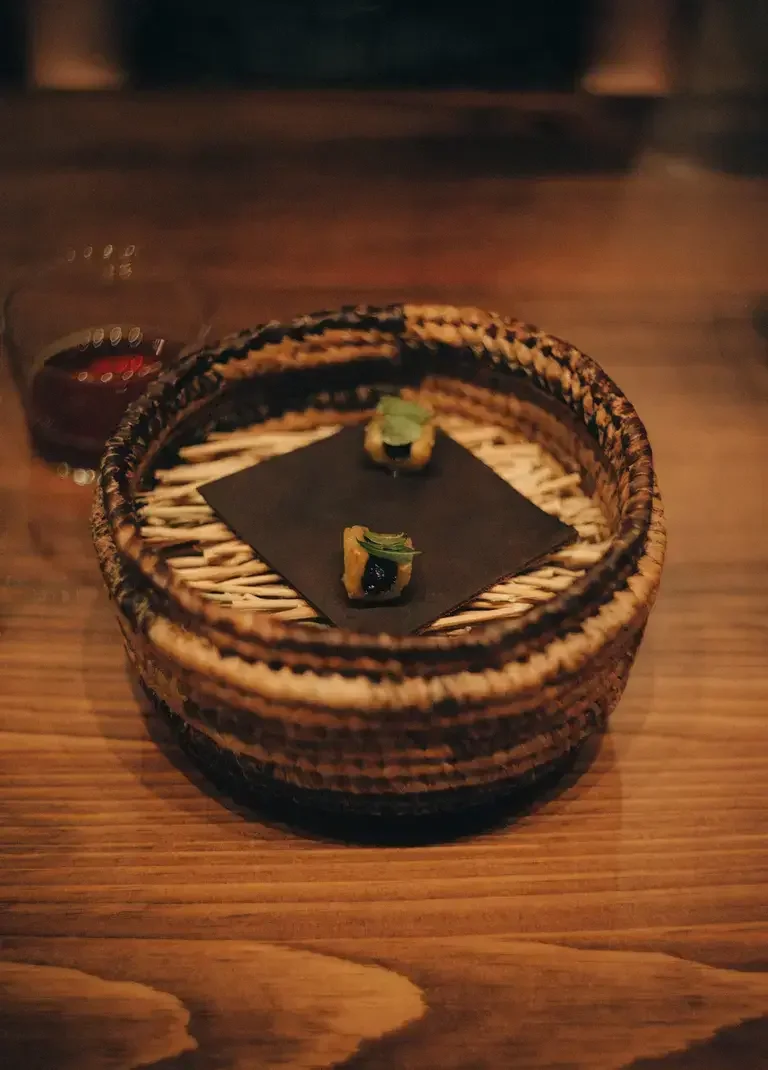
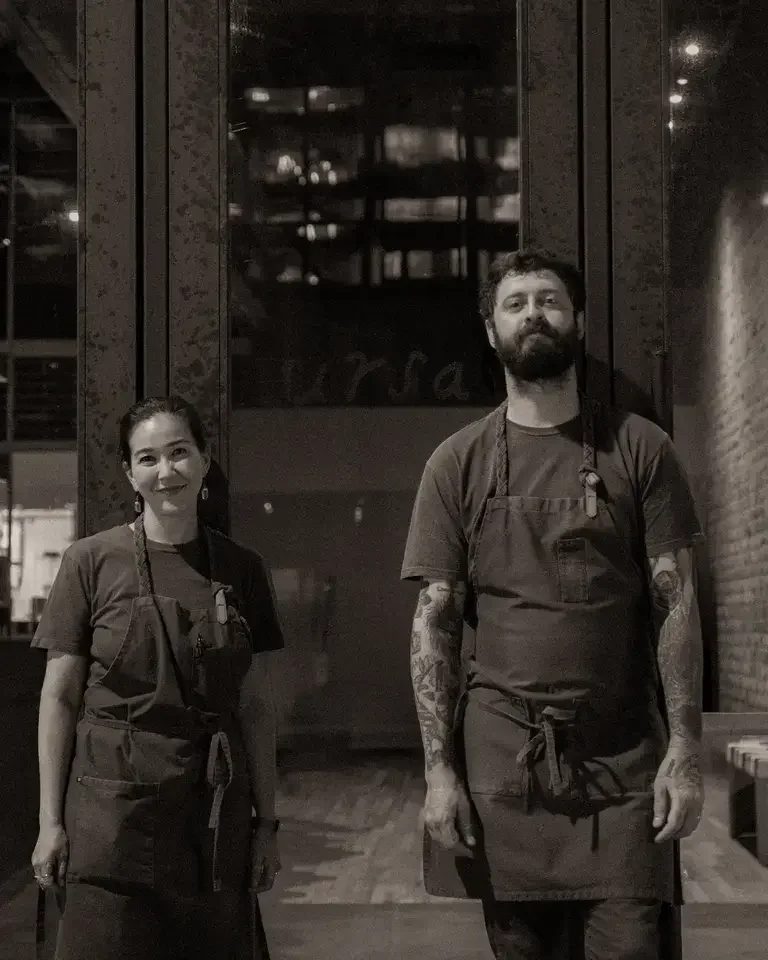
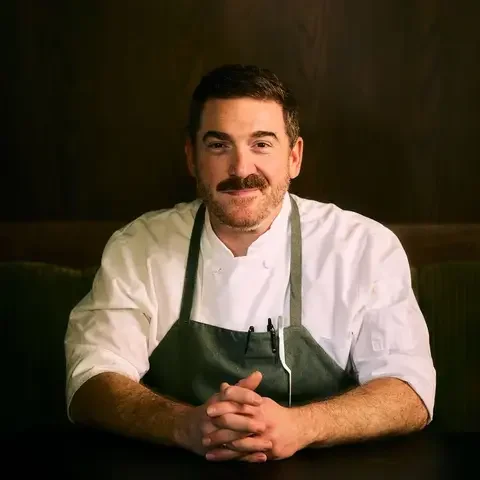
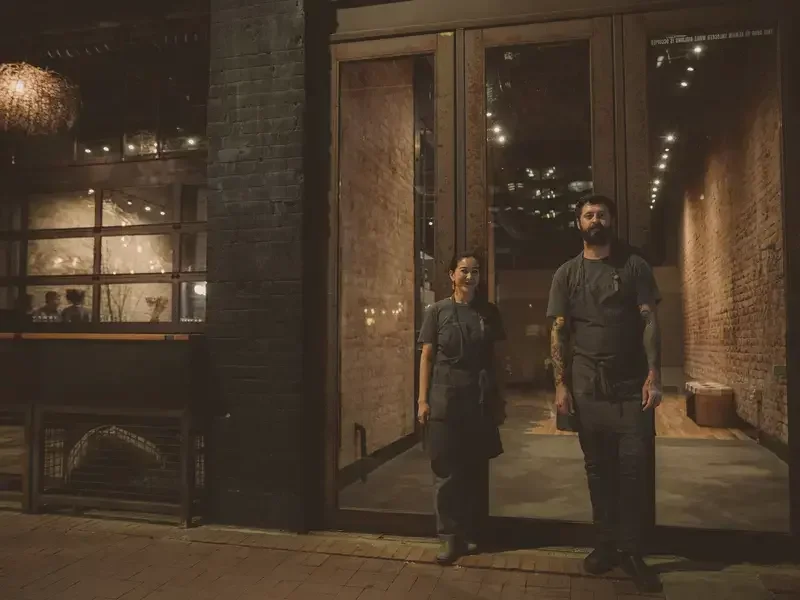
“It’s a perennial typically at its best in spring, when the leaves are a super fresh and a vibrant minty color,” explains Lopez, chef and co-owner of Ursa, a fine-dining restaurant in downtown Tucson whose tasting menu celebrates the flavors of the Sonoran Desert. “It has a very intense bitter flavor that really does define the desert, but it gets overlooked. We’ve only just scratched the surface of what we can do with it.”
So far, Lopez has used the leaves to make a pu-erh-style tea, smoke meats and vegetables, and create infusions.
The desert’s wild foods are central to Ursa’s culinary identity and Lopez’s personal story. Lopez was born and raised in Calexico, California, in the southern Imperial Valley. His grandfather, Hector, taught him about the plants growing around them, regularly quizzing him to make sure the knowledge took root. The environment can be brutal, but it is full of surprises. “Most of the world equates green to life, and, because the desert has very little of it, it gets overlooked,” says Lopez.
Today’s trek is a lesson in how much this landscape holds. A moment later, Lopez hands me a pale green seed sheathed in papery brown skin.
“This is jojoba,” he says, pronouncing it ho-HO-bah. “It’s like a bitter almond. They’re really cool to snack on throughout a hike, because they wake you up.”
I take a bite. It is every bit as bitter as promised. “How do you balance that sharpness when you’re cooking with them at the restaurant?” I ask.
“I feel as if we shouldn’t disrupt what a product does,” Lopez replies. “Our goal is to really show what the desert can do and not dump it with salt and sugar. We do use them very sparingly because they’re harder to digest in large quantities.”
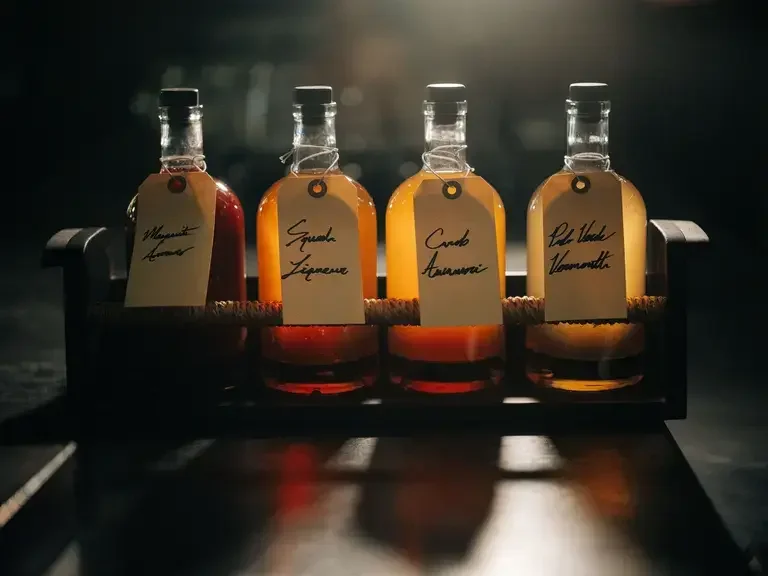
Lopez points to another bush spangled with knobby, purplish pods: velvet mesquite. The mature pods are typically milled into flour for cakes, cookies, breads, and tortillas. At Ursa, the team has soaked the bark to make a milk. They have also experimented with harvesting the sap and grating it tableside over dishes as they would truffles. “We are also fermenting it into an elixir, so we’ll see where that goes,” he says.