
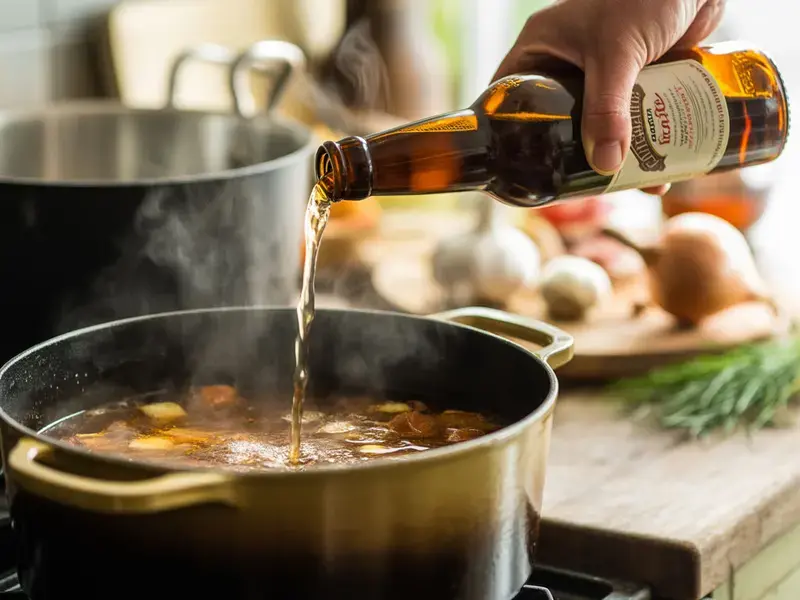
For many home cooks, cooking with beer starts and ends with beer-battered fish or a quick splash in a stew. But beer can do much more in the kitchen. Used thoughtfully, it brings sweetness, bitterness, acidity, and umami, behaving almost like a bridge between stock and wine. Understanding how beer in cooking behaves, which styles suit which dishes, and how to use it safely lets you build deeper flavor in everything from marinades to desserts.
Below, a guide to why and how to cook with beer, the best styles for different recipes, and some ideas to try at home.
Why Use Beer in Cooking?
Beer is complex: it contains malted grains, hops, yeast, and often adjuncts like wheat, spices, or fruit. Each of these elements contributes something specific to food.
Malt brings sweetness, toastiness, and body. It can echo flavors you already have in a dish, such as roasted meats, caramelized onions, or dark chocolate. Hops add bitterness and aromatic notes that range from herbal and floral to resinous or citrusy. Yeast fermentation brings subtle acidity and savory depth.
This makes cooking with beer useful when you want to:
- Add depth and complexity without the tannins of red wine.
- Give stews, braises, and sauces a rounded, malty backbone.
- Lighten batters and tempura with carbonation.
- Build aromatic marinades that tenderize while flavoring.
If you already pair beer with your food at the table, you can extend that logic to the pan. Many of the guidelines that help you pair beer with food like wine – matching intensity, contrasting or mirroring flavors – apply equally when you are choosing which beer to cook with.
Best Beer Styles for Different Dishes
Not all beers behave the same in a recipe. Choosing the right style is as important as deciding to use beer at all.
For most recipes that require cooking with beer, start with something balanced and moderate in alcohol. Extremely bitter or highly alcoholic beers can easily dominate a dish, especially as the liquid reduces.
A few reliable pairings:
- Pale lagers and kölsch for light batters, steamed mussels, or delicate poultry.
- Wheat beers for seafood, shellfish, and dishes with citrus or herbs.
- Amber ales for sausages, roast chicken, and onion-based stews.
- Brown ales for beef stews, casseroles, and mushrooms.
- Porters and stouts for slow-braised meats, chilies, chocolate desserts, and baked puddings.
Very strong beers – like some of the strongest beers in the world, which can reach spirits-like levels of alcohol – are usually better reserved for sipping, not simmering. Their intensity and sweetness can throw off the balance of a dish unless used in tiny amounts, for example in a dessert sauce or glaze.
How to Add Beer in a Recipe Safely
When you are learning how to cook with beer, safety and control matter as much as flavor.
First, treat beer like any alcoholic liquid near heat: keep open flames in check, pour slowly, and avoid splashing onto gas burners or very hot fat. Alcohol can ignite, especially in high-proof beers, so add beer off the direct flame whenever possible, then return the pan to the heat.
Next, be realistic about alcohol “cooking off”. It does reduce over time, but it does not vanish instantly. Long-simmered stews and braises will have significantly less alcohol than a quick pan sauce, but not necessarily zero. Keep that in mind if you are serving children, pregnant guests, or anyone avoiding alcohol.
A few principles help control the result:
- Add beer early in long-cooked dishes so it has time to mellow and integrate.
- Use smaller quantities in quick recipes so the bitterness and alcohol do not dominate.
- Taste as you go and balance with stock, water, or aromatics if the beer flavor feels too assertive.
If you already know how to deglaze with wine, the process is familiar: pour in a small amount of beer to dissolve browned bits on the bottom of the pan, then reduce until the raw alcohol edge softens and the sauce tastes concentrated but not harsh.
Cooking Techniques Enhanced by Beer
Beer shines in several classic techniques, often in places where you might otherwise reach for wine, stock, or water.
Braising and stewing
Replacing some or all of the liquid in a braise with beer deepens the flavor of meats and vegetables. For example, beef or pork cooked slowly in brown ale or stout gains a gentle bitterness and roasted malt notes that echo the browning on the meat.
Marinating
Beer-based marinades can help tenderize proteins and infuse them with flavor. Combine beer with aromatics, herbs, spices, and a little acid. For poultry or pork, a pale ale or wheat beer adds subtle fruit and spice notes without overwhelming the meat.
Battered and fried dishes
Carbonation in beer creates light, crisp batters and coatings. Classic beer-battered fish, onion rings, or vegetables benefit from the bubbles, which expand in the hot oil and create a delicate shell. Neutral lagers or pilsners are often ideal here.
Deglazing and reduction sauces
After searing meat or vegetables, use beer to deglaze instead of wine. Scrape up the fond, then reduce with stock, mustard, cream, or herbs for a sauce that feels rustic yet layered.
Baking and desserts
Darker beers like stout and porter pair beautifully with chocolate, coffee, and caramel flavors. They can be used in cake batters, sticky toffee puddings, or ice creams, adding complexity and moisture.
Once you start thinking of beer in cooking as another flavor tool – like vinegar, stock, or fortified wine – it becomes easier to decide where it can genuinely improve a dish rather than just feel like a gimmick.
Beer Recipes to Try at Home
When you are ready to experiment with cooking with beer recipes, start with dishes where beer clearly supports the existing flavors rather than competing with them.
You could try:
- A slow-cooked beef or pork stew with brown ale, root vegetables, and plenty of onions, where the malt amplifies the sweetness of the vegetables and the caramelization on the meat.
- Mussels steamed in wheat beer with garlic, shallots, herbs, and a touch of cream, where the beer echoes the bread you might serve on the side.
- A pale-lager batter for fish or seasonal vegetables, adjusting the thickness so the coating stays crisp and light.
- A stout-infused chocolate cake or pudding, where roasted malt flavors intertwine with cocoa and coffee notes.
From simple deglazed pans to long, slow braises and batters, cooking with beer is about balance. Choose the right style, add it thoughtfully, respect its strength, and it will give your stews, marinades, and sauces a quiet but unmistakable depth.