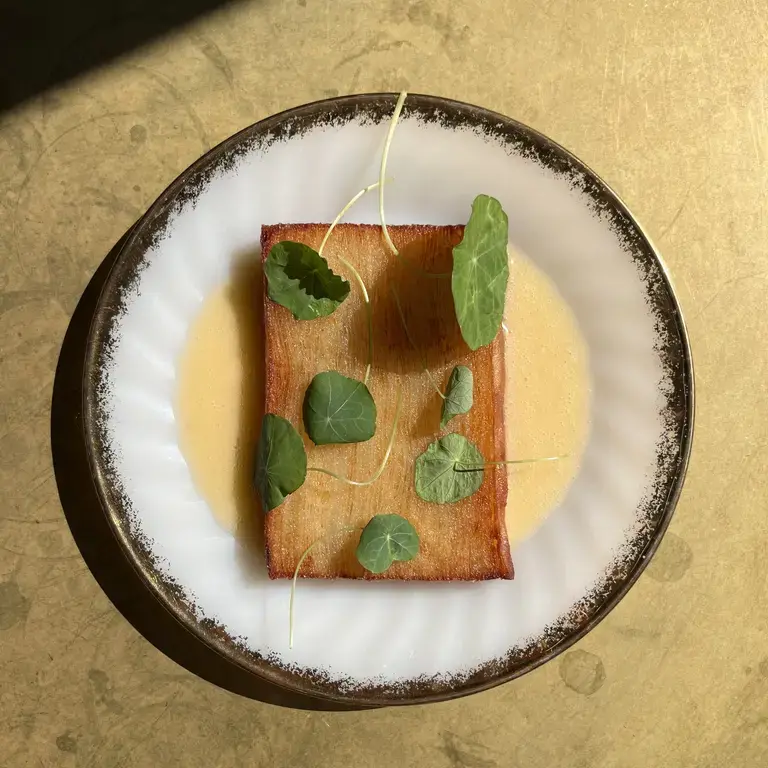
Potato Pavé With Caramelized Sauerkraut. Credit: Camille Lindsley

FOR THE CARAMELIZED SAUERKRAUT
Olive oil: 70 g
White onions: 3 (peeled and julienned)
Sauerkraut: 450 g (drained and slightly dried)
Whole caraway seeds: 5 g
White verjus: 240 ml
Dijon mustard: 1 tbsp
Maple syrup: 1 tbsp
Lemon juice: to taste
Salt: to taste
FOR THE POTATO PAVÉ
Butter: 450 g
Thyme: 3 sprigs
Garlic cloves: 2 (smashed)
Idaho potatoes: 4.5 kg
Neutral oil: for frying
Salt: to taste
This dish came about due to our desire to make a perfect potato preparation that felt at home on all of our menus, whether Sunday brunch, dinner tasting menu, or at an off-site pop-up. I grew up in the fissure between Philadelphia and the Amish Country of central Pennsylvania, and both cultural centers represent something near and dear to my cooking style. I wanted to make a dish that looked metropolitan and technical, but tasted like country cooking. Roasted sauerkraut is a flavor that I became accustomed to eating and cooking in Pennsylvania. When I discovered it was not a typical preparation elsewhere in the country, I felt compelled to introduce it to as many people as possible.
We make the sauerkraut in house and let it age for at least six months before serving it. That gives plenty of time for the flavors to develop, and the texture of the cabbage relaxes. When caramelized, it melts seductively into the flaky, buttery layers of potato pavé. Its funk is given context with the additional brightness of the verjus. You can garnish with nasturtiums or other similarly peppery greens, like arugula or mustard greens.
- Warm the olive oil in a rondeau or wide, heavy pan over medium heat. Add the onions and cook, stirring occasionally, until lightly caramelized.
- Add the sauerkraut and caraway seeds. Continue cooking, stirring frequently and scraping the pan as fond develops, until the mixture is deeply caramelized and mahogany in color.
- Deglaze gradually with small splashes of the verjus as needed to loosen the fond and continue building flavor. Once fully caramelized, remove from heat and transfer to a mixing bowl.
- Stir in the Dijon mustard and maple syrup. Season with lemon juice and salt to taste. Set aside.
- Place the butter, thyme, and smashed garlic in a saucepan over medium heat. Melt gently and cook for about 5 minutes, allowing the butter to absorb the aromatics. Do not let the garlic brown. Strain and keep warm.
- Peel the potatoes, keeping them whole in cold water to prevent discoloration. Do not soak once sliced.
- Preheat the oven to 350°F.
- Generously coat a 30 × 15 cm pan with cooking spray. Line the bottom with parchment paper and spray again.
- Using a mandolin, slice the potatoes thinly lengthwise. Arrange the slices in overlapping layers in the pan, creating a scalloped pattern. Brush each layer with the melted herb butter and season lightly with salt every other layer. Continue layering until the pan is full.
- Cover with parchment, place a second pan on top, and weight it down. Set the pan on a baking tray and bake for 1 hour, or until the potatoes are easily pierced with a cake tester.
- Remove from the oven and refrigerate overnight with weight still applied.
- The next day, unmold the pavé by inverting it onto a cutting board. Cut into 1.25 cm slices.
- Heat vegetable oil in a cast iron skillet to 350°F. Fry the slices until golden brown and crisp on both sides. Season with salt.
- Serve hot, topped with the caramelized sauerkraut. Garnish with peppery greens such as nasturtiums, arugula, or mustard greens if desired.