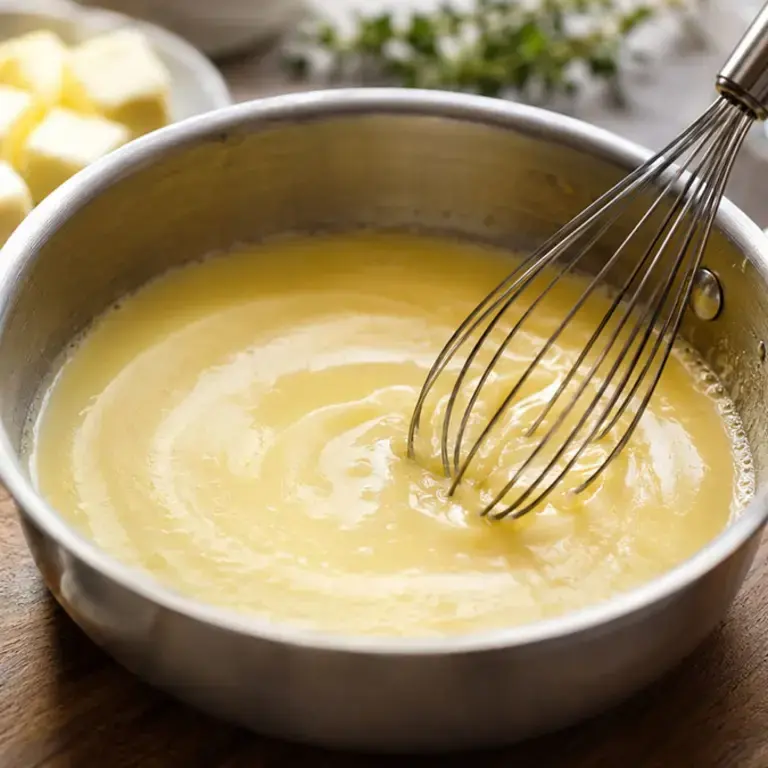

To make the perfect beurre monté, start by using cold butter. When the butter is cool, it melts gradually and gives the emulsion time to form. Ideally, you should cube the butter and then use it straight from the fridge when ready to make the sauce. It only takes four tablespoons of butter to form the emulsion, and you don’t need to add any more water to the mix once it’s stabilized.
It’s vital to add the butter slowly at the start and to whisk continuously to help disperse the butterfat. Once you can see that the smooth emulsion has formed, you can be more generous with the size of the butter chunks.
After boiling the water, the heat must be turned to low to allow the butter to melt gradually. When bubbles form, the pan has gotten too hot and will need to cool off the heat to prevent the emulsion from splitting. After cooking, keep it warm but make sure it never reaches a simmer and it’s best used within the hour.
To maintain full control over the taste profile of your beurre monté, try making your own butter using this viral recipe to add a homemade touch.
What It's Used For (Poaching, Glazing, Sauces)
Beurre monté is made in kitchens worldwide, favored by chefs for its ability to evenly coat ingredients, add a professional glossy shine, and allow gentle poaching of ingredients without separating. It’s used for poaching seafood, particularly lobster, and helps to keep the meat juicy while enriching the flavors.
It can also be used as a glaze to elevate simple roasted vegetables and rich meat dishes. Simply toss roasted vegetables in a saucepan with your beurre monté for one minute to gently coat the ingredients.
Beurre monté is also often incorporated into recipes as a French butter sauce with added flavors. Some chefs will introduce ingredients such as lemon zest and parsley, for a classic lemon and herb sauce, or a dash of truffle oil for an indulgent twist. For a spicy kick, try incorporating red pepper flakes or smoked paprika for a gentle touch of savory heat.
Common Emulsion Mistakes
Though beurre monté is easier to make than beurre blanc, which requires precise ratios, there are still ways for the emulsion to split. Letting it boil is one of the usual reasons for the sauce to fail. At too high a temperature the emulsion becomes unstable and will likely split into butterfat and water. Adding the butter too quickly overwhelms the small amount of water and prevents the emulsion from forming.
This isn’t a sauce that you can leave unattended either. Leaving it over high heat for just one minute can push it past a stable temperature. If it does split, there are ways to recover the emulsion. You will usually need to remove it from the heat, add one tablespoon of cold water along with a cube of cold butter, and whisk vigorously to bring the emulsion back together.