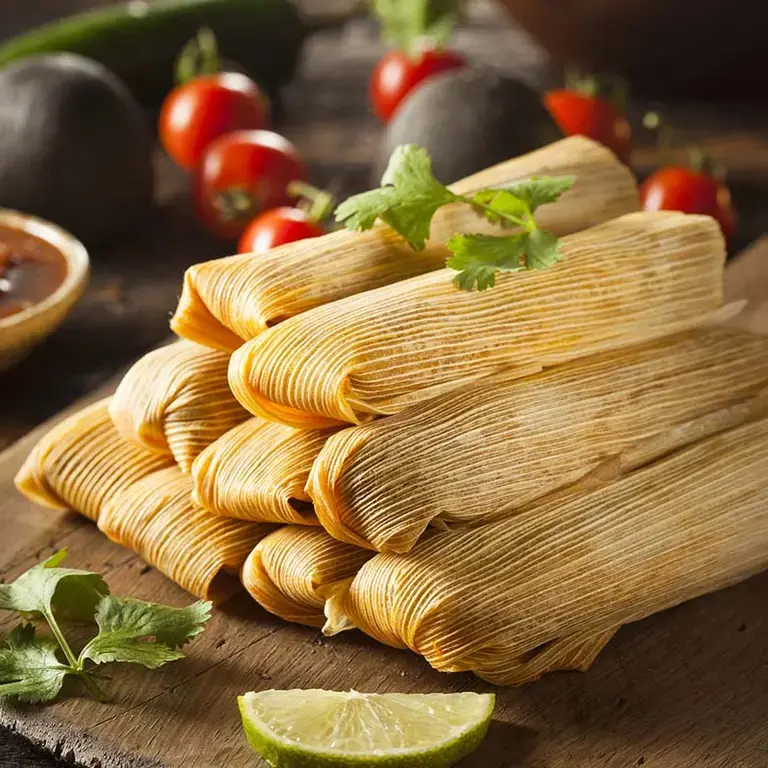

For the perfect tamale, the masa needs to be a light, fluffy dough. A good tamale should be tender with the masa supporting, not dominating, the filling ingredients. One way to test the consistency of the dough is to whip a little masa with water until it becomes light enough to float, which indicates that it’s properly aerated. If you’re new to cooking with masa harina, and wondering how it compares to similar ingredients such as corn flour, take a look at our helpful article explaining the key differences.
The corn husks must be soaked in hot water to become pliable before filling, so it’s important not to skip this step. The wrapper is vital for steaming the tamale and cooking the ingredients inside. During the steaming process, the tamales need to be arranged with the open ends facing upward to let the masa cook properly, and they need time to rest after steaming to allow the dough to set. Though tamales are traditionally prepared in batches, take care not to overcrowd the basket, as this will stop them from cooking evenly.
Origins and Tradition (From 7000 BC to Today)
Before trying to make this recipe it’s first helpful to understand what a tamale is. At its simplest, it’s a traditional Mesoamerican dish made of masa, filled with meats, cheese, and vegetables, wrapped in a corn husk, and steamed until firm. Early versions of this dish are thought to have originated from practical needs to carry and preserve food.
Tamales are both portable and hearty, and would have likely served as food for hunters, traders, and soldiers. Alongside this practical need, they were also used in ceremonies in the Aztec and Maya cultures. When the Spaniards arrived in America around the 16th century, ingredients such as pork and spices were incorporated into existing recipes.
Today tamales are still featured at important celebrations, from Christmas to Día de los Muertos, and recipes are passed down through generations inspired by a family’s regional identity.
Regional Variations (Sweet, Chicken, Vegetarian)
There are many regional variations on this dish. In northern Mexico it’s common to find tamales made on the smaller side, featuring fillings such as pork with red chili sauce. In southern Mexico including Oaxaca, banana-leaf tamales are popular, using banana leaves in place of the corn husks for added earthy aromas. Vegetarian tamales reflect Mexico’s long heritage of plant-based cooking, with fillings from beans to roasted peppers found in a variety of recipes.
Sweet tamales are another take on this dish, including fillings such as strawberries, cinnamon, chocolate, nuts, and seasonal fruits. The masa is often sweetened and colored and sweet tamales are usually found at celebrations and family gatherings. For more Hispanic-inspired celebratory recipes, take a look at our roundup of the top five Puerto Rican Christmas recipes to try.