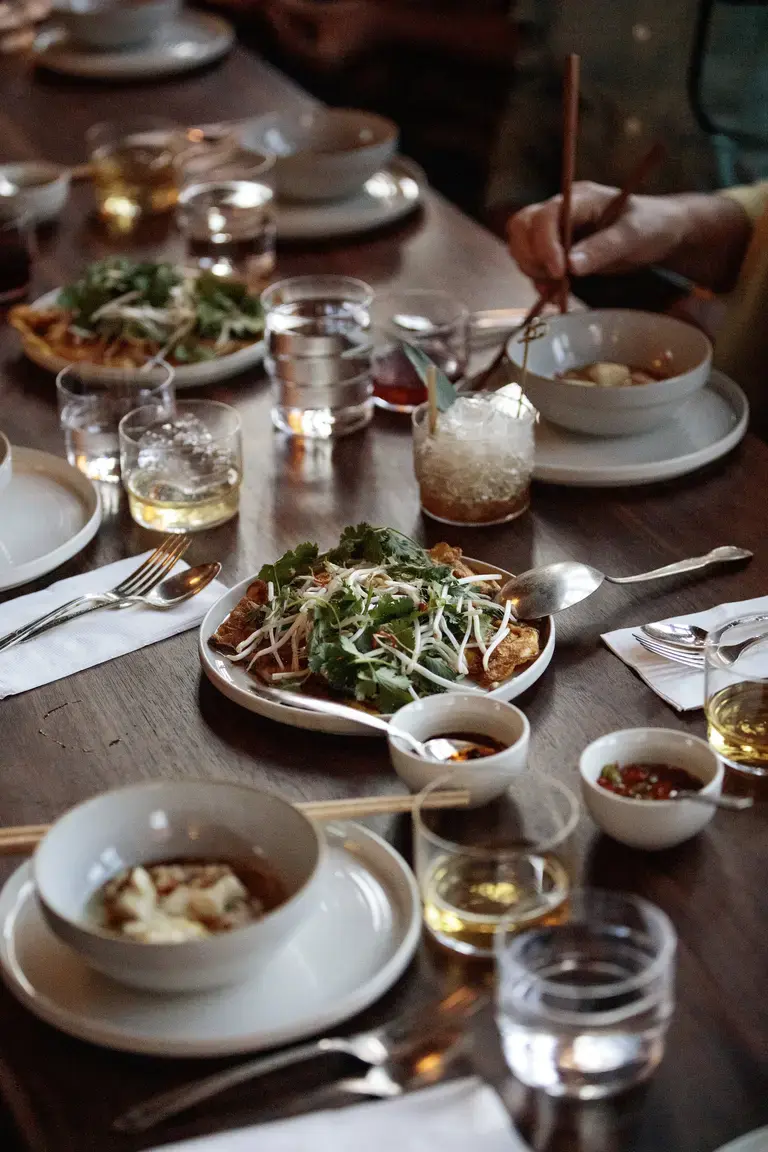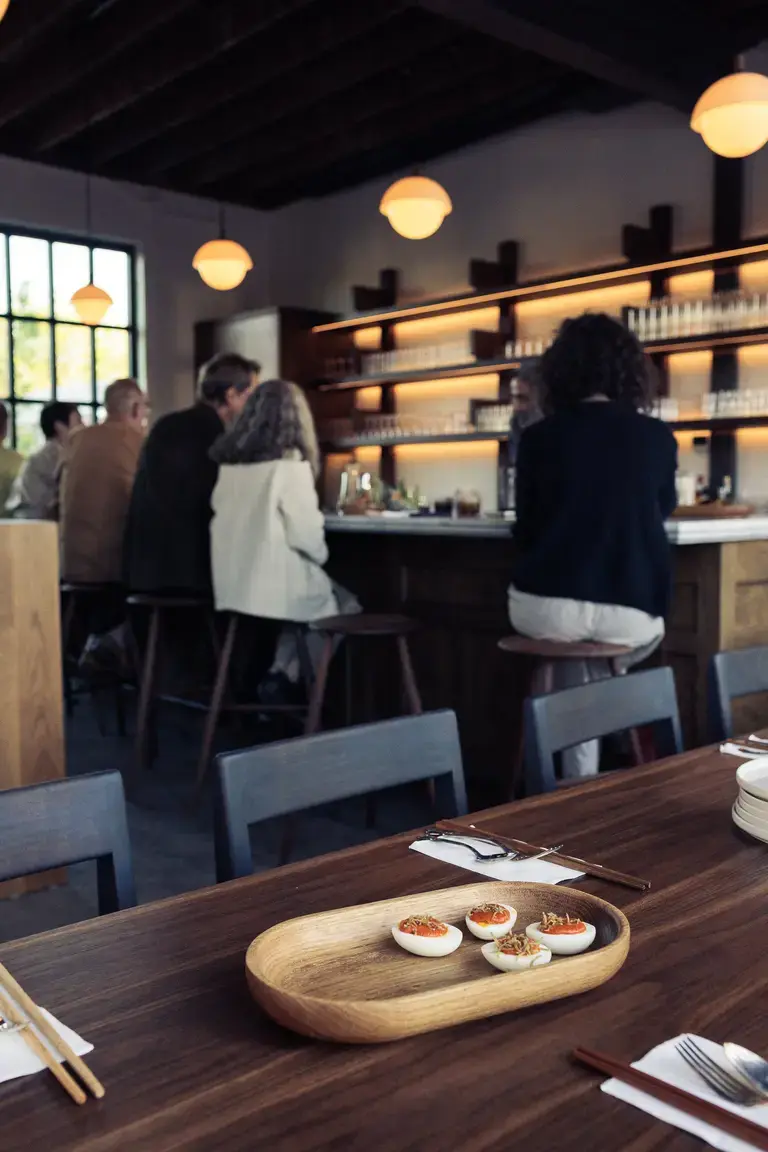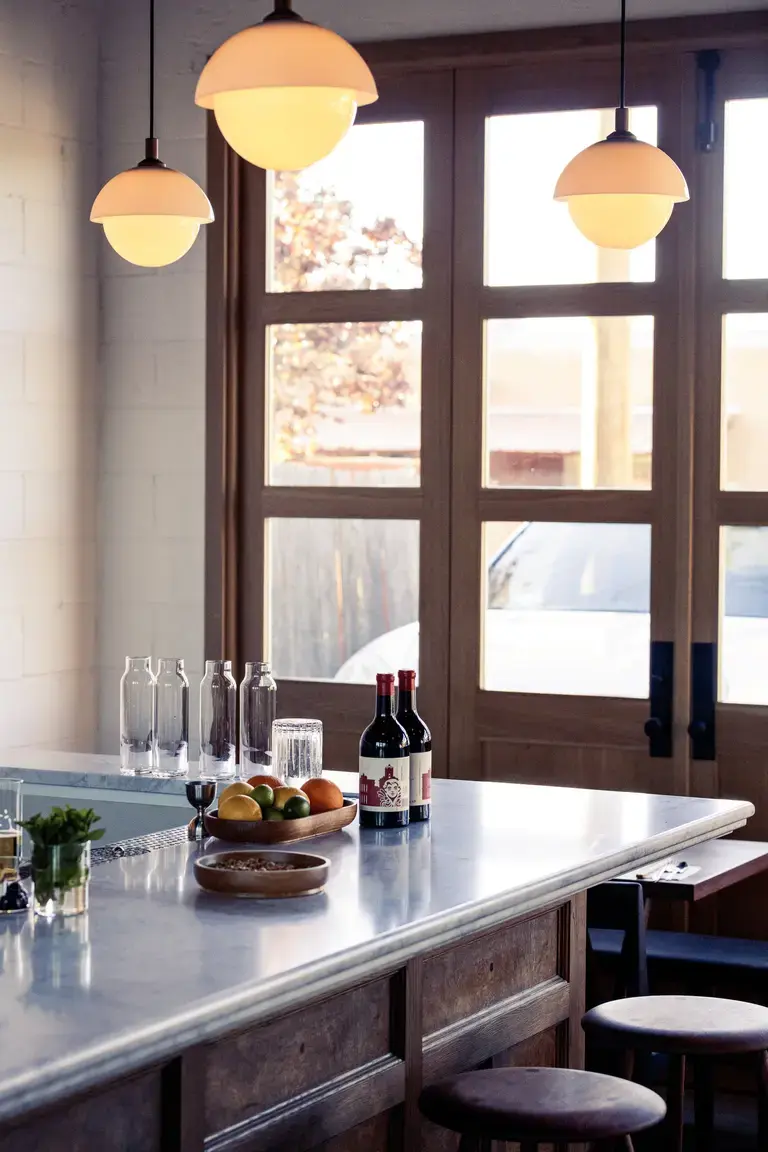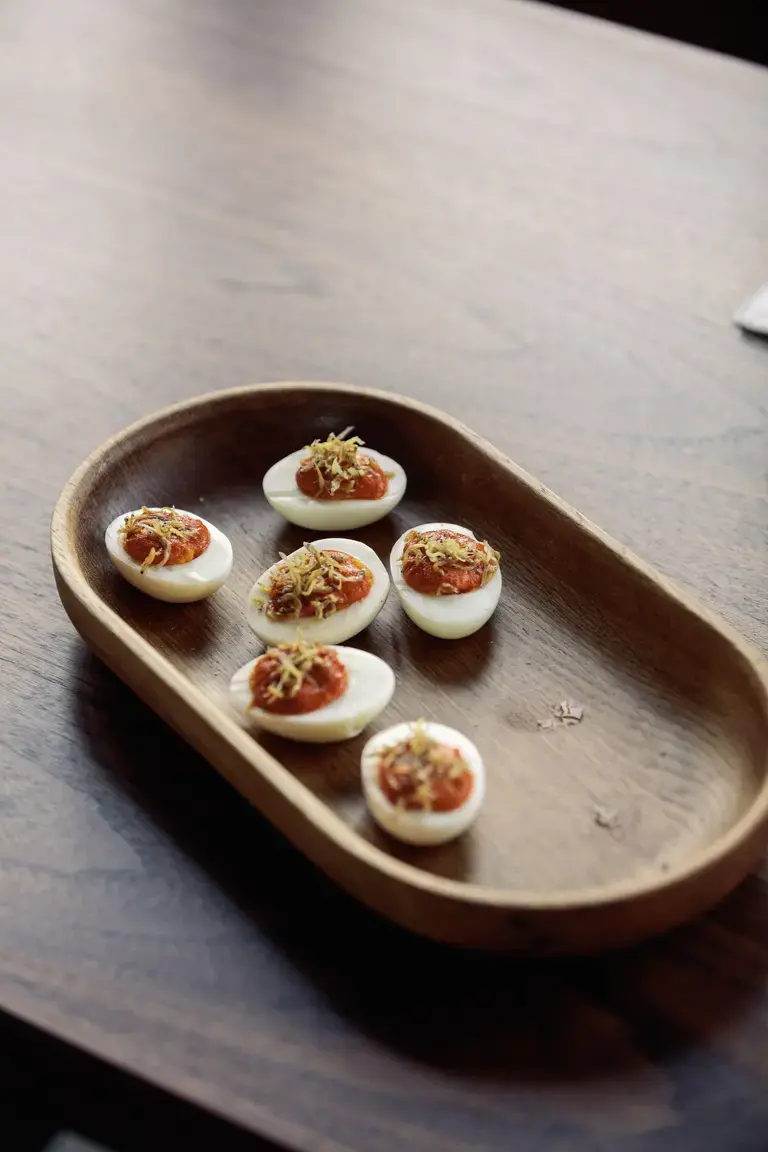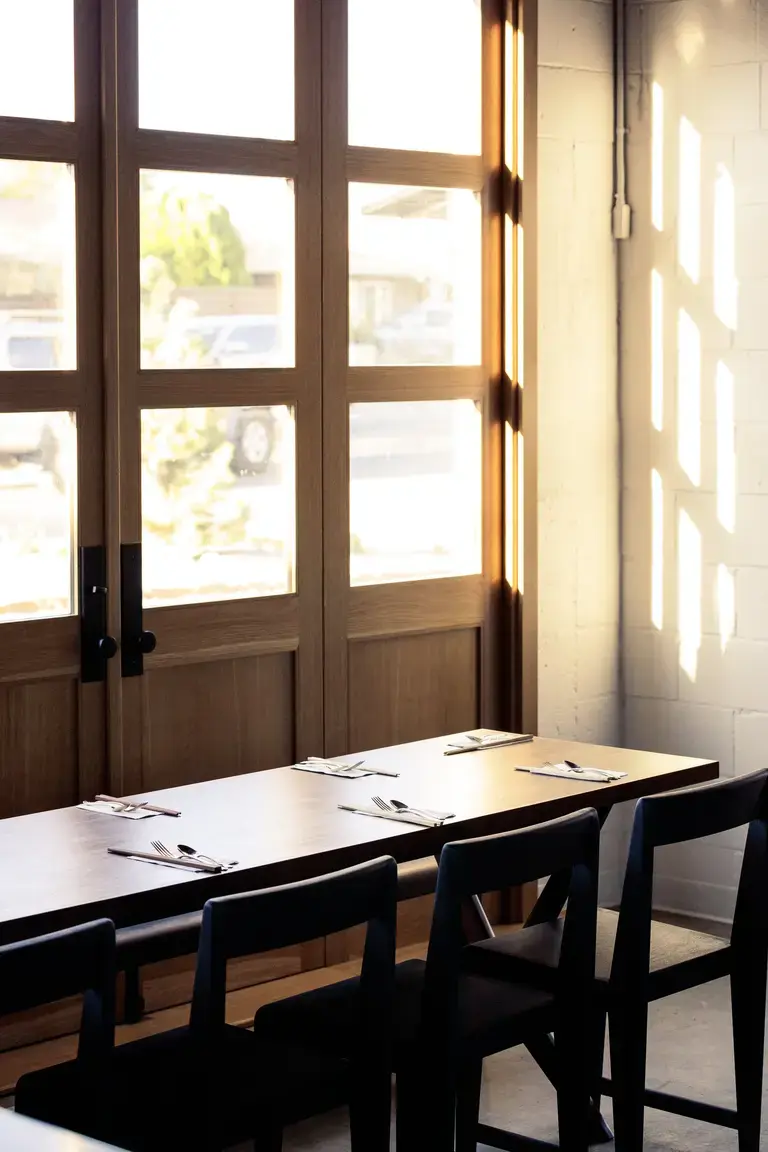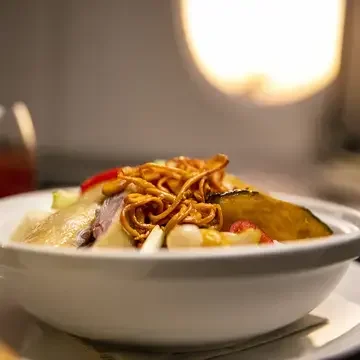

Part of the appeal of Leo’s, Zak Pelaccio’s Thai and Malay-inspired restaurant in Santa Fe, is watching the team work within the building’s constraints. The communal tables are less a statement about the modern need for human connection than a practical way to accommodate more diners inside the former 1950s gas station and auto shop. Because the kitchen is small, servers encourage guests to order the full meal at once and explain that dishes will arrive as they are ready. “Most Asian restaurants use this service style anyway,” Pelaccio says.
Leo’s is, in other words, built on resourcefulness. Pelaccio has always been scrappy, and that scrappiness has been central to his success.
“Resourcefulness is a prerequisite for the job,” says Pelaccio, who won the James Beard Award for Best Chef: Northeast in 2016 and made his name with the Fatty Crab restaurants. “Most creative people need parameters in which to be creative.” In the restaurant world, one of those parameters is often a lack of space. Leo’s is not Pelaccio’s first experience with cramped quarters. Chickenbone Café, the Williamsburg gastropub he opened in 2002, had no dedicated prep area. To make the space work, he commissioned cutting boards that matched the size and shape of the bar, where he and his staff butchered animals after service.
At Fatty Crab, the Southeast Asian restaurant that put Pelaccio on the map, he had nowhere to cure meat. Pelaccio recalls that the health regulations required him to use a specialized facility, but he was determined to cure the meat himself. His staff kept a garbage bin nearby with a clean bag inside. If inspectors arrived unannounced, someone would yell, “Health inspection!” and the team would toss whatever they were curing into the bin. The inspectors would look inside and assume it was garbage. As soon as the coast was clear, the staff would retrieve the meat and get back to work.