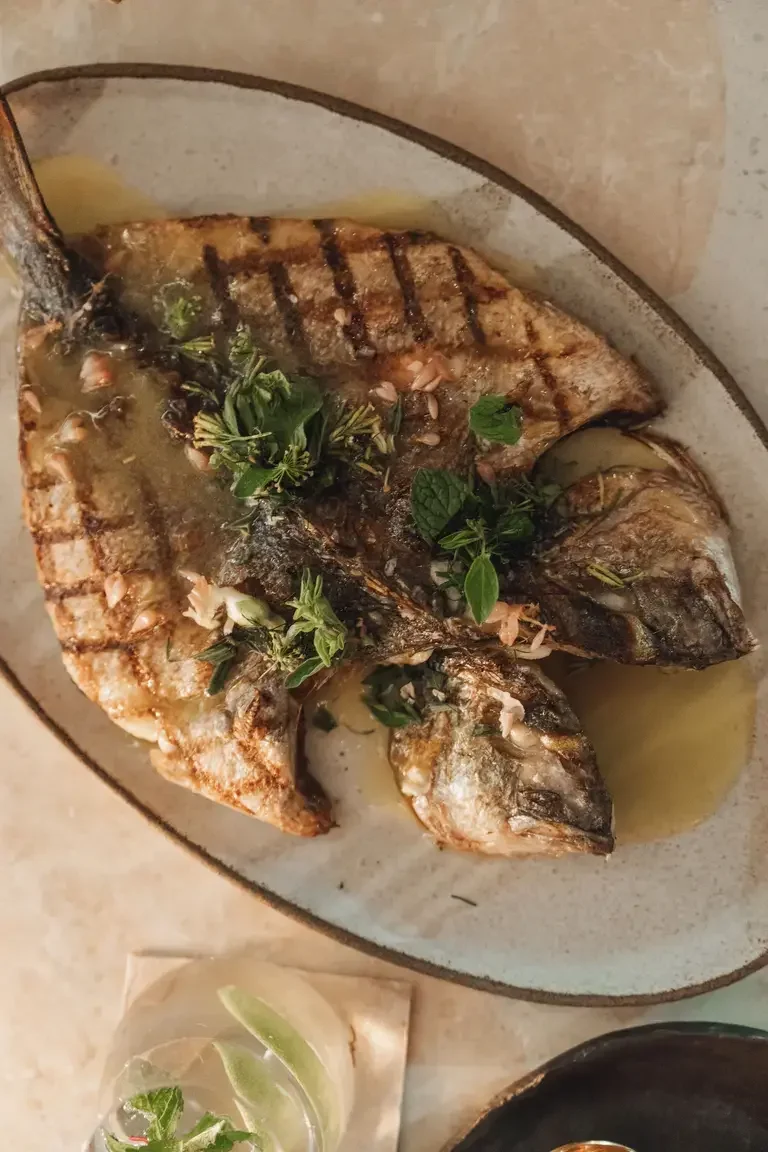
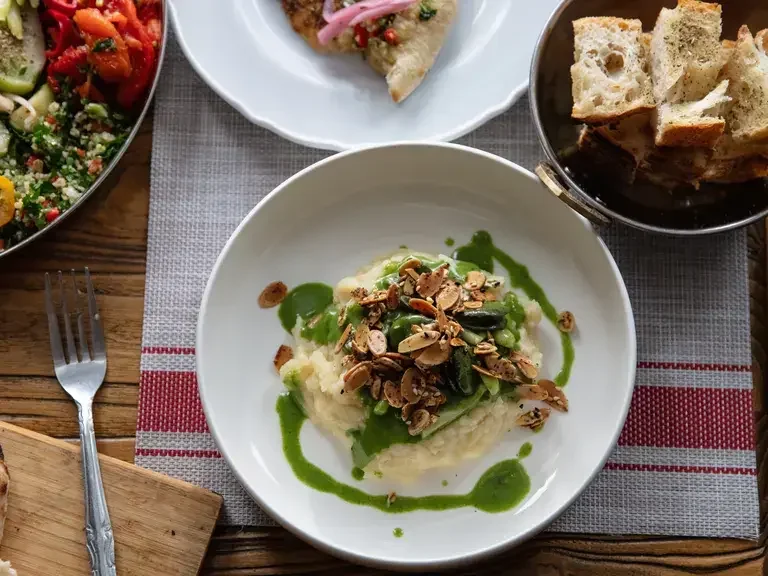
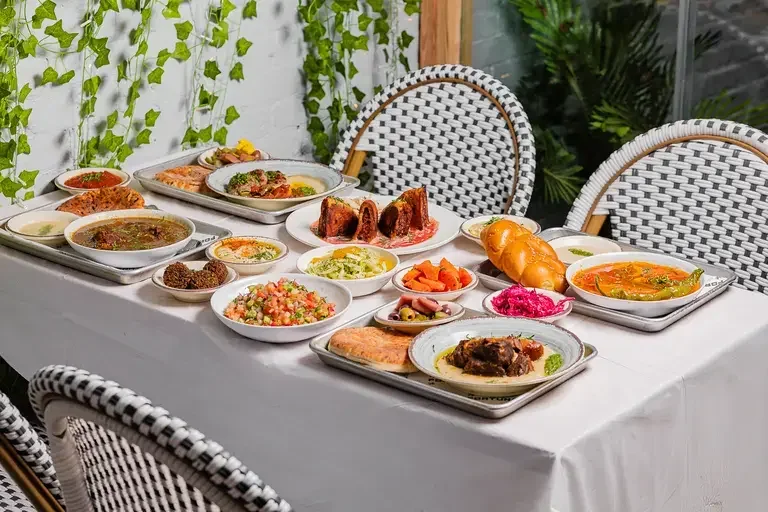
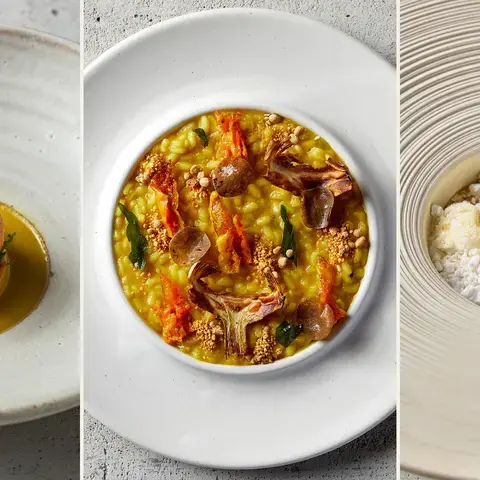
“The region is so diverse,” says chef Bobby Saritsoglou of Stina in Philadelphia. “Greek food isn't defined by Italian, Turkish, Lebanese, Spanish or North African food, as they each have their own history and identity.” At the same time, dishes that fall into the Mediterranean category ultimately share more similarities than differences.
“Every region has its own traditions, but there is a shared respect for ingredients, seasonality and the idea of gathering around food,” says Aslanoglou, who builds on his Greek heritage with recipes learned in kitchens across France, Spain, and the Middle East. Those experiences “taught me how much diversity exists within Mediterranean cooking,” he says.
Even though small plates are now trending in the U.S., mezze, tapas, and cicchetti are ingrained in Mediterranean culture, where “meals are meant to be shared, people linger at the table, and eating is connected to family, community and hospitality,” explains Demetri Tsolakis of Xenia Greek Hospitality in Boston.
Rather than thinking of a menu in terms of “small plates,” newer stateside Mediterranean restaurants nod to the region’s culinary lifestyle, prioritizing the community aspect of dining through shareable dishes. “It changes the energy of dinner,” says Tsolakis. “Instead of everyone ordering an appetizer and an entrée and staying within their own plate, the table becomes part of the experience.”
A single ingredient can also reveal connections across the region. At Fortuna in New York City, for instance, chef-owner Tal Lavi fuses nonna’s cooking with flavors from Israel, Yemen, Egypt, and Morocco. In addition to using Italian olive oil, he spotlights tahini. “It's our version of mayo in Mediterranean cooking,” says Lavi, who imports his tahini directly from Israel. From Egyptian hummus to the dipping sauce served with Fortuna’s shawarma dumplings, Lavi says using tahini and “ingredients like it introduces different flavors to the American palate.”
Beyond individual ingredients, dishes have evolved as they’ve traveled across the region. Take peinirli, a type of Greek “pizza boat” that can be filled with spinach and cheese, brushed with butter, and topped with an over-easy egg. Even though it’s now associated with northern Greece and Thessaloniki, peinirli is closely related to Turkish pide. Its arrival in Greece dates back to the early 1920s, when Greek refugees brought it from Asia Minor in the aftermath of the Greco-Turkish War. “Food doesn't necessarily recognize the borders around countries today, so it’s common to find dishes that exist in different forms and under different names throughout the region,” says Saritsoglou.
It’s less about borders and more about a shared approach to hospitality. “That's what makes the food so interesting: how history, migration and different cultures have shaped what we eat today,” says Saritsoglou.