Sorry, you need to enable JavaScript to visit this website.
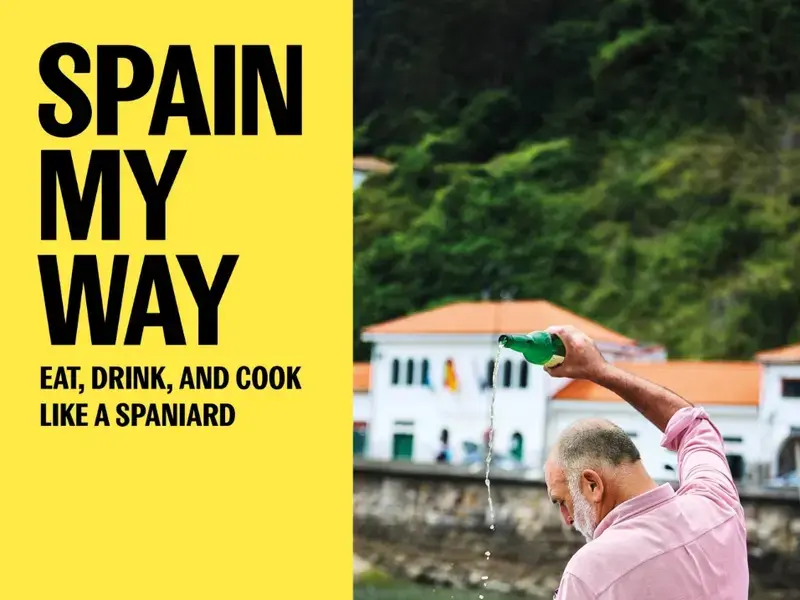
Spain My Way

Spain My Way: Eat, Drink, and Cook Like a Spaniard by José Andrés. Copyright © 2026. Reprinted by permission of Ecco, an imprint of HarperCollins Publishers

José Andrés Has a Different Idea of Authenticity

8 Minute read

The recipes in Spain My Way celebrate Spain's past, but José Andrés is just as interested in what happens when cuisines evolve.

For most of his career, José Andrés has viewed himself as a steward of Spanish cuisine.

Whether serving paella, croquetas, or tortilla española, he has spent decades introducing Americans to the foods of his native country while remaining fiercely protective of the traditions behind them.

That is what makes one of the most intriguing ideas running through his new cookbook, Spain My Way, feel almost contradictory.

The book, which combines more than 100 recipes with essays on Spanish food, drink, history, and culture, repeatedly returns to an idea that Andrés finds endlessly fascinating: the traditions we think of as timeless are often the product of centuries of change.

Throughout the book, Andrés returns to the stories behind the food—not just how dishes are made, but how they evolve. The recipes are central to Spain My Way, but so are the migrations, cultural exchanges, historical accidents, and shifting tastes that helped create them.

"I like to understand in what particular moment a dish became part of the popular DNA of a country, of a region, of a town," he says.

"Every dish is history on a plate."

For Andrés, that curiosity often begins with small mysteries. One of his favorites appears in The Virginia House-Wife, an 1824 cookbook by Mary Randolph, a prominent hostess and relative of Thomas Jefferson. Among its recipes are several versions of gazpacho, a dish now closely associated with southern Spain. How did gazpacho find its way into an early American cookbook decades before modern notions of Spanish cuisine had taken hold in the United States? Questions like that are what keep Andrés digging through culinary history.

That inquisitiveness reflects a belief that runs throughout Spain My Way: culinary traditions rarely develop in isolation. Throughout his career, Andrés has been fascinated by the moments when dishes cross borders, become adopted by new communities, and eventually feel as though they have always belonged.

Many of those stories begin with moments of upheaval. During the conversation, Andrés pointed to 1492, not for Christopher Columbus's voyage, but for the expulsion of Jews and Muslims from Spain and the pressure placed on many others to convert to Christianity. He recounted the story of La Alberca, a village where a pig was traditionally allowed to roam the streets, a visible sign that residents were eating pork and therefore practicing Christianity.

The anecdote is the kind of historical detail Andrés loves to collect. More importantly, it illustrates a larger pattern he sees throughout food history.

"Out of every not-so-great moment in history," he says, "something good comes out of it."

José Andrés

José Andrés. Credit: Johnny Miller

The effects rippled far beyond Spain's borders. Later migrations would leave similar marks elsewhere. Andrés points to examples like Mexico's al pastor, which traces its roots to Lebanese immigrants, as reminders that food traditions are constantly being carried, adapted, and reinvented.

That perspective has also shaped the way Andrés thinks about contemporary cuisine. As he works on a forthcoming cookbook focused on American food, he finds himself wrestling with a deceptively simple question: What exactly is American cooking?

"It is true that in one moment in time, in history, you kind of freeze and you say, this is Spanish cooking, this is America today," he says. "But then you have to put kind of a date."

To Andrés, cuisines are less permanent identities than snapshots in time. What feels essential today may have been an innovation a century ago, while what seems timeless may have arrived from somewhere else entirely.

He points to oysters as an example. Once a staple of American commerce and daily life, oysters were preserved, pickled, and shipped throughout the country. Today, Americans still love oysters, but many of those traditions have disappeared. In Spain, meanwhile, preserved seafood remains deeply embedded in the culture, from escabeche to some of the world's most celebrated tinned fish.

What fascinates Andrés is not simply that traditions change, but how selectively they change. Why do some foods endure while others fade away? Why does one preparation become a cherished national tradition while another slips into history?

"Things change," he says. "What happened? We forget that things change because we were not there."

That same complexity exists within Spain itself. Andrés often describes the country as one of Europe's most diverse culinary landscapes, where geography, language, and local traditions can change dramatically over relatively short distances.

"We are what, the size of Texas?" he says. "Spain is so small, you could drive 100 kilometers or less, like 60 miles, and the dishes are different, the drinking traditions are different, the landscape is different. I mean, forget 50 kilometers, you can go town to town sometimes, and Spain has that and I think that's very beautiful."

Andrés learned that lesson early. Born in Asturias and raised in Barcelona, he remembers bringing sandwiches made with Cabrales, the pungent blue cheese of northern Spain, and membrillo to school. What seemed perfectly normal to him was met with confusion by classmates who had grown up with different foods and traditions.

For Andrés, it was an early reminder that there is no single Spanish cuisine. The foods, flavors, and customs that feel essential in one region can seem unfamiliar just a few hours away. The same country that prizes Cabrales in Asturias has its own distinct culinary identity in Catalonia, the Basque Country, Andalusia, Galicia, and beyond. That regional diversity runs throughout Spain My Way, where recipes and stories move across the country rather than attempting to define Spanish food through a single lens.

The more Andrés has learned about Spanish food, the less interested he has become in defining it narrowly. "The more you know, people make you an expert, and inside you feel like a fraud because you know how little you know," he says. "And that's only Spain."

For all of his fascination with change, Andrés spent much of his career trying to protect Spanish cuisine from it. As Spanish food gained popularity in the United States, he often found himself pushing back against shortcuts, misconceptions, and what he jokingly describes as the many "horrors" committed in the name of paella. His goal was never to freeze Spanish cooking in place, but to ensure that people understood the traditions before reinventing them.

"I felt like I had to be the holder of the tradition," he says.

That responsibility shaped everything from the dishes he served to the ingredients he chose. While other chefs freely blended cuisines and experimented across borders, Andrés was often reluctant to make changes that might blur the lines of what Spanish food was. An avocado might make perfect sense in a tapa, he says, but for years he avoided additions like that out of concern that people would confuse Spanish cooking with something else entirely.

Yet the deeper Andrés has dug into food history, the harder it has become to ignore one of its central lessons: the traditions he spent decades protecting were themselves the product of adaptation, migration, and reinvention.

That realization has led him to reconsider his own role. Rather than acting solely as a guardian of Spanish cuisine, Andrés increasingly sees room for evolution, experimentation, and new interpretations.

"Now I think I'm going to give myself maybe more freedom in the next 30 years of my life," he says.

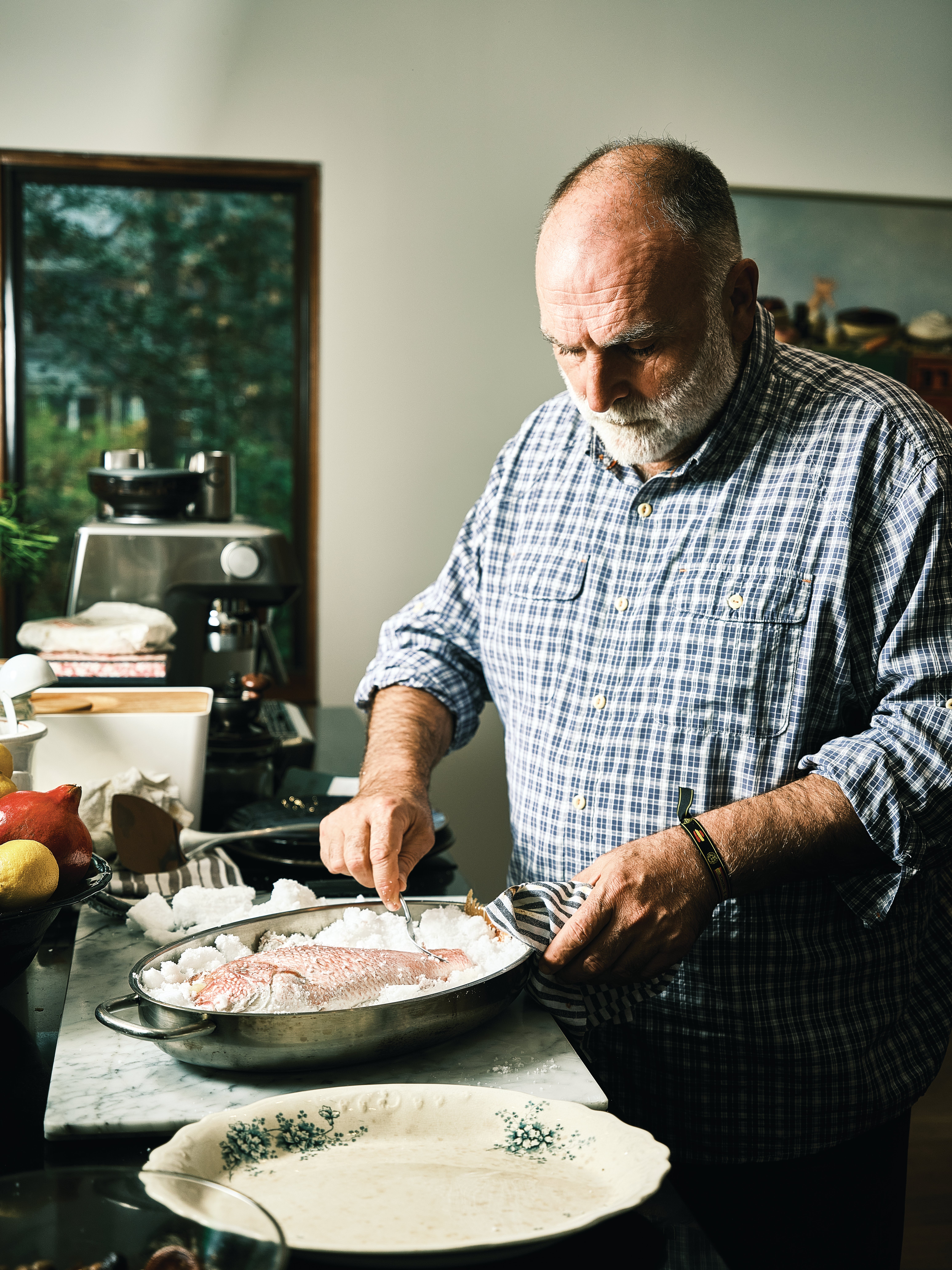
José Andrés cooking

José Andrés Cooking. Credit: From Spain My Way: Eat, Drink, and Cook Like a Spaniard by José Andrés. Copyright © 2026. Reprinted by permission of Ecco, an imprint of HarperCollins Publishers

The shift is subtle rather than radical. Andrés is not abandoning tradition. If anything, he believes understanding a dish's history is what gives cooks permission to build on it thoughtfully. But where he once worried that adding an ingredient like avocado to a tapa might confuse diners about what Spanish food is, he now sees those boundaries as less rigid than he once did.

After all, the history he loves to trace is filled with examples of ingredients, techniques, and ideas crossing borders before becoming accepted as part of a cuisine's identity. The story of Spanish food, he argues, has never been one of preservation alone. It has always been one of change.

The idea came into focus for Andrés during a recent theater event promoting the book. While demonstrating recipes onstage, he found himself preparing a Spanish omelet and gambas al ajillo at the same time. Running short on time and dealing with a temperamental induction burner, he ended up placing the shrimp directly on top of the omelet.

The combination wasn't planned. The audience loved it.

"All of a sudden, people were asking for that in the restaurant," he says. "At some point, I'm going to have to put that omelet with the gambas al ajillo on top on the menu, and it's going to be fucking awesome."

"Maybe that tells us something about Spanish cooking," he says. "Maybe we need to shake it up a little bit."

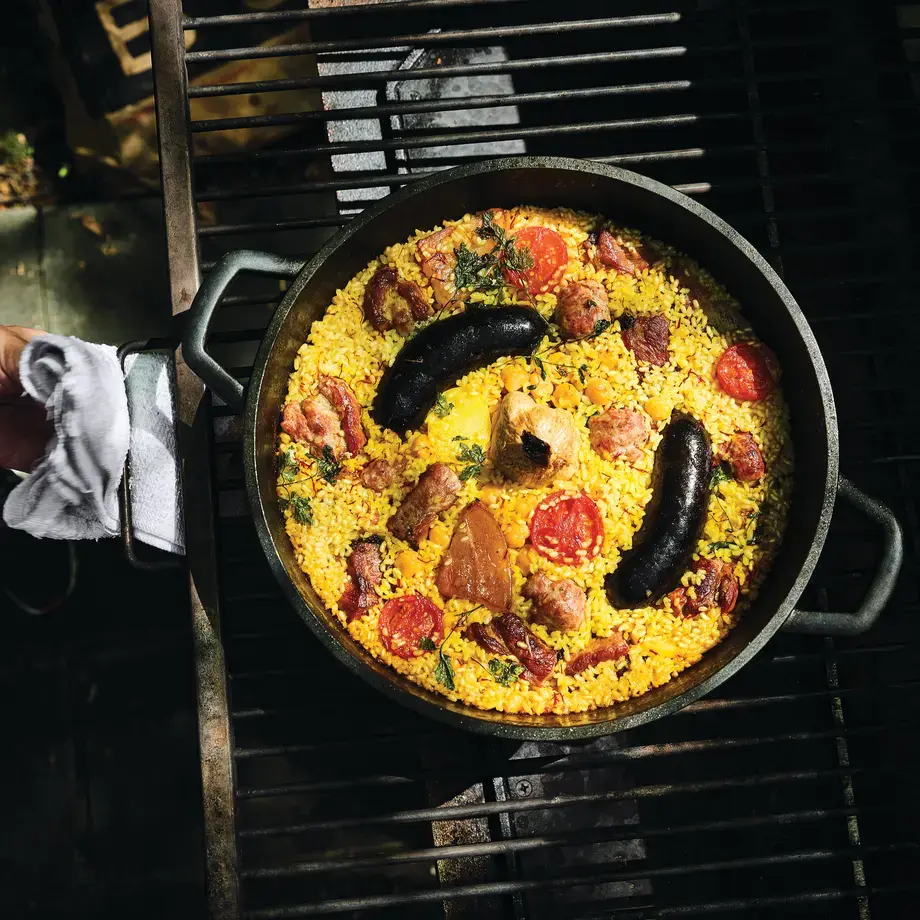
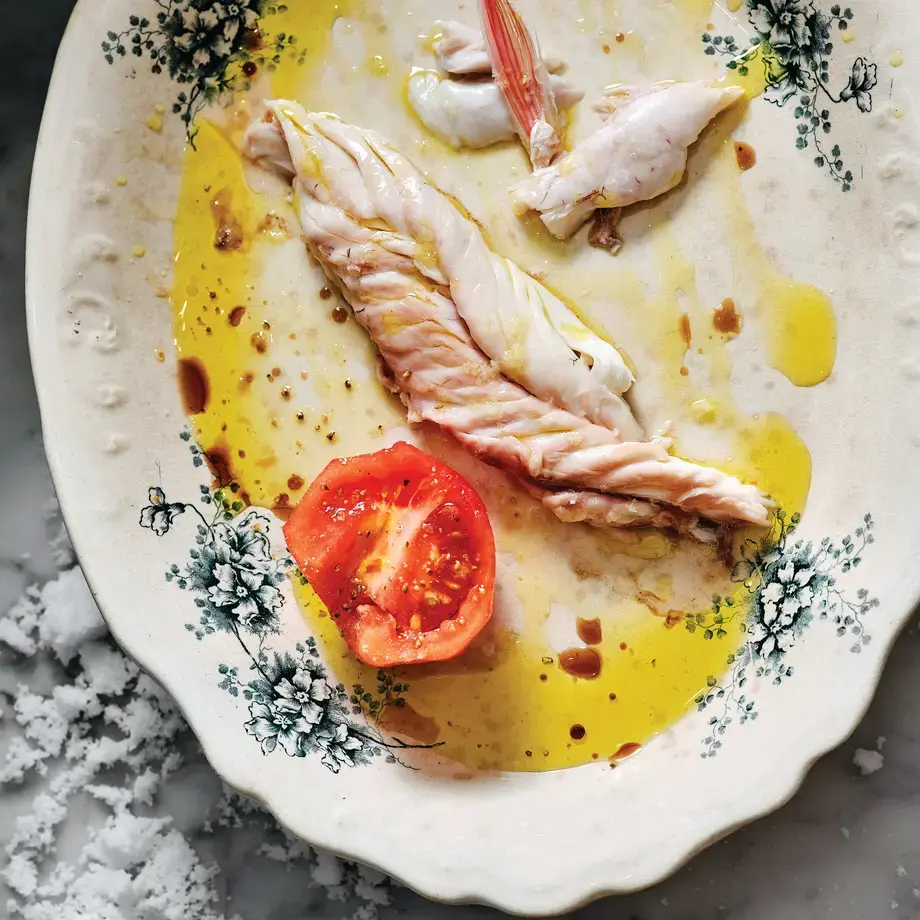
Recipes from Spain My Way: Eat, Drink, and Cook Like a Spaniard by José Andrés

Spread the flavor - share this story.

Join the community
Badge
Join us for unlimited access to the very best of Fine Dining Lovers
Unlock all our articles
Badge
Continue reading and access all our exclusive stories by registering now.

Already a member? LOG IN