Sorry, you need to enable JavaScript to visit this website.

Inside the Kitchen: Seven Questions with Chef Adolfo Pucci of Ariete
5 Minute read
Adolfo Pucci

Adolfo Pucci

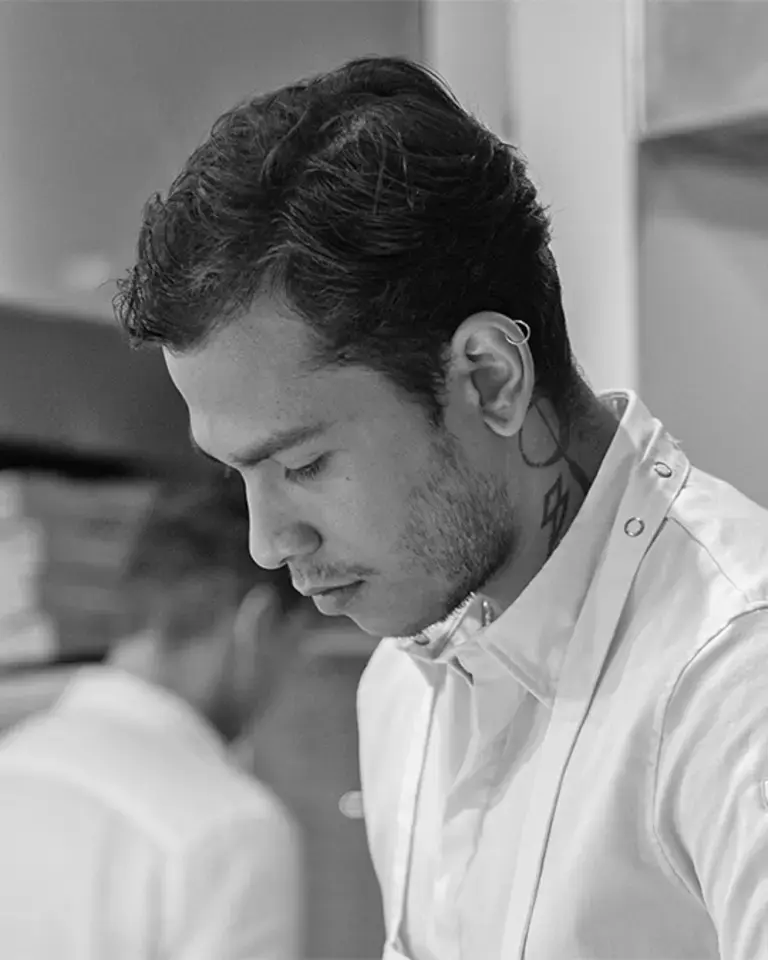
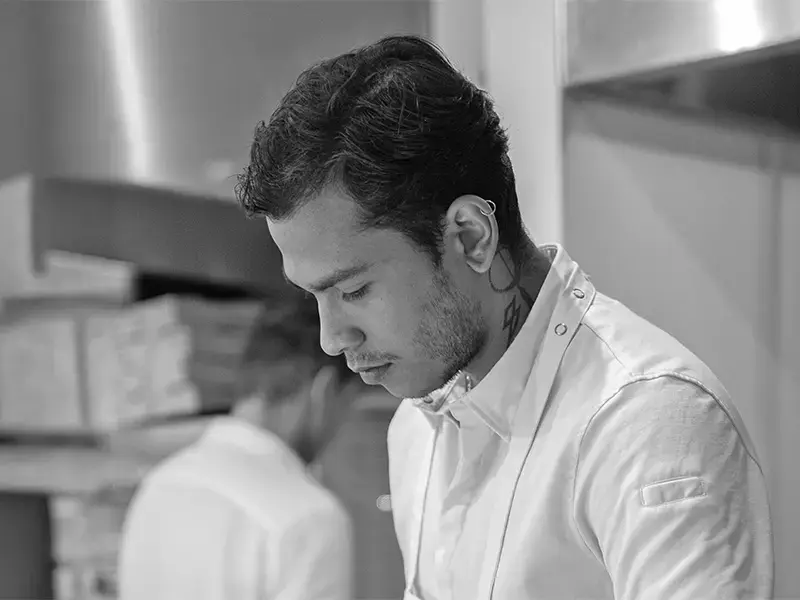
Adolfo Pucci is the executive sous chef at Ariete in Miami and a 2026-27 U.S. Regional Finalist in the S.Pellegrino Young Chef Academy Competition. Here, Pucci discusses his most meaningful food memory, the restaurants he hopes to experience, Venezuelan comfort food, and the philosophy guiding his cooking.

Without a doubt, a great spaghettoni aglio, olio e peperoncino. A little parsley, some alici, two or three pomodorini just lightly sautéed, great olive oil, and a touch of Parmigiano. The spaghettone has to be perfectly al dente and properly emulsified with its own pasta water. It really doesn’t need much more. To me, it’s probably the best dish in the world. Simple, direct, and, when it’s done right, very hard to beat.

Growing up in a Neapolitan family means that many of my earliest memories are inevitably connected to food. But if I had to choose one, it would be lunch at my nonna Pérsida’s house. I can still remember the smells of her kitchen before anything else: the sauce cooking, the meat, the cheese, the herbs, and especially her involtini. I remember that aroma filling the house and the anticipation of everyone sitting down together around the table.

To me, that’s a true “Ratatouille moment”: a flavor that can instantly take you back to a place, a person, and a moment in your life. Over the years, my cooking became more technical and the way I cook changed, but that memory never did. That’s why the involtini appear in my S.Pellegrino dish. I’m not trying to reproduce my nonna’s recipe exactly; I’m trying to preserve what it meant to me and reinterpret it through the chef I am today. I can change the technique, the presentation, or even the form of the dish, but when I taste it, I still want to recognize a little bit of that table.

To me, fine dining is about intention, hospitality, purpose, and attention to detail. I don’t think it’s defined only by expensive ingredients, technical complexity, or formality. There can be tremendous sophistication in doing something seemingly simple with an extraordinary understanding of the ingredient.

Technique, service, and precision are fundamental, but they should always serve something: flavor, hospitality, emotion, culture, or an idea. I also think we need to broaden our definition of excellence today. A great restaurant shouldn’t be measured only by what happens on the plate, but by the culture it builds around it: how it respects its ingredients, how it welcomes its guests, and how it develops and takes care of the people who make the experience possible.

One of my biggest goals is to become a leading voice in New American cuisine in the United States, building a style of cooking that connects my Venezuelan and Italian roots, my childhood memories, and the incredible ingredients this country has to offer. I want to develop a voice of my own while also bringing greater visibility and value to the culture I come from.

I’ve been fortunate to work in great kitchens that shaped so much of the chef I am today. They taught me that standards are standards and that maintaining them is what truly defines a high-level kitchen. But they also gave me perspective, purpose, and identity. My dream is to build a restaurant that can do the same for others. Someday, I hope it’s known not only for the Michelin stars I dream of earning, but also for the cooks who came through that kitchen, the voices they discovered there, and what they went on to build afterward.

There are four restaurants I would love to experience not only as a guest but, if I ever had the opportunity, from inside their kitchens as well.

DiverXO, by Dabiz Muñoz, for its creative freedom and its ability to bring cultures, flavors, and techniques together in a language that is completely its own. Central, by Virgilio Martínez, for the way it understands territory and turns Peru’s biodiversity and ingredients into a fundamental part of its identity. Atomix, by Junghyun and Ellia Park, for the way they’ve brought their Korean roots into a deeply personal, precise, and contemporary expression in New York. And Enrico Bartolini al MUDEC, for the way it evolves Italian tradition through technique and creativity without losing its connection to its roots.

They’re very different restaurants, but they all represent something I deeply admire: a clear identity, a profound respect for where they come from, and the freedom to use that foundation to create something new.

My philosophy starts with knowing where I come from and understanding the place where I cook. My cooking is deeply shaped by my childhood in Venezuela and the flavors of the Caribbean, but also by my Italian roots, their sense of hospitality, and the importance the table always had in my family.

Over time, something else became equally important to me: cooking from the territory around me. I believe some of the best ingredients are often the ones closest to us, and there’s tremendous value in knowing and supporting the people who produce our food. I like to start with what is ours and, from there, cook with a much more global perspective.

But there’s also a human side to my philosophy. I grew professionally in demanding kitchens, where I learned that there are no shortcuts and that hard work is essential. Eventually, I realized that hard work alone isn’t enough. Before I aspire to be a great chef, I want to be a great person. For me, cooking with identity, working hard, having a clear purpose, and treating the people who build alongside you with respect are all part of the same philosophy.

A freshly made arepa with queso de mano and Mantequilla Maracay. I work every day around technique, precision, and the construction of dishes, but some flavors don’t need to be reinterpreted to mean something. For me, that combination tastes like home. And that’s probably why I could eat it for the rest of my life.

Adolfo Pucci is one of 10 chefs competing in the 2026-27 S.Pellegrino Young Chef Academy U.S. Regional Final. Meet the other finalists vying for a place at the global Grand Finale.

Spread the flavor - share this story.

Join the community
Badge
Join us for unlimited access to the very best of Fine Dining Lovers
Unlock all our articles
Badge
Continue reading and access all our exclusive stories by registering now.

Already a member? LOG IN