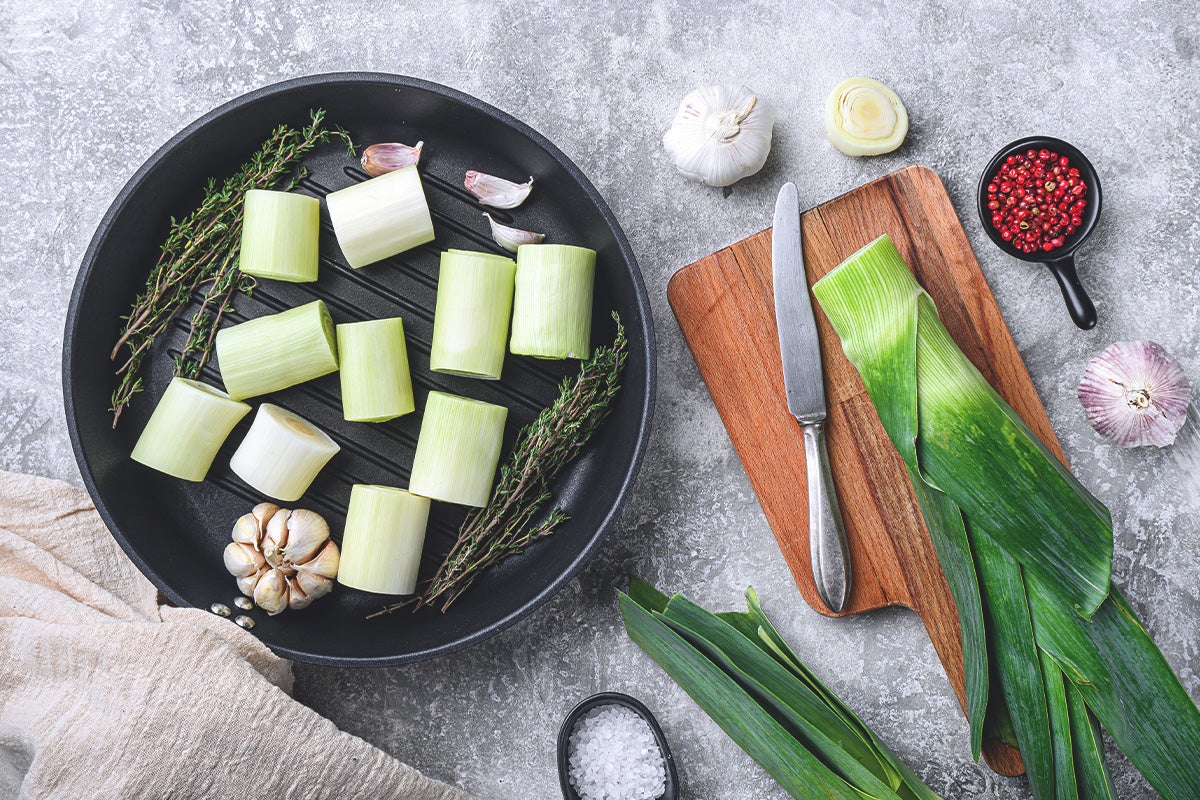
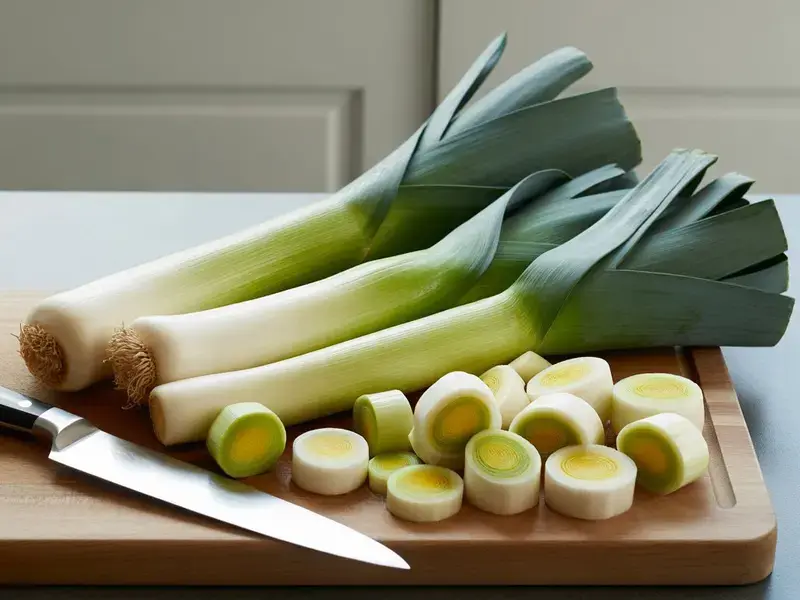
If you have ever sliced into a leek and found sand in every layer, you know why it pays to learn how to clean and cut leeks properly. These mild alliums bring sweetness and depth to soups, braises, and roasted dishes, but their layered structure traps soil. Once you understand how to trim, wash, and slice them, cutting leeks for soup, roasting, or sautéing becomes a quick, reliable step in your prep routine.
Choosing and Cleaning Leeks
Before you think about how to cut leeks, start by selecting good ones and cleaning them thoroughly.
Look for leeks that:
- Have firm, white to light green bases
- Feel heavy for their size
- Have crisp, dark green tops (not slimy or yellowing)
- Show no cracking or splitting at the root end
Leeks are part of the onion family, along with scallions, shallots, and many other alliums; understanding the range of onion types and their uses helps you decide when leeks’ gentle sweetness is preferable to the sharper flavor of regular onions.
How to clean leeks
Leeks grow in sandy soil, and dirt often hides between their layers. Cleaning is non-negotiable.
- Trim the root
Slice off the very base where the roots emerge, but keep enough of the core intact so the leek holds together. - Trim the dark greens
Cut off the very dark, tough green tops. You can keep the medium-green parts for cooking and reserve the darkest leaves for stock. - Slice lengthwise
For most uses, slice the leeks lengthwise down the middle so you can open the layers. For rings, you can slice crosswise first and then wash, but splitting lengthwise makes it easier to rinse out grit. - Rinse between layers
Fan the layers under cold running water, rubbing gently with your thumb to dislodge any sand or soil. - Dry briefly
Shake off excess water and pat dry if you plan to sauté or roast; too much water will encourage steaming instead of browning.
Once your leeks are clean, you are ready to tackle specific cuts.
How to Cut Leeks Step by Step
Whether you are learning how to cut a leek for soup or how to cut leeks for roasting, the technique starts the same.
Basic trimming
- Place the cleaned leek on a cutting board.
- If you have not already, trim off the root end and the darkest green tops.
- Decide whether you want rounds, half-moons, or strips.
For rounds and half-moons
This is ideal when cutting leeks for soup or sautés.
- For rounds: leave the leek whole and slice crosswise into coins. Thinner slices cook faster and melt into soups; thicker slices hold more texture.
- For half-moons: halve the leek lengthwise first, then place each half cut side down and slice crosswise. This shape is great when you want pieces that separate easily in the pan.
For batons and strips
This works well when cutting leeks for roasting or for presentations where you want visible pieces.
- For batons: cut the leek into 2–3 inch lengths, then slice each piece into quarters or sixths lengthwise.
- For strips (julienne): halve the leek lengthwise, lay flat, then slice into thin lengthwise strips. These cook quickly and can be used as a bed for fish, a base for braises, or crisped as a garnish.
At every stage, keep your cuts even so the leeks cook at the same rate.