
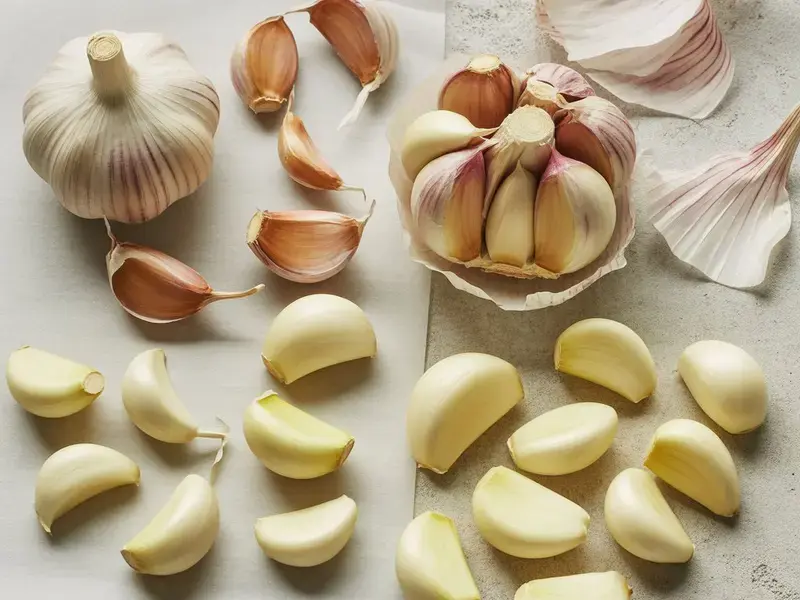
Once you understand how to peel garlic efficiently—whether you are working with a single clove or a whole head—chopping, slicing, or crushing it becomes the easy part. The trick is choosing the right peeling method for the job: a quick knife smash when you just need a clove or two, a shaking method when you are prepping in bulk, and smart storage for peeled cloves so they stay fresh and safe to use.
When to Peel Garlic (and When Not To)
You do not always need to peel garlic, and sometimes leaving the skin on is an advantage. Knowing when to peel garlic cloves saves time and gives you better results.
Peel garlic when:
- You are finely chopping, slicing, or mincing it
- You plan to crush it into a paste or use a garlic press
- You want it to melt into sauces, dressings, or marinades
- You are roasting peeled cloves for a spreadable, caramelized result
Leave the skin on when:
- Roasting whole heads of garlic: the skins protect the cloves and keep them soft and sweet inside
- Adding lightly crushed cloves to stocks, braises, or stews where you will remove them later
- Infusing oil or butter briefly with whole cloves you will discard
Garlic’s relatives, like wild garlic (ramps, wild garlic leaves, and similar foraged alliums), are often used differently—more like herbs than cloves—so it is worth distinguishing between traditional heads of garlic and leafier, seasonal alliums when you plan your prep.
Peeling Methods: Knife, Smash, Shake
There is no single “best” way to peel garlic. The right method depends on how much you need and how you plan to use it.
Knife-and-trim method (neat and controlled)
Best when you need perfectly shaped cloves or plan to slice them.
- Separate a clove from the bulb.
- Lay the clove on a cutting board and trim off the root end with a small knife.
- Make a small slit in the skin lengthwise if needed.
- Peel away the papery skin with your fingers.
This method is slower but keeps the clove intact, which is ideal for thin slices or precise cuts.
Smash-and-peel method (fast, for chopped or crushed garlic)
Perfect when you want to peel garlic easily for mincing, crushing, or adding to sauces.
- Place the clove on the board.
- Lay the flat side of a chef’s knife on top of the clove.
- Press down firmly with the heel of your hand until the clove cracks.
- The skin will loosen and slip off easily; discard the peel and trim the root end if needed.
Because the clove is partially crushed, this is not the best choice when you need neat slices, but it is ideal for quick everyday cooking.
Shake method (for small batches, hands-off)
Good when you need to peel garlic fast for a handful of cloves.
- Separate several cloves from the bulb and lightly crush them with the palm of your hand to loosen the skins.
- Place the cloves in a metal or hard plastic container with a tight-fitting lid (or between two metal bowls).
- Shake vigorously for 15–20 seconds.
- Open the container; most cloves should be peeled or nearly peeled. Remove skins and tidy up any that need a quick trim.
This method is efficient for medium quantities, though it can be noisy and works best with very fresh garlic.
How to Peel a Lot of Garlic at Once
If you cook frequently or are preparing large-batch recipes, learning how to peel a lot of garlic at once can save serious time. Combine techniques and set yourself up for clean storage.
- Break down multiple heads
- Press down on each garlic bulb with your palm to loosen the cloves.
- Separate all the cloves into a bowl.
- Loosen skins in bulk
- Lightly crush cloves with the side of a knife or your palm just enough to crack the skins.
- Use the shake method in a lidded container or between two bowls to knock off most of the peels.
- Finish by hand
- Spread everything on a tray and quickly sort cloves from skins.
- Use a small knife to trim any stubborn root ends or peel remaining skins.
- Dry the cloves
- Pat the peeled cloves dry with a clean towel before storing; excess moisture shortens their shelf life.
From here, you can either use the garlic immediately or store it properly so it is ready for the week.
Storage Tips for Peeled Cloves
Knowing how to store peeled garlic cloves is just as important as peeling them. Done correctly, you keep flavor and texture while avoiding safety issues.
Short-term storage (up to a week)
- Place peeled, dry cloves in an airtight container.
- Store in the refrigerator.
- Use within 3–7 days for best flavor and texture.
You can also cover peeled cloves loosely with a neutral oil in the fridge for flavor and convenience, but be strict about timing—use within a few days and keep them cold.
Freezing peeled garlic
Freezing is useful if you have peeled a lot at once:
- Spread peeled cloves on a tray in a single layer and freeze until solid.
- Transfer frozen cloves to a labeled freezer bag or container.
- Use directly from frozen in cooked dishes; texture will be softer, but flavor holds well.
You can also freeze garlic in other prepped forms, like finely chopped or puréed with a little oil, portioned in small amounts (for example, in an ice cube tray) and transferred to a container once solid.
Safety note
Avoid storing garlic at room temperature once peeled, and do not leave garlic in oil at warm temperatures for extended periods, as this can create unsafe conditions. Always keep prepped garlic cold and use it within a reasonable window.
Cooking Tips for Prepped Garlic
Once you have garlic peeled and ready, it is tempting to use more of it—which is great, as long as you manage timing and heat.
Match the cut to the cooking time
- Whole or halved cloves: best for long braises, roasts, and confiting in oil; they become mild and sweet.
- Sliced garlic: cooks quickly and can burn if the heat is too high; ideal for sautés where you want visible pieces.
- Minced or crushed garlic: releases flavor fastest and should often go in later or over moderate heat.
Control browning
- Start garlic in a cold pan with oil when you want a gentle infusion.
- Add garlic after other ingredients (like onions) when you are sautéing at higher heat, so it does not burn.
- If garlic starts to brown too quickly, lower the heat or add another ingredient (like tomatoes or broth) to cool the pan.
Use scraps wisely
Garlic skins and trimmed root ends still carry aroma and can be repurposed in stock or infused broths rather than going straight to the trash, as long as you strain them out before serving.
When you know how to peel garlic easily, how to scale up for bulk prep, and how to store peeled cloves safely, garlic stops being a fiddly step and becomes a ready, reliable building block for everything from quick weeknight sauces to long, slow braises.