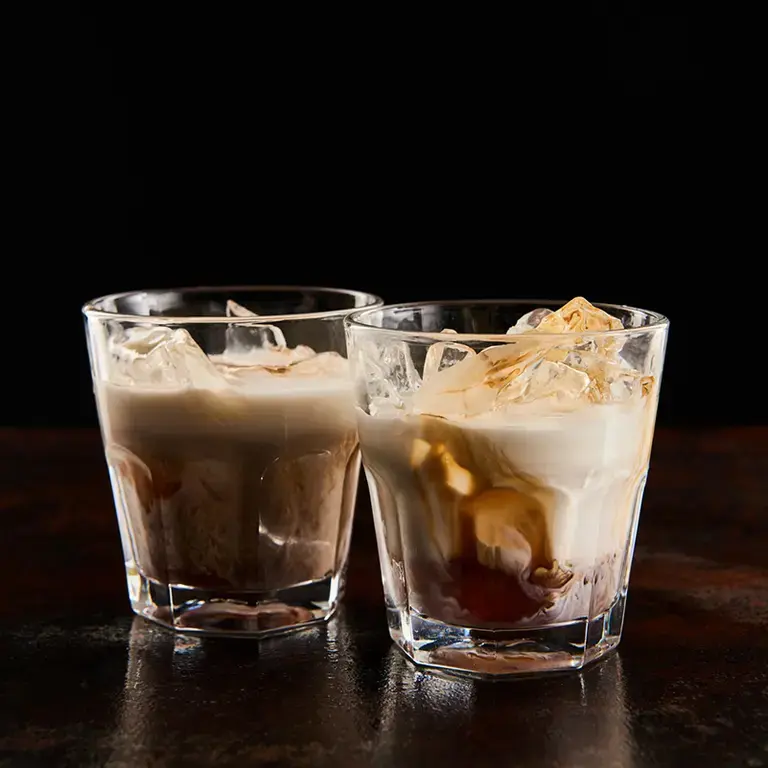

Although this is a simple drink and the list of ingredients for a White Russian is short, there are a few tips and tricks to perfect the taste. First, though it may be tempting, don’t add too much cream. The cream is there to soften the alcohol, but it shouldn’t dominate the overall profile of the drink. If you prefer a creamier style of White Russian, you can double the amount of cream in the recipe above.
For the ice, it’s best to use large, solid cubes that melt slowly. As there’s no shaking involved in this recipe, the ice is important to keep the drink cool, but you want to stop it from becoming watery. You can also chill the glass in the freezer for 15 minutes before making the drink to help preserve coolness and texture.
When it comes to the choice of vodka and coffee liqueur, there are several options. For the vodka, a neutral, smooth style is preferable as it allows the aromatic coffee flavors and sweetness of the cream to remain in balance. Whichever style you choose, it’s worth being aware that different brands will have varying levels of alcohol, affecting the final potency of your cocktail.
You will be able to source coffee liqueurs at your local grocery store, but there are also now boutique versions available with stronger coffee-driven profiles, or you could even try making a homemade coffee liqueur for full control over the sweetness of the final drink. Some mixologists will add a pinch of salt to a White Russian to enhance the coffee notes and offset any extra sweetness.
Last but not least, you can experiment with the cream. In the recipe above, we’ve suggested using heavy cream for a luxurious mouthfeel, but you can swap this for half-and-half for a lighter yet still smooth texture.
The Cocktail's History (From the 1960s to The Big Lebowski)
The White Russian drink is a nostalgic cocktail that’s remained a favorite across the decades. It evolved as a variation on the Black Russian, created in 1949 in Brussels at the Hotel Metropole. The original recipe featured a mix of vodka and coffee liqueur, but by the 1960s versions started to appear in cocktail guides including cream. Neither the White nor Black Russian were invented in Russia; their names are instead a nod to the presence of vodka in the drinks.
In the 1970s and 1980s, creamy cocktails were increasingly popular, and the White Russian established itself as a classic go-to alongside other well-known creamy drinks including the grasshopper and piña colada. It became a common after-dinner drink with its sweet and indulgent flavor profile.
Though it was already a regular on cocktail lists, it was catapulted to fame in 1998 when the cult film The Big Lebowski featured it. A White Russian is the drink the main character, the Dude, played by Jeff Bridges, enjoys throughout the film. The drink reflected the Dude’s laid-back personality, while the film revived the cocktail for a new generation and turned it into an icon of cinema.
Variations (Black Russian, Mudslide, Dairy-Free Version)
The White Russian has benefited from the recent interest in retro cocktails, with premium twists being put on what’s in a White Russian drink. Today, bartenders are experimenting with craft coffee liqueurs, cold brew coffee, aged spirits, flavored creams, and plant-based alternatives to explore modern takes on this traditional recipe.
The Black Russian, featuring only vodka and coffee liqueur, came before the White Russian and provided the inspiration for this cocktail, as outlined above. For those with a sweet tooth, the mudslide is an even more indulgent version of a White Russian that’s chocolate-forward and adds Irish cream liqueur to the list of ingredients. For a plant-based alternative, it’s easy to switch oat cream for the heavy cream in the recipe above.
Once you’ve perfected this cocktail, take a look at our pick of the top 20 cocktails, including a Bloody Mary and a Manhattan.
Intended for ages 21+. Please drink responsibly.