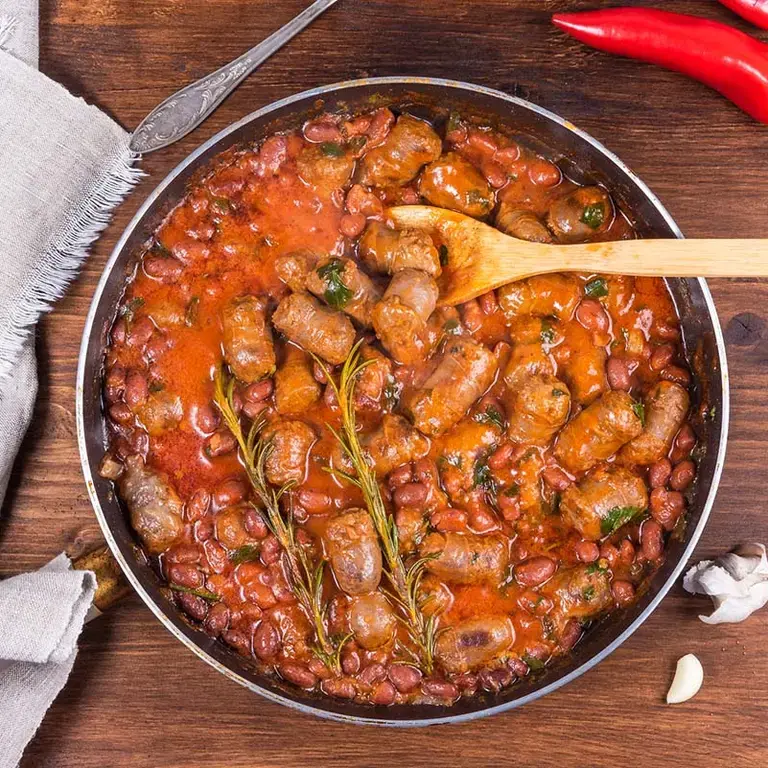

For the most flavorful stew, select ground beef made from a cut that benefits from the slow cooking process. Options such as beef chuck have marbled fat throughout, and suit the longer cooking time. Browning the meat first creates a savory crust and enriches the final flavor. Make sure the stew remains at a simmer as gentle cooking allows the meat to break down and tenderize without drying out.
The onion, garlic, and sausage provide a strong base for the stew, and spices such as ground cumin bring warmth and depth, creating overall balance. It’s best to taste the broth as it’s simmering to adjust the seasoning once the chiles and spices have had a chance to mellow.
The stew can also be made ahead of time; resting allows the flavors to develop, while gentle reheating can help maintain the texture.
Origins in Cowboy Cooking Culture
Cowboy cooking was shaped by the practical needs of life on the trail. Meals needed to be made with ingredients that could endure long periods of travel and be easily cooked over a campfire. As such, one-pot cooking became a popular method in which stews brought together meat, vegetables, beans, and other available ingredients that could be cooked together in one pot.
Slow cooking also had the added advantage of turning less expensive cuts of meat into more tender and filling meals. Key preserved ingredients included dried beans, canned tomatoes, dried chiles, onions, and salted meats, which were safe to transport on trails.
Flexibility in recipes was also fundamental, as the availability of ingredients would commonly dictate the dish. The emphasis was placed on hearty food that could easily feed a group during a long journey.
Variations (Slow Cooker, With Green Chiles)
Using a slow cooker is a modern interpretation of the low-and-slow approach that was adopted by the cowboys in traditional campfire cooking. Follow the recipe steps above to brown the beef and aromatics before adding them to the slow cooker instead of a Dutch oven.
Tougher vegetables should be added at the start of cooking, whereas more delicate ingredients, including beans and sweet corn, can be added toward the end to warm through. You’ll lose less liquid in a slow cooker, so you’ll need to adjust the recipe above to start with less water.
Green chiles adds Southwestern flavor and brings heat, fruitiness, and smokiness to the dish. Hatch green chiles are connected with New Mexico and can be easily roasted before being added to the stew. Green chiles works particularly well with cuts of beef and pork, along with beans, potatoes, and tomatillos, and brings a fiery character to the overall dish.