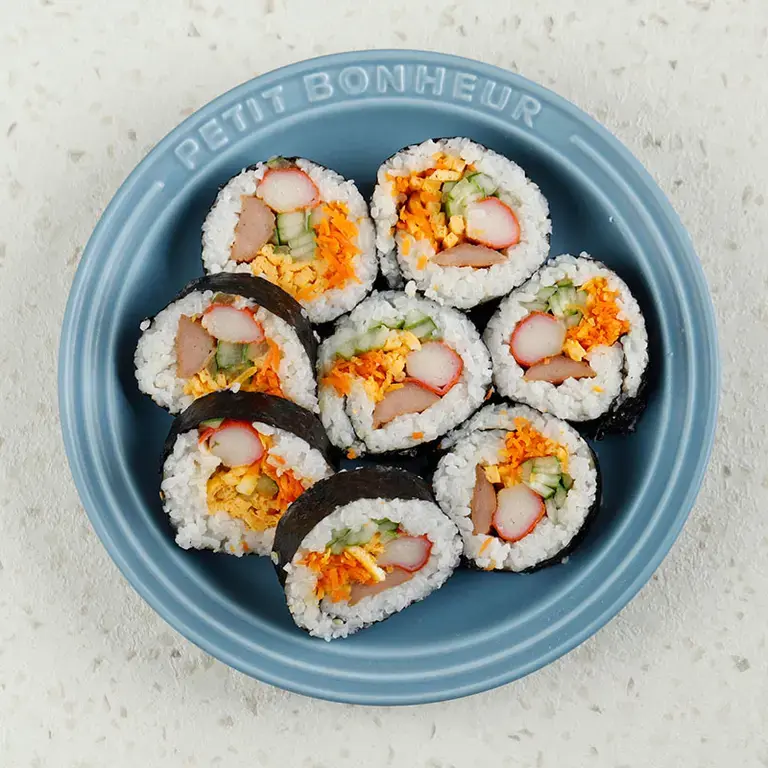

The key to making the best kimbap, also known as gimbap, is to perfect the rice and rolling technique. The rice needs to be tender, but not too soft, and seasoned to be cohesive, but not as sticky as sushi rice. Let the rice cool fully before assembling otherwise the seaweed wrapper will soften and struggle to hold the fillings.
Any excess moisture will also make the seaweed wrapper soggy. It’s important to drain the spinach as much as possible, as it’s an ingredient that naturally retains a lot of moisture. Cut all of the ingredients into similar-sized strips so the roll is easy to shape and has an even distribution of the fillings throughout.
The seaweed needs to be placed shiny-side down when assembling the kimbap, and the filling should be arranged in a compact line to create a tight roll without overstuffing. If you have a bamboo rolling mat available, this helps to produce an even, firm roll. Kimbap should be eaten soon after rolling, as the longer it sits the more moisture transfers to the seaweed wrapper and makes the texture undesirably soft.
Kimbap vs. Sushi: The Differences
To understand the difference between kimbap and sushi, it’s first helpful to know what kimbap is. Although both are rolled in sheets of dried seaweed, kimbap is distinctly Korean and made with rice usually seasoned with sesame oil and salt. Sushi, however, features signature sticky rice often seasoned with rice vinegar, sugar, and salt.
Sushi also tends to use raw or cooked seafood, whereas kimbap includes a wider variety of ingredients from vegetables to eggs to fish cakes and is designed as a complete dish rather than smaller elements to make up a meal.
Popular Filling Variations
Classic fillings for kimbap Korean food include spinach, pickled radishes, carrots, eggs, and beef. There are also many seafood variations featuring fish cakes and crab, along with vegetarian adaptations built around mushrooms and tofu.
Whichever ingredient you choose, it’s important to balance the salty, savory, fresh, and pickled flavors for a variety of textures in the roll. For more inspiration for your kimbap take a look at our selection of the top 12 Korean pantry items, including gochujang and toasted sesame oil, for an authentic taste profile.
If kimbap has ignited an interest in Korean cooking in your home there are plenty of Korean restaurants to visit throughout the United States. Take a look at our article highlighting the best Korean restaurants to visit next time you’re in New York City.