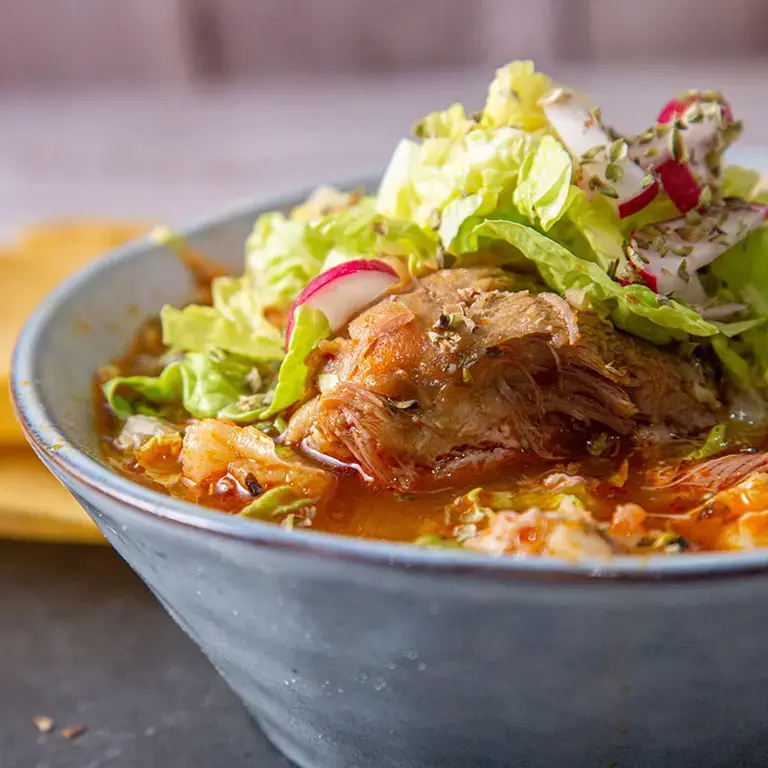

To create this dish authentically, one of the most important pozole ingredients to include is hominy corn. This corn undergoes a process called nixtamalization which gives it its chewy texture and amplifies the overall flavor of the maize. For ease, we’ve suggested sourcing precooked corn in the recipe above, but you can cook it at home if preferred.
This isn’t a dish that can be rushed. Traditionally, pozole is slow-cooked so the pork becomes exceptionally tender and develops flavor in the broth. Using pork shoulder gives the broth its signature richness, and the cut has enough fat and connective tissue to benefit from the longer cooking process.
It’s important to skim the surface and remove any scum or excess foam, as this produces a cleaner-tasting broth for the final dish. Blending the chiles and straining the mixture back into the broth also help create a smooth, flavorful liquid while removing the tough chile skins.
Pozole often tastes even better after it has rested, allowing the flavors to meld and develop. As such, you can make it ahead of time, store it in the fridge, and simply reheat it on the stove when you’re ready to serve.
Pozole Rojo, Verde, and Blanco: The Differences
Now that you know what pozole is, there are a few different styles that you can try making. Pozole rojo gets its color and flavor from dried red chiles, including guajillo, ancho, and occasionally chiles de árbol.
Pork is the traditional meat for this style, and it’s often associated with areas in Mexico such as Jalisco and Guerrero. The recipe shared above is a pozole rojo-style preparation.
A pozole verde features ingredients such as tomatillos, green chiles, cilantro, pumpkin seeds, and a variety of herbs. Chicken tends to be used more commonly than pork, and pozole verde is a brighter, fresher take on the dish with a more herbaceous flavor profile. It’s closely linked to the region of Guerrero, and its color comes from fresh green ingredients rather than the dried red chiles found in pozole rojo.
Lastly, pozole blanco is a simpler version of the dish. The flavor is built using the meat, hominy corn, garlic, and onion instead of a colorful cooking liquid. Pork is the classic meat used, and the neutral broth gives diners the opportunity to customize their own dish with chiles, lime, and other toppings.
Traditional Garnishes (Lettuce, Radish, Oregano)
The garnishes for a pozole are centered around adding freshness and texture to the dish. Shredded lettuce brings a cooling crunch and contrast to the rich, hot broth, whereas a squeeze of fresh lime balances the overall flavors of the pork and broth adding a welcome acidity.
Other common options include Mexican oregano and thinly sliced radishes, which add peppery crunch and sharpness. Avocado is often served with green pozole preparations to add creaminess to the dish, and crisp corn tostadas are popular for dipping into any of the varieties.